
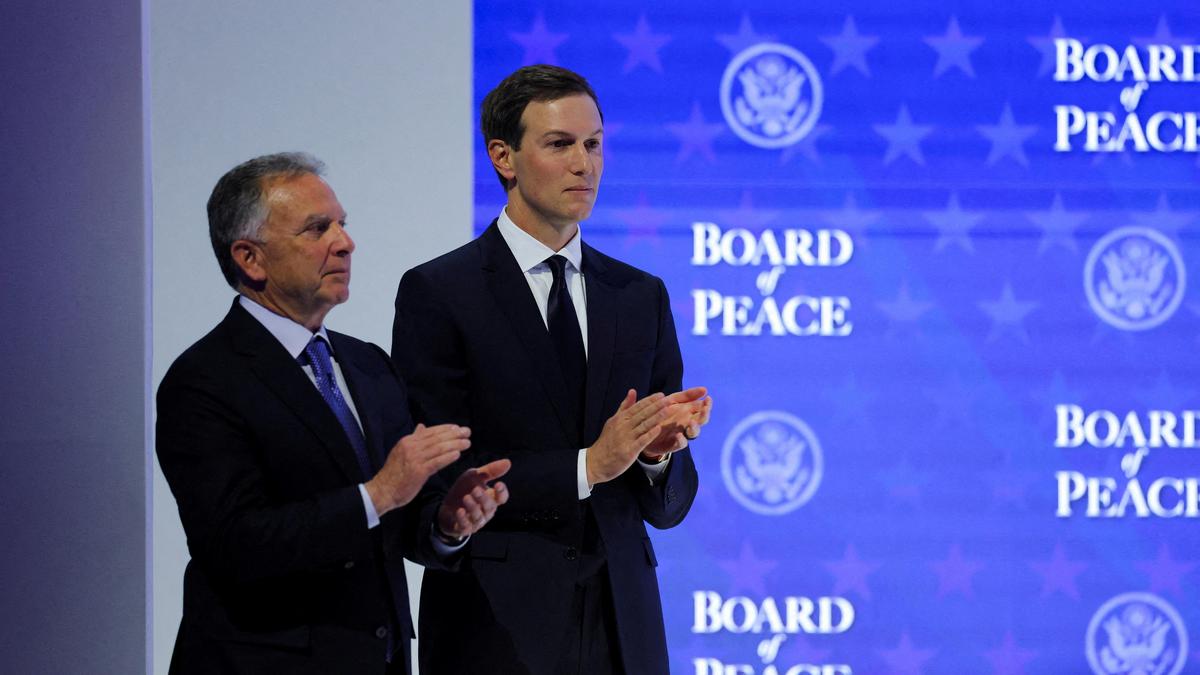
Sat Jan 24 18:55:48 UTC 2026: ### U.S. Envoys Kushner and Witkoff Meet Netanyahu to Discuss Gaza’s Future
The Story: On Saturday, January 24, 2026, U.S. President Donald Trump’s envoys, Jared Kushner and Steve Witkoff, arrived in Israel to engage in discussions with Prime Minister Benjamin Netanyahu regarding the future of Gaza. The talks aim to solidify the existing ceasefire and explore avenues for establishing a long-term, enduring peace. Amidst these diplomatic efforts, the family of the last remaining Israeli hostage, Ran Gvili, held in Gaza, implored Prime Minister Netanyahu to prioritize his return during discussions with the American envoys.
Key Points:
- Jared Kushner and Steve Witkoff, U.S. envoys, met with Israeli Prime Minister Benjamin Netanyahu on January 24, 2026, to discuss Gaza’s future.
- The focus is on solidifying the ceasefire and achieving long-term peace in Gaza.
- U.S. CENTCOM chief Admiral Brad Cooper also visited Israel on the same day.
- Talks also include the return of the remains of Ran Gvili, the last Israeli hostage in Gaza.
- Donald Trump and Jared Kushner presented their vision for a “New Gaza” at the World Economic Forum in Davos earlier in the week, suggesting investments of at least $25 billion to rebuild Gaza’s infrastructure.
- A U.N. and World Bank estimate from February 2025 projected reconstruction costs at $53 billion, while a U.N. Trade and Development agency report in November estimated it could reach $70 billion and take decades.
- A fragile ceasefire has been in place since October 10, but both Israel and Hamas have repeatedly accused each other of violations.
Critical Analysis:
This meeting between U.S. envoys and the Israeli Prime Minister underscores the continued U.S. interest in the region. The timing of the visit, immediately following the “New Gaza” vision presented at Davos, suggests a concrete effort to translate Trump’s conceptual plan into actionable strategies. The presence of Admiral Cooper further highlights the strategic dimension of the talks, implying security concerns are being addressed alongside reconstruction and political dialogue.
Key Takeaways:
- The U.S. is actively involved in shaping the post-conflict Gaza landscape.
- Economic incentives and large-scale investment are central to the U.S. plan for Gaza’s future.
- The return of the remaining Israeli hostage is a significant point of negotiation and public pressure.
- The fragile ceasefire remains a critical concern requiring constant diplomatic engagement.
- Discrepancies in reconstruction cost estimates highlight the complexities and uncertainties in rebuilding Gaza.
Impact Analysis:
The success of these talks hinges on several factors, including the willingness of both Israel and Hamas to adhere to the ceasefire, the availability of substantial international investment, and the resolution of outstanding issues such as the hostage return. The long-term impact will depend on whether the “New Gaza” vision can transcend the rhetoric and translate into tangible improvements in the lives of Gazans, fostering stability and preventing a resurgence of conflict. Failure to address the underlying causes of the conflict and deliver on promised reconstruction efforts could lead to renewed violence and further instability in the region.
 First Piper