
Thu Jan 22 16:46:48 UTC 2026: # Trump Inaugurates “Board of Peace” Amidst Controversy and Limited Support
The Story:
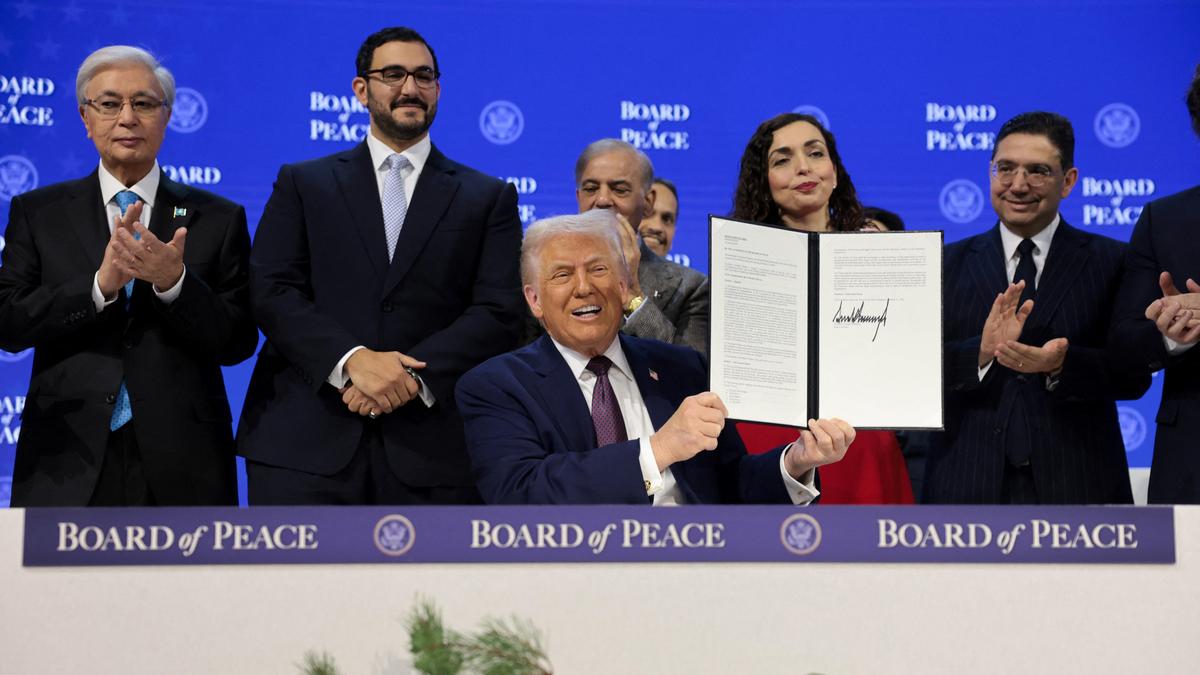
On January 22, 2026, U.S. President Donald Trump inaugurated his “Board of Peace” at the World Economic Forum in Davos, Switzerland. The stated aim of the board is to maintain a ceasefire in the ongoing Israeli-Hamas conflict and potentially rival the United Nations in broader peacekeeping efforts. However, the initiative has been met with skepticism, as many U.S. allies have declined to participate. The event included representatives from only 19 countries and the U.S., despite President Trump claiming 59 nations have signed on. Simultaneously, Ali Shaath, a former Palestinian Authority official, announced the imminent reopening of the Rafah border crossing under U.S. supervision.
Key Points:
- President Donald Trump launched his “Board of Peace” in Davos on January 22, 2026, with the goal of mediating peace in the Israeli-Hamas conflict.
- Key attendees included leaders from Kazakhstan, Bahrain, Pakistan, Kosovo, and Morocco.
- India and several other U.S. allies declined invitations to join the board.
- President Trump envisions the board potentially replacing some functions of the United Nations.
- Ali Shaath announced the reopening of the Rafah border crossing under U.S. supervision.
- 59 countries are claimed to have signed onto the board, but only representatives of 19 countries and the U.S. attended the event.
- The board’s charter outlines its mission to promote stability, restore governance, and secure peace in conflict-affected areas.
- Countries such as France, Norway, Slovenia, Sweden, and the United Kingdom have rejected the proposal.
Critical Analysis:
The creation of the Board of Peace is happening amidst a backdrop of declining support for Trump’s coalition. The historical context reveals rising tensions, and the initiative can be seen as an attempt by Trump to regain control and project strength on the global stage. This move directly challenges the established international order, particularly the role of the United Nations.
Key Takeaways:
- President Trump’s “Board of Peace” is a contentious initiative aimed at addressing the Israeli-Hamas conflict but lacks broad international support.
- The initiative highlights a potential shift in U.S. foreign policy towards unilateral action and a challenge to established international institutions.
- The board’s composition raises concerns about inclusivity and its effectiveness in achieving lasting peace.
- The reopening of the Rafah border crossing signifies a potential change in the management and governance of Gaza under U.S. supervision.
- The varying reactions from different countries underscore the complex geopolitical landscape surrounding the Israeli-Palestinian conflict.
Impact Analysis:
The “Board of Peace” has significant potential impacts on the global order and the Israeli-Palestinian conflict:
- Weakening of Multilateral Institutions: If successful, the board could undermine the authority and effectiveness of the United Nations and other international bodies, leading to a more fragmented and unpredictable global landscape.
- Shift in Regional Power Dynamics: The U.S.’s direct involvement in governing Gaza through the board and the Rafah crossing could alter the regional power balance, potentially marginalizing other key players like Egypt and the Palestinian Authority.
- Uncertainty in Peace Process: The lack of broad international support for the board could hinder its ability to achieve a lasting peace in the Israeli-Palestinian conflict. The exclusion of key stakeholders may further complicate negotiations and exacerbate existing tensions.
- Impact on U.S. Alliances: The initiative risks straining relationships with traditional U.S. allies who have opted not to participate, potentially leading to a realignment of global alliances.
- Future Conflicts: If the “Board of Peace” is successful in Gaza, it could establish a precedent for similar interventions in other conflict zones, potentially leading to further erosion of international norms and institutions.
 First Piper