
Sat Jan 24 19:46:01 UTC 2026: ### Coconut Farmers in Coimbatore Face Setbacks Amid Price Fluctuations
The Story:
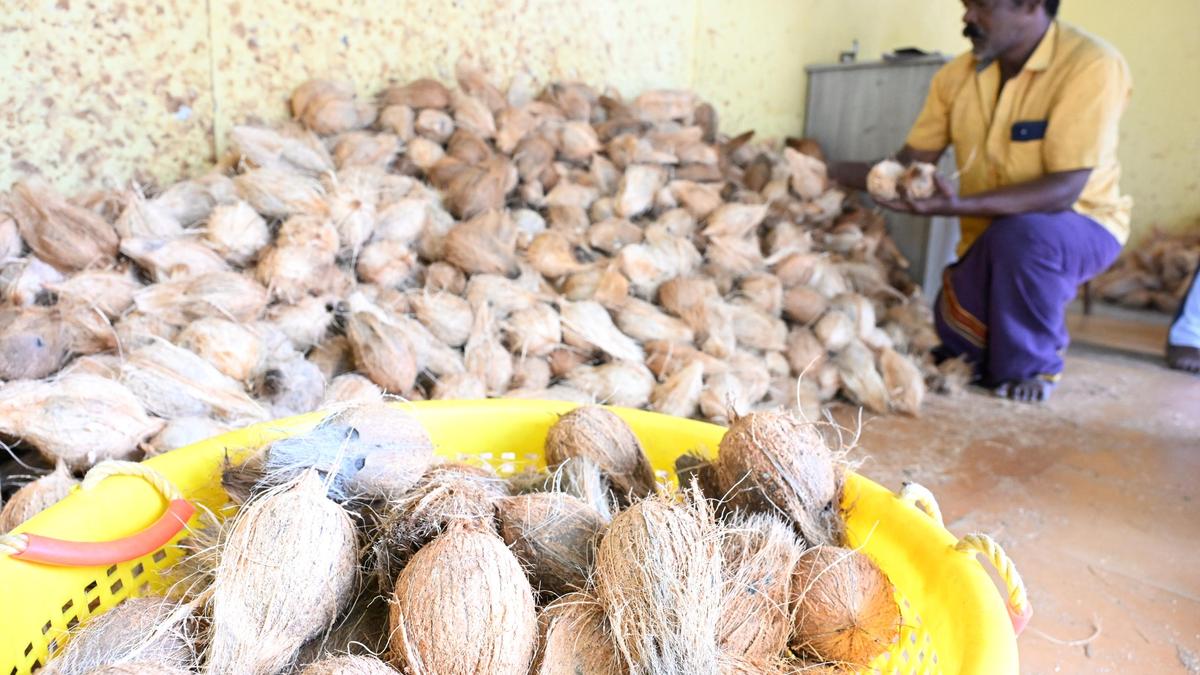
Coconut farmers in the Coimbatore region of India are reportedly struggling with fluctuating prices in the open market, despite relative stability in prices at ‘Uzhavar Sandhais’ (farmer’s markets). Farmers allege that middlemen are manipulating the demand-supply dynamics, leading to lower costs for coconuts and copra. An official from the Department of Agricultural Marketing and Agri Business confirmed a price decrease compared to two months prior, though noting that fluctuations are not unusual this time of year.
Key Points:
- Coconut farmers are experiencing price fluctuations in the open market.
- Prices at ‘Uzhavar Sandhais’ range between ₹50 and ₹60 per kg.
- Farmers blame middlemen for manipulating demand-supply dynamics.
- One coconut farmer, Jagadeesan from Udumalpet, claims there’s no reason for the price decrease given production issues.
- Officials from the Department of Agricultural Marketing and Agri Business acknowledge the price decrease.
- The report was published January 25, 2026.
Critical Analysis:
The historical context reveals a pattern of challenges faced by farmers in the region, including wildlife damage (January 24, 2026: Banana field ransacked by wild boars), irrigation disruptions (January 24, 2026: Disruption of irrigation canals), compensation delays (January 24, 2026: Delay in compensation for Walwandwadi lake project), and support for poultry farmer strikes (January 23, 2026: Strike for revision of rearing rate). The coconut price fluctuation issue is another symptom of the broader systemic problems affecting agricultural livelihoods in the region. These problems include market manipulation, infrastructure challenges (irrigation), and lack of adequate support from government agencies (wildlife management, compensation).
Key Takeaways:
- Farmers in the Coimbatore region face multifaceted challenges that extend beyond simple market fluctuations.
- Middlemen practices are perceived as a significant factor impacting farmers’ income.
- Government intervention and regulation may be necessary to stabilize prices and protect farmers’ interests.
- The broader agricultural sector is struggling, exemplified by the range of issues reported.
- Resilience through “Uzhavar Sandhais” show promise, but are not enough.
Impact Analysis:
The continuing struggles of farmers in Coimbatore, as evidenced by these reports, may lead to several long-term consequences:
- Economic hardship for farming communities: Fluctuating prices and external pressures can reduce income, leading to debt and potentially forcing farmers to abandon their livelihoods.
- Increased rural-urban migration: As farming becomes less viable, individuals may seek opportunities in urban centers, potentially straining urban resources and infrastructure.
- Food security concerns: Reduced agricultural output can impact regional and national food security, potentially leading to price increases and supply shortages for consumers.
- Social unrest: Frustration and anger among farmers can lead to protests and social unrest, requiring government intervention to address grievances.
- Policy changes: The ongoing challenges may prompt government to implement new policies aimed at supporting farmers, regulating markets, and investing in agricultural infrastructure.
 First Piper