
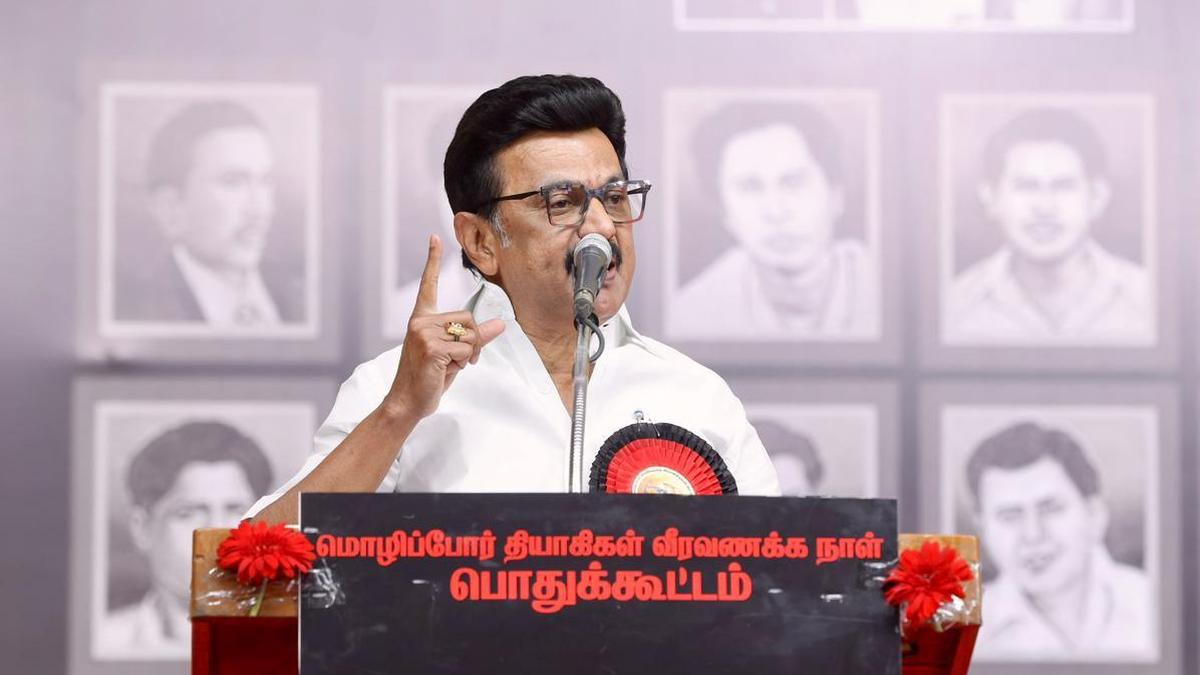
Sun Jan 25 16:51:39 UTC 2026: ### DMK Chief Stalin Declares 2026 Assembly Election an “Arya-Dravidian Battleground”
The Story:
DMK President and Chief Minister M.K. Stalin has framed the upcoming 2026 Tamil Nadu Assembly election as a decisive battle against forces attempting to undermine Tamil culture. Speaking at the Linguistic Martyrs’ Memorial Day event in Kancheepuram on January 25, 2026, Stalin accused the BJP-led central government of betraying Tamil Nadu’s interests and asserted the DMK’s commitment to defending Tamil language, soil, and pride against cultural invasion, specifically citing the imposition of Hindi. He criticized the AIADMK, aligning them with the BJP, and dismissed Prime Minister Narendra Modi’s promises as empty, referencing the BJP’s previous electoral defeats in the state.
Key Points:
- M.K. Stalin characterized the 2026 election as an “Arya-Dravidian battleground” against forces endangering Tamil culture.
- He accused the BJP-led central government of betraying Tamil Nadu and attempting a cultural invasion through the imposition of Hindi.
- Stalin criticized the AIADMK’s alleged subservience to the BJP, mocking their leaders.
- He dismissed Narendra Modi’s electoral promises, reminding the public of the BJP’s past failures in Tamil Nadu.
- Stalin addressed allegations of a drug menace in Tamil Nadu, shifting blame to BJP-ruled states like Gujarat and Maharashtra.
Critical Analysis:
The framing of the election as an “Arya-Dravidian battleground” is a deliberate strategy to consolidate DMK’s core support base and mobilize anti-BJP sentiment. Given the historical context of linguistic and cultural tensions in Tamil Nadu, this rhetoric seeks to resonate with voters who perceive Hindi imposition and the BJP’s policies as a threat to their identity. Stalin’s attack on the AIADMK as BJP “slaves” is aimed at weakening their alliance and preventing the NDA’s “double engine” model from gaining traction in the state. His response to Modi’s drug allegations showcases a defensive posture, attempting to deflect criticism by highlighting issues in BJP-governed states. The mention of the BJP setting up a committee to draft a manifesto for the West Bengal Assembly polls indicates that the BJP has a strategy of pushing their agenda and presence within regions of India.
Key Takeaways:
- The 2026 Tamil Nadu Assembly election is being shaped as a cultural and ideological conflict between the DMK and the BJP/AIADMK alliance.
- Language and cultural identity are potent political tools being used to mobilize voters.
- The DMK is attempting to portray the BJP as an external threat to Tamil Nadu’s interests and autonomy.
- Accusations of corruption and governance failures are being used by both sides to discredit each other.
- Stalin has set a tone that paints this election as a historical continuation of protecting Tamil culture against outside influence.
Impact Analysis:
The rhetoric employed by M.K. Stalin could have a significant impact on the political landscape of Tamil Nadu and potentially national politics. The escalation of the “Arya-Dravidian” narrative could further polarize the electorate, making cross-party alliances more challenging. A strong DMK victory could bolster regional parties’ resistance to the BJP’s national agenda. Conversely, a weak showing could empower the BJP to intensify its efforts to gain ground in the South. The outcome of this election will likely influence the broader debate on federalism, linguistic rights, and cultural autonomy in India, particularly as the BJP continues to push for wider recognition of Hindi. The results of this election are very likely to shape how Tamil Nadu views Indian Union relations in the future.
 First Piper