
Sun Jan 25 01:54:46 UTC 2026: ### Headline: EU and India Poised to Conclude FTA and Deepen Strategic Ties Amidst Global Uncertainty
The Story:
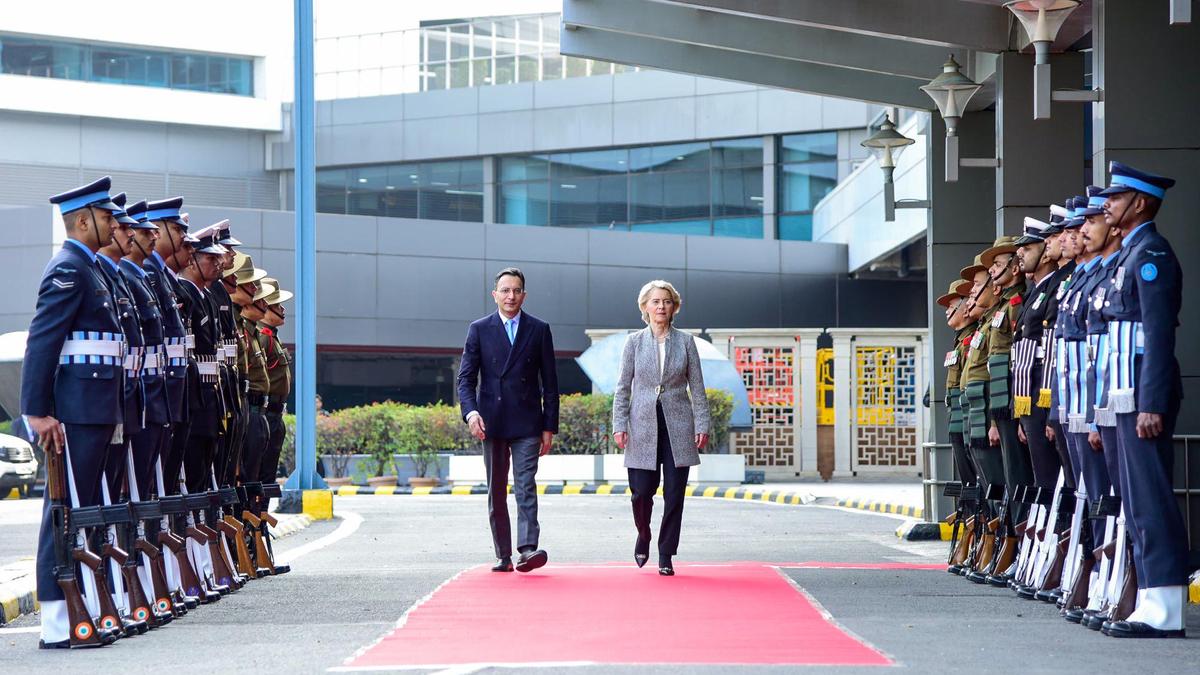
European Commission President Ursula von der Leyen has commenced her four-day visit to India ahead of the 16th EU-India Summit, scheduled for January 27, 2026. She and European Council President Antonio Costa will participate in the Republic Day celebrations as chief guests on January 26, 2026, and then engage in summit talks with Prime Minister Narendra Modi. The summit aims to finalize the long-awaited free trade agreement between India and the EU, establish a strategic defense partnership, and create a framework for the mobility of Indian professionals. The visit comes at a time of increasing global concerns related to the economic and security policies of the Trump administration.
Key Points:
- European Commission President Ursula von der Leyen is visiting India from January 24, 2026.
- European Council President Antonio Costa will arrive on January 25, 2026.
- Both EU leaders will be chief guests at India’s Republic Day celebrations on January 26, 2026.
- The 16th EU-India Summit is scheduled for January 27, 2026.
- The summit is expected to conclude a Free Trade Agreement (FTA), firm up a strategic defence partnership, and establish a framework for the mobility of Indian professionals.
- India’s total trade in goods with the EU was worth approximately $136 billion in the financial year 2024-25.
Critical Analysis:
The timing of this summit, as highlighted by the article, is crucial. The mention of “increasing global concerns over disruptions caused by the Trump administration’s economic and security policies” suggests that both India and the EU are seeking to solidify their strategic partnership as a counterweight to perceived instability or protectionist policies emanating from the United States under the Trump administration. The desire to establish a strategic defense partnership further underscores this motivation, indicating a move toward greater self-reliance and regional security cooperation, independent of traditional alliances.
Key Takeaways:
- The EU-India relationship is strengthening, driven by mutual economic and strategic interests.
- Global uncertainty, partly attributed to the Trump administration’s policies, is a significant catalyst for this strengthened partnership.
- The conclusion of the FTA will significantly boost trade between India and the EU.
- The strategic defense partnership signals a deeper level of cooperation beyond economics.
- Mobility of Indian professionals will be facilitated, enhancing people-to-people connections and knowledge exchange.
Impact Analysis:
The deepening ties between India and the EU will have significant long-term implications. The FTA is likely to reshape trade flows, potentially benefiting both economies through increased market access and reduced tariffs. The strategic defense partnership could lead to joint military exercises, technology transfer, and coordinated responses to regional security challenges. The mobility framework for Indian professionals will likely boost the Indian IT sector and contribute to innovation in both regions. This alignment also creates a powerful geopolitical bloc, capable of influencing global policy and promoting a multilateral world order, potentially acting as a counterbalance to unilateral actions by other major powers.
 First Piper