
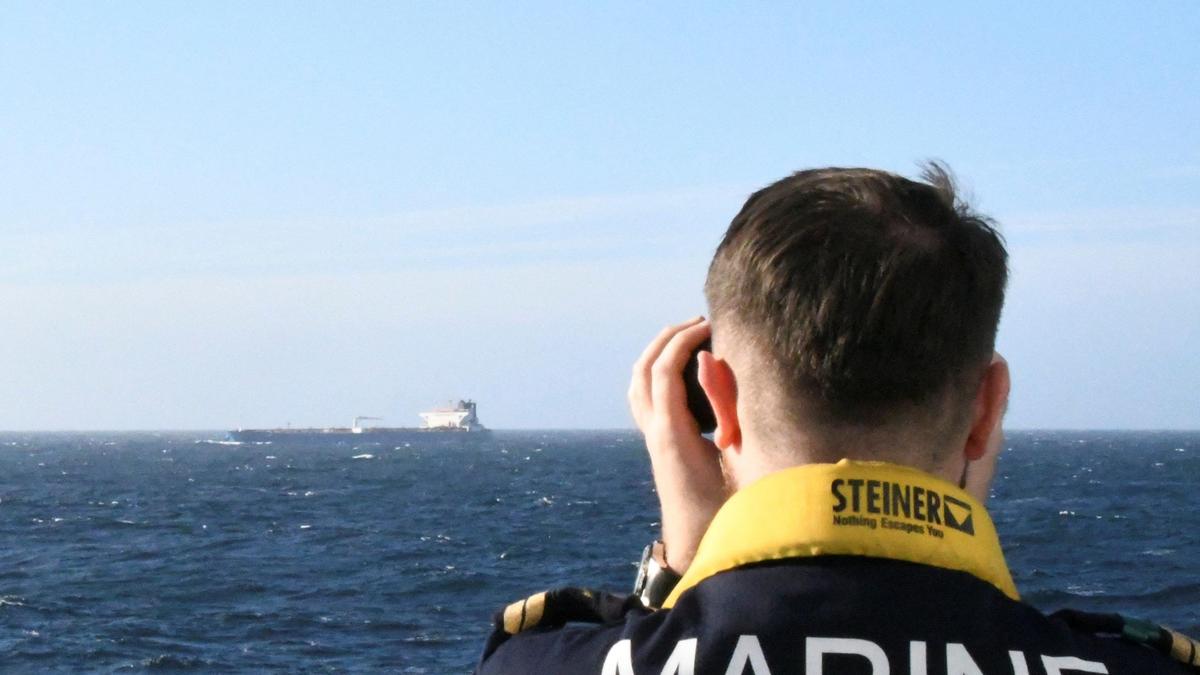
Fri Jan 23 22:20:56 UTC 2026: Headline: French Navy Intercepts Tanker “Grinch” Suspected of Sanctions Evasion
The Story: On January 22, 2026, the French Navy, supported by allies, intercepted the oil tanker “Grinch” in the Alboran Sea, between Spain and Morocco. The tanker, which departed from Murmansk, Russia, is suspected of being part of Russia’s “shadow fleet,” a network used to circumvent international sanctions. The “Grinch” is expected to arrive at the French port of Marseille-Fos on January 24, 2026, where it will be further investigated.
Key Points:
- The French Navy intercepted the tanker “Grinch” on January 22, 2026.
- The “Grinch” departed from Murmansk, Russia.
- The tanker is suspected of being part of Russia’s “shadow fleet,” which helps countries like Russia and Iran evade sanctions.
- The “Grinch” was flying a Comoros flag, according to ship tracking websites.
- French President Emmanuel Macron announced the interception.
- Another ship called \”Carl\” with the same registration number is sanctioned by the United States and European Union.
- This is the second such boarding in recent months; in late September, France detained the Russian-linked ship “Boracay.”
Critical Analysis:
The interception of the “Grinch” occurs within a broader context of heightened geopolitical tensions and increased enforcement of international sanctions against Russia and Iran. The timing is significant, coinciding with new U.S. sanctions specifically targeting Iran’s “shadow fleet” due to its role in suppressing protests. Furthermore, ongoing Ukraine-Russia-US talks in Abu Dhabi suggest a complex web of negotiations and power dynamics influencing international maritime security. The drone attack on an oil depot in western Russia could indicate attempts to disrupt Russia’s energy infrastructure, further complicating the situation.
Key Takeaways:
- European nations are actively working to enforce sanctions against Russia, including intercepting vessels suspected of sanctions evasion.
- The “shadow fleet” phenomenon continues to be a significant challenge to international sanctions regimes.
- The interception is likely to further strain relations between France and Russia.
- The event highlights the complex intersection of energy security, international sanctions, and geopolitical conflicts.
- There is increasing cooperation among allied nations in monitoring and interdicting vessels involved in illicit activities.
Impact Analysis:
The interception of the “Grinch” signals a more assertive approach by European nations in enforcing sanctions and combating illicit maritime activities. This is likely to lead to increased scrutiny of vessels operating in sensitive regions and potentially higher costs for those involved in sanctions evasion. Over the long term, these actions could compel Russia and Iran to seek alternative strategies for circumventing sanctions or to engage in diplomatic efforts to alleviate them. This interception serves as a deterrent to future sanctions violations, potentially reshaping maritime trade routes and energy flows.
 First Piper