
Fri Jan 23 17:22:52 UTC 2026: ## India and EU Aim to Finalize Trade Agreement Ahead of Summit Amidst Geopolitical Shifts
The Story:
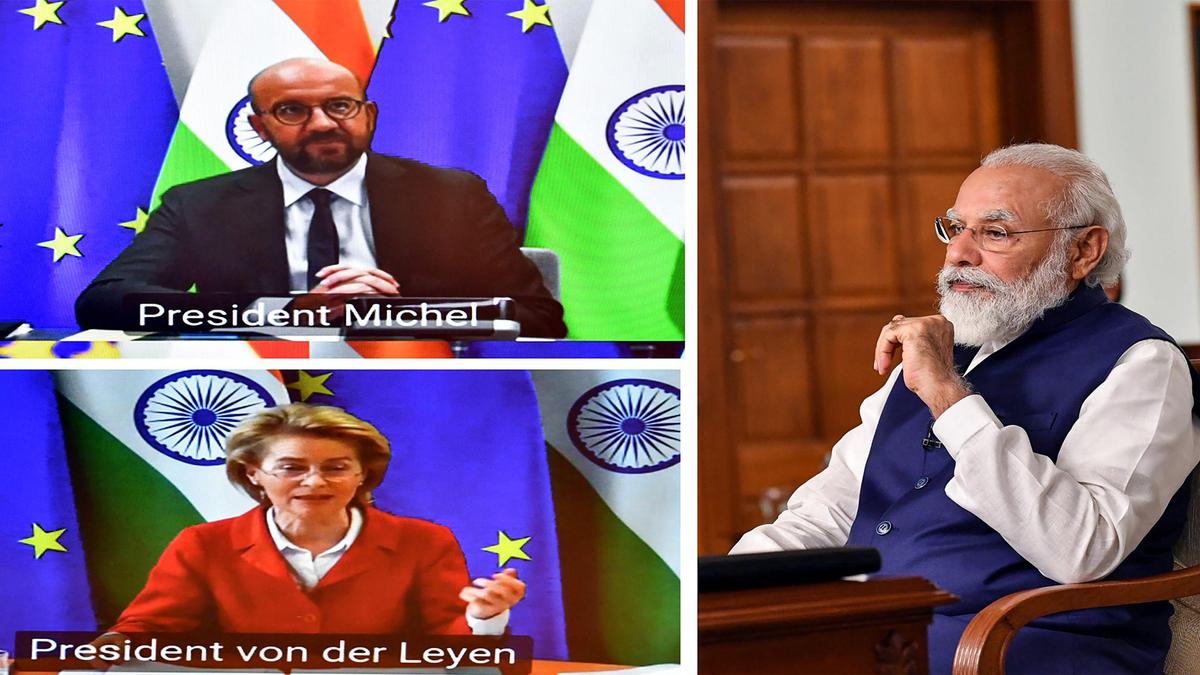
India and the European Union are intensifying efforts to finalize a comprehensive trade agreement before the 16th EU-India Summit scheduled for January 27, 2026. The agreement, which has been under negotiation for over two decades, faces challenges related to agricultural sensitivities, carbon border taxes, service delivery, and non-tariff barriers. In addition to the trade agreement, discussions will encompass a new Defence and Security partnership, an information security agreement, and a Memorandum of Understanding on mobility. This intensified engagement occurs against a backdrop of shifting global dynamics, including strained transatlantic relations and geopolitical tensions in Europe.
Key Points:
- The 16th EU-India Summit is scheduled for January 27, 2026, focusing on a ‘Free Trade’ Agreement (FTA).
- Sensitive agricultural issues are reportedly “off the table” for both sides.
- A Defence and Security agreement is planned, marking only the third such comprehensive agreement for the EU in Asia, after Japan and South Korea.
- The EU has raised concerns about India’s relationship with Russia, particularly regarding military exercises and oil trade.
- A Memorandum of Understanding (MoU) on mobility will address the movement of highly skilled workers, students, researchers, and seasonal workers.
- Feasibility studies are planned for the India Middle East Europe Economic (IMEC) Corridor, which faced setbacks due to the Israel-Gaza conflict.
- Both India and the EU are motivated by the disarray in their trading relationships with the U.S. under the Donald Trump administration and the EU looking to de-risk from China.
Critical Analysis:
The renewed push for the India-EU FTA, coupled with the Defence and Security agreement, suggests a strategic realignment driven by shared concerns over geopolitical instability and economic pressures. The EU’s desire to de-risk from China and diversify its partnerships, alongside India’s need to mitigate the impact of U.S. tariffs, are key drivers for this accelerated engagement. Despite differing views on Russia, the willingness to engage in security dialogue highlights a commitment to finding common ground.
Key Takeaways:
- The India-EU relationship is deepening beyond trade, encompassing security and mobility.
- Geopolitical factors, including strained relations with the U.S. and concerns about Russia and China, are influencing the partnership.
- Negotiations remain complex, with sensitive issues requiring careful handling.
- The potential FTA could significantly impact trade relations between India and the EU, one of India’s largest trade partners.
- The new agreements indicate a long-term strategic partnership, not merely a transactional arrangement.
Impact Analysis:
- Economic: The FTA could boost bilateral trade significantly, enhancing market access and reducing trade barriers for both sides. It will establish India as an alternative production hub.
- Geopolitical: A stronger India-EU partnership could provide a counterbalance to the influence of the U.S. and China in the global arena. This may see India leaning towards the west in a more formal fashion.
- Security: The Defence and Security agreement could lead to increased cooperation in defense technology and intelligence sharing, enhancing regional stability. This may increase EU involvement in the indo-pacific.
- Social: The mobility agreement could facilitate the exchange of skilled workers and students, promoting cultural understanding and economic growth. India may get access to critical research being done in Europe.
 First Piper