
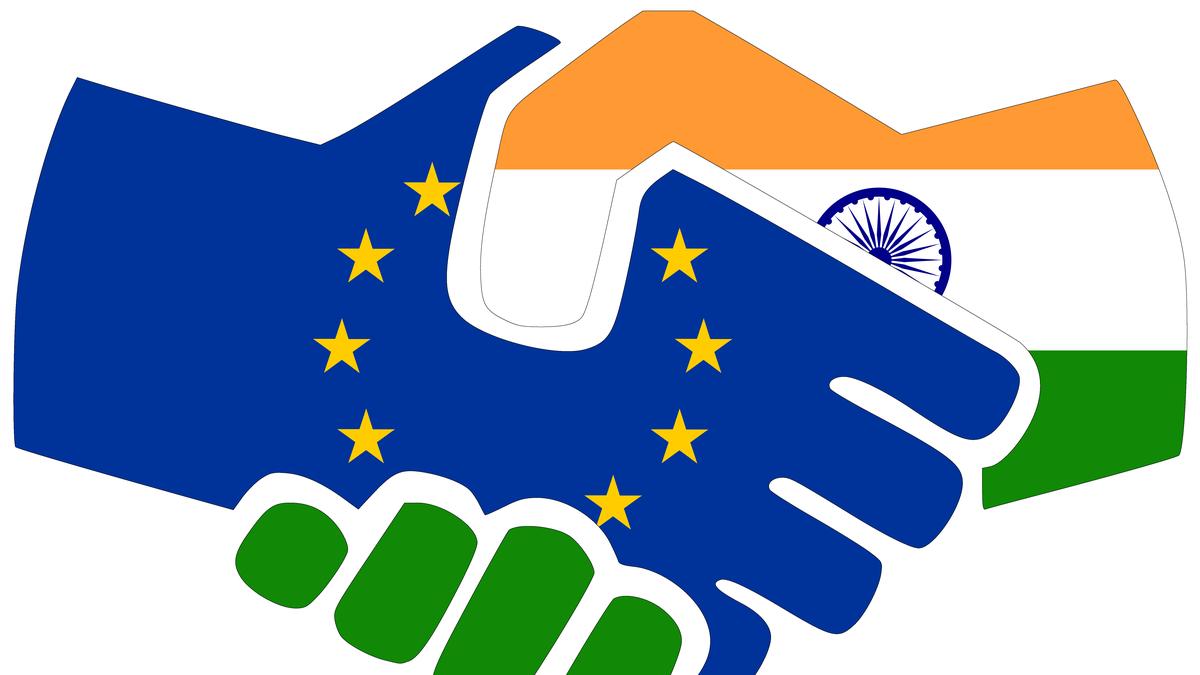
Fri Jan 23 18:38:00 UTC 2026: # EU and India Forge Stronger Ties Amidst Global Realignment
The Story
As India prepares to host European Commission President Ursula von der Leyen and European Council President António Luís Santos da Costa for the 77th Republic Day on January 26, 2026, and the 16th India–EU Summit on January 27, 2026, the deepening relationship between the EU and India takes center stage. This visit signifies a strategic alignment of intent, driven by a need for strategic autonomy amidst global uncertainties. The strengthening ties aim to address unrealized potential in trade, technology, and defense, with ongoing negotiations for a Free Trade Agreement (FTA) and a proposed Security and Defence Partnership. The backdrop includes strained relations between India and the United States due to tariffs and criticisms related to the Russia-Ukraine conflict.
Key Points
- High-level visit: Presidents Ursula von der Leyen and António Luís Santos da Costa to attend India’s 77th Republic Day and co-chair the 16th India-EU Summit.
- FTA negotiations: India and the EU are nearing completion of a Free Trade Agreement (FTA) initiated in 2007, aiming to boost trade in textiles, pharmaceuticals, automobiles, and digital services.
- Carbon Border Adjustment Mechanism (CBAM): A point of contention is the EU’s CBAM, which India views as a non-tariff barrier.
- Security and Defence Partnership: The EU proposes a Security and Defence Partnership with India, similar to those with Japan and South Korea, focusing on defence market access and co-production of equipment.
- Strategic Autonomy: Both India and the EU seek strategic autonomy due to unpredictability from the US and assertiveness from China.
Critical Analysis
This moment shows that India, finding itself at odds with the US under a new administration possibly, seeks to diversify its strategic partnerships. This aligns with the long-term trend of India seeking a multi-aligned foreign policy and reducing dependence on any single power. The EU, facing its own challenges with dependence on Russian energy and concerns about Chinese economic influence, also sees value in a stronger relationship with India. The related historical contexts reinforces this as the EU wants closer ties with India and PM Modi looks to reform India.
Key Takeaways
- India-EU relations are intensifying due to shifting geopolitical landscapes and mutual interests in trade, security, and strategic autonomy.
- The FTA holds significant potential for economic growth but faces challenges related to the EU’s Carbon Border Adjustment Mechanism (CBAM).
- A Security and Defence Partnership would mark a substantial upgrade in the India-EU relationship, fostering cooperation in defense manufacturing and technology.
- Both India and the EU view this partnership as a model for other nations seeking alternative alliances in a multipolar world.
- The leaders consider this Free Trade Agreement, the ‘mother of all deals’
Impact Analysis
The strengthened India-EU partnership could have long-term implications for global trade, security, and multilateralism. A successful FTA and Security and Defence Partnership would create new economic opportunities and enhance security cooperation in the Indian Ocean region. More broadly, this alignment could contribute to a more balanced and resilient global order, reducing over-reliance on traditional powers and fostering a multipolar system where sovereign choices are respected. The success of this partnership will depend on overcoming existing challenges, such as the CBAM issue and bureaucratic hurdles, and realizing the full potential of cooperation in areas such as technology, climate change, and digital governance.
 First Piper