
Thu Jan 22 16:09:27 UTC 2026: # Rohingya Refugee Camp Fire Exposes Humanitarian Funding Crisis in Cox’s Bazar
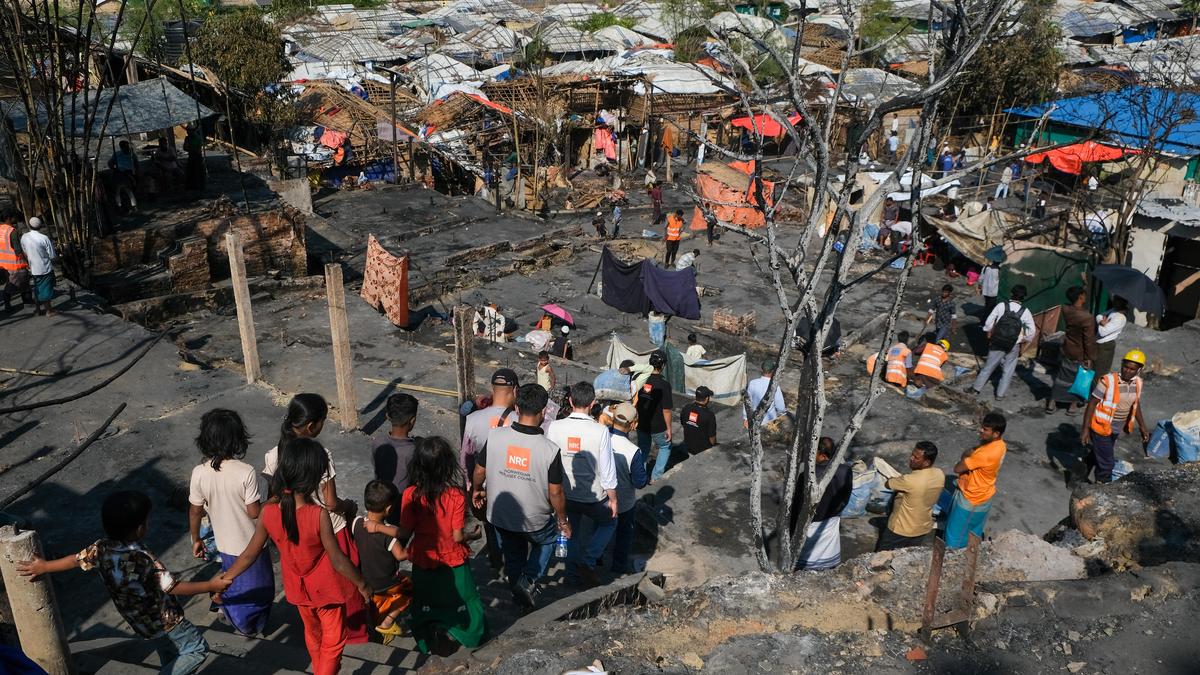
The Story: A massive fire ripped through Camp 16, a Rohingya refugee camp in Cox’s Bazar, Bangladesh, on January 20, 2026, displacing over 2,000 people and destroying hundreds of makeshift homes. The blaze, which took firefighters three hours to control, highlights the dire conditions within the overcrowded camps and underscores the critical need for increased humanitarian aid. Relief agencies are calling for urgent funding to build safer housing and provide emergency assistance to the affected population, already struggling to survive.
Key Points:
- A fire in Camp 16 in Cox’s Bazar on January 20, 2026, destroyed 335 shelters and damaged 72 more.
- Over 2,000 Rohingya refugees were displaced by the fire.
- The fire also damaged water and sanitation points, 11 learning centers, and camp infrastructure.
- No fatalities were reported, but many lost all possessions, including vital documents.
- Humanitarian organizations, including the IOM and Norwegian Refugee Council, are providing emergency aid.
- Plans to build 50,000 semi-permanent shelters were shelved due to aid cuts announced in January 2025.
- The US and several European countries have significantly reduced international aid, exacerbating the funding crisis.
- In 2025, only about half the funds needed for the Rohingya response were received, resulting in a funding gap of USD 466.6 million.
- Between May 2018 and December 2025, there have been 2,425 fires in the camps, affecting over 100,000 people.
Key Takeaways:
- The fire in Camp 16 is a direct consequence of inadequate housing conditions and overcrowding in the Rohingya refugee camps.
- Significant cuts in international aid have severely hampered efforts to improve living conditions and mitigate fire risks.
- The lack of funding has forced the shelving of crucial projects, such as the construction of semi-permanent shelters, leaving refugees vulnerable.
- Urgent action is needed to increase funding and resume the construction of safer housing to prevent future disasters.
- The international community’s failure to adequately support the Rohingya refugee response is creating a recurring cycle of displacement and suffering.
Impact Analysis:
The fire and the underlying funding crisis have long-term implications for the Rohingya refugees and the host community in Bangladesh:
- Increased Vulnerability: Displaced refugees are more susceptible to disease, exploitation, and other protection risks.
- Strain on Resources: The humanitarian crisis places a significant strain on already limited resources in Bangladesh.
- Erosion of Trust: The lack of adequate support can erode trust between refugees and aid organizations, hindering future assistance efforts.
- Regional Instability: Prolonged displacement and desperation can contribute to regional instability and potentially lead to radicalization.
- Reputational Damage: The international community’s failure to adequately address the crisis damages its reputation and undermines efforts to promote human rights and humanitarian principles.
 First Piper