
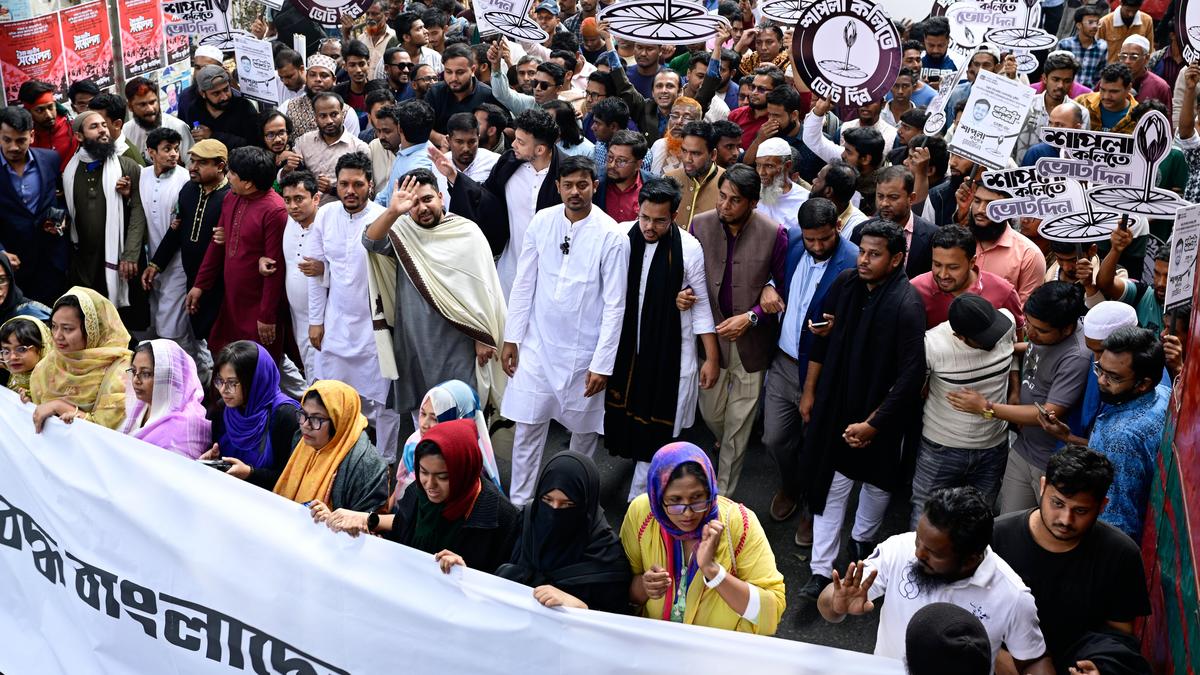
Thu Jan 22 07:01:10 UTC 2026: # Bangladesh Gears Up for Historic Election Amidst Political Turmoil
The Story:
Campaigning has officially begun for Bangladesh’s national elections scheduled for February 12, 2026. This election is particularly significant as it marks the first since the 2024 uprising that led to the ousting of longtime Prime Minister Sheikh Hasina. The election will be held under an interim government led by Nobel laureate Muhammad Yunus. While Yunus has pledged a free and fair election, the banning of Hasina’s Awami League party raises concerns. Voters will also decide on proposed political reforms enshrined in a National Charter.
The political landscape is complex, with the Awami League excluded and a 10-party alliance led by Jamaat-e-Islami seeking to expand its influence. Tarique Rahman, chairman of the Bangladesh Nationalist Party (BNP), is a leading contender for Prime Minister after returning from a 17-year exile. The election will include a referendum on a national charter aimed at reforming the political system.
Key Points:
- Bangladesh’s national elections are scheduled for February 12, 2026, the first since the 2024 uprising.
- The election is being held under an interim government led by Muhammad Yunus.
- Sheikh Hasina’s Awami League party has been banned from participating.
- A 10-party alliance led by Jamaat-e-Islami is seeking to expand its influence.
- Tarique Rahman, BNP chairman, is a leading contender for Prime Minister.
- Voters will decide on a national charter intended to bring about political reforms.
- The “July National Charter” seeks to bring checks and balances to avoid authoritarian administrations.
Key Takeaways:
- Bangladesh is undergoing a period of significant political transition following the ouster of Sheikh Hasina in 2024.
- The exclusion of the Awami League casts a shadow on the fairness and inclusivity of the upcoming elections.
- The rise of Jamaat-e-Islami and the return of Tarique Rahman signal a potential shift in the country’s political alignment.
- The referendum on the national charter represents a crucial juncture for reforming Bangladesh’s political system and preventing future authoritarianism.
- The election’s outcome will significantly shape the future direction of Bangladesh and its democratic institutions.
 First Piper