
Thu Jan 22 03:57:35 UTC 2026: ### Trump’s “Board of Peace” Launches Amidst Geopolitical Maneuvering at Davos
The Story:
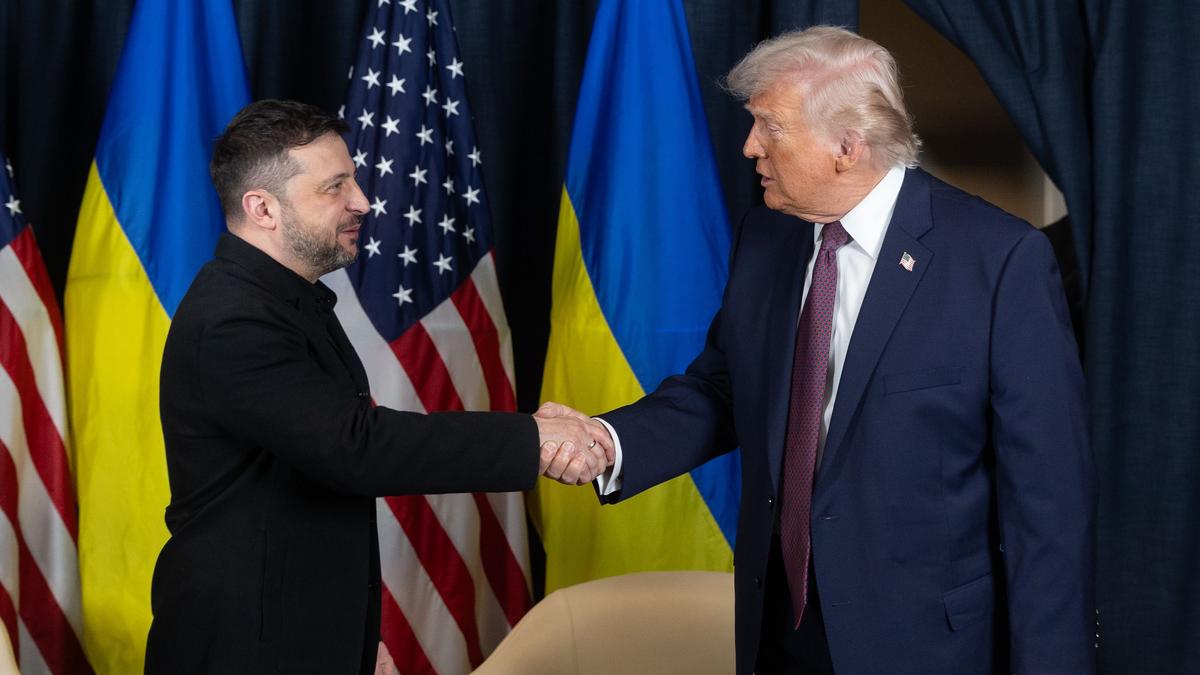
At the World Economic Forum in Davos on January 22, 2026, U.S. President Donald Trump formally launched his “Board of Peace,” a controversial body aimed at resolving international conflicts. Simultaneously, U.S. officials unveiled plans for a “New Gaza,” envisioning a futuristic resort on the Palestinian territory. The “Board of Peace” has garnered a mixed reception, with countries like Argentina, Armenia, and the UAE accepting invitations while others, including China, Germany, and Russia, remain non-committal. Ukrainian President Volodymyr Zelenskyy used the forum to criticize Europe’s response to the U.S.-Greenland dispute and to discuss security guarantees for Ukraine with Trump.
Key Points:
* Trump signed the charter for the “Board of Peace,” billing it as a body for resolving international conflicts.
* The U.S. presented a vision for a “New Gaza,” a resort to be built in three years.
* Countries like Argentina, Armenia, Bahrain, Belarus, and Hungary have accepted invitations to join the “Board of Peace.”
* Ukraine’s Zelenskyy criticized Europe’s response to the U.S.-Greenland dispute, advocating for stronger European leadership.
* Zelenskyy and Trump discussed security guarantees for Ukraine and plans for post-war recovery.
* Trump is seeking increased U.S. control over Greenland, citing national and international security concerns.
Critical Analysis:
The timing of these events suggests a multi-pronged U.S. strategy to exert influence on the global stage. The “Board of Peace,” while presented as a conflict-resolution body, may also serve as a tool to consolidate alliances and exert leverage on participating nations. The “New Gaza” proposal, while ambitious, could be seen as a means of securing U.S. interests in the region and potentially influencing the Israeli-Palestinian conflict. Trump’s pursuit of Greenland raises concerns about U.S. expansionism and its impact on transatlantic relations, even after backing down from tariffs on European allies supporting Denmark in this instance. Zelenskyy’s statements highlight the increasing pressure on Europe to assume a greater role in global security, particularly as U.S. focus potentially shifts elsewhere.
Key Takeaways:
* The U.S. is actively reshaping its role in international diplomacy under President Trump, prioritizing bilateral relationships and creating new platforms like the “Board of Peace.”
* Geopolitical tensions surrounding Greenland are escalating, with implications for Arctic security and NATO’s role in the region.
* The future of Gaza remains uncertain, with U.S. proposals for redevelopment intertwined with political considerations.
* Ukraine is seeking stronger security guarantees and exploring avenues for peace negotiations amid ongoing conflict with Russia.
* Europe’s role in global affairs is being challenged, particularly in the context of U.S. foreign policy shifts and regional conflicts.
Impact Analysis:
The unfolding events have significant long-term implications. The “Board of Peace” could redefine international conflict resolution, potentially bypassing traditional organizations like the UN. The “New Gaza” project, if realized, could reshape the geopolitical landscape of the Middle East. The Greenland dispute has the potential to strain transatlantic relations and alter the balance of power in the Arctic. The outcome of the Ukrainian conflict will continue to influence European security and the relationship between the U.S. and Russia. These developments collectively point towards a reshaping of the global order, with the U.S. seeking to assert its dominance and other nations adapting to the changing dynamics.
 First Piper