
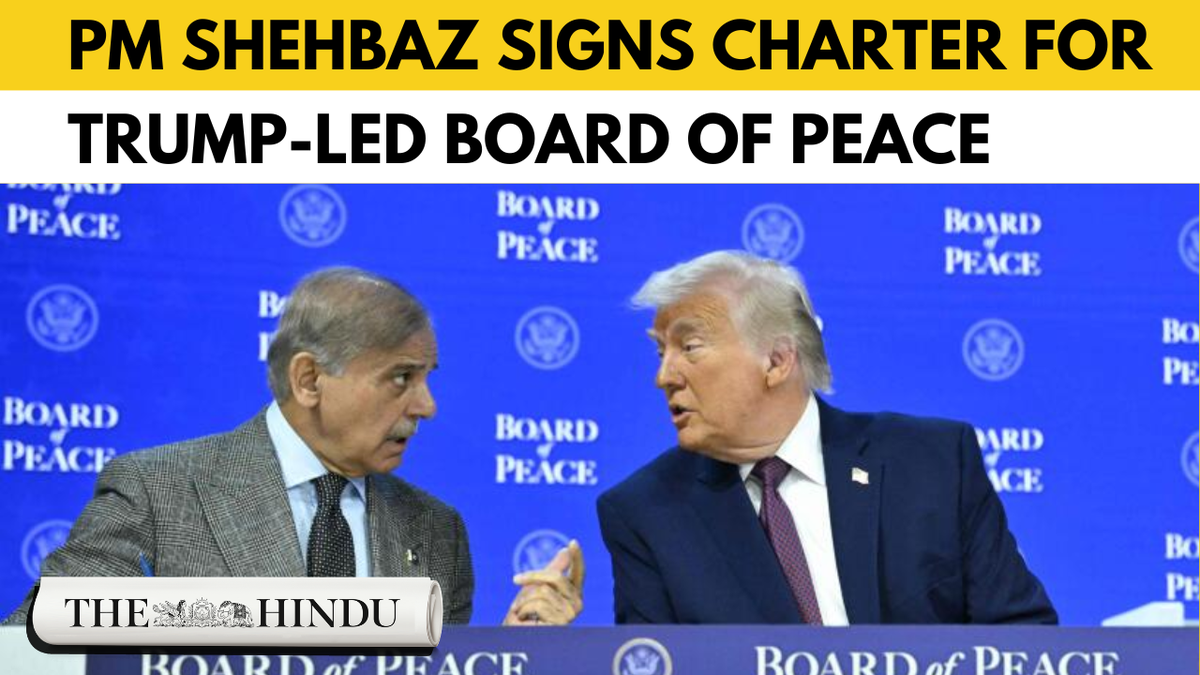
Thu Jan 22 14:26:41 UTC 2026: ### Headline: Pakistan Joins Trump-Led Board of Peace Initiative with $1 Billion Commitment
The Story:
Pakistan has officially committed to the Trump-led Board of Peace initiative, an organization focused on post-conflict governance and reconstruction. The announcement, made on January 22, 2026, highlights the financial terms of participation, particularly the reported $1 billion contribution required for permanent membership. This development places Pakistan within the framework of international efforts, seemingly centered around a U.S.-led vision, to stabilize regions affected by conflict.
Key Points:
- Pakistan has committed to the Trump-led Board of Peace initiative.
- The Board of Peace aims to oversee post-conflict governance and reconstruction.
- Permanent membership reportedly requires a $1 billion contribution.
- The news was reported on January 22, 2026.
Critical Analysis:
The context reveals a pattern of the Trump administration actively shaping post-conflict scenarios, exemplified by the “Imperial agenda” in Gaza. Simultaneously, Trump is accusing NATO allies of shirking responsibility in Afghanistan. The Board of Peace initiative could be interpreted as an effort to centralize control over reconstruction efforts, potentially leveraging financial incentives to secure participation from countries like Pakistan, while potentially sidelining traditional allies. The $1 billion entry fee suggests a deliberate strategy to establish U.S. influence and control.
Key Takeaways:
- The Trump-led Board of Peace appears to be a significant vehicle for shaping post-conflict landscapes.
- Pakistan’s financial commitment suggests a strategic alignment, likely driven by economic or geopolitical considerations.
- The U.S. appears to be seeking to establish a strong leadership role in global peace and reconstruction efforts, even if that means circumventing existing alliances.
- The hefty membership fee raises questions about accessibility and inclusivity within the initiative.
Impact Analysis:
This event series could have significant long-term implications:
- Geopolitical Realignment: Pakistan’s alignment with a U.S.-led initiative, potentially at the expense of other relationships (such as those with NATO or China), could reshape regional power dynamics.
- Economic Burden: The $1 billion contribution could strain Pakistan’s economy, potentially making it more reliant on the U.S. or other financial backers for future projects.
- Governance Model: The success or failure of the Board of Peace initiative will set a precedent for future post-conflict governance models, either reinforcing a centralized, U.S.-influenced approach or highlighting its limitations.
- Future Conflicts: The initiative’s effectiveness in achieving lasting peace will influence how international interventions are viewed and approached in future conflicts.
 First Piper