
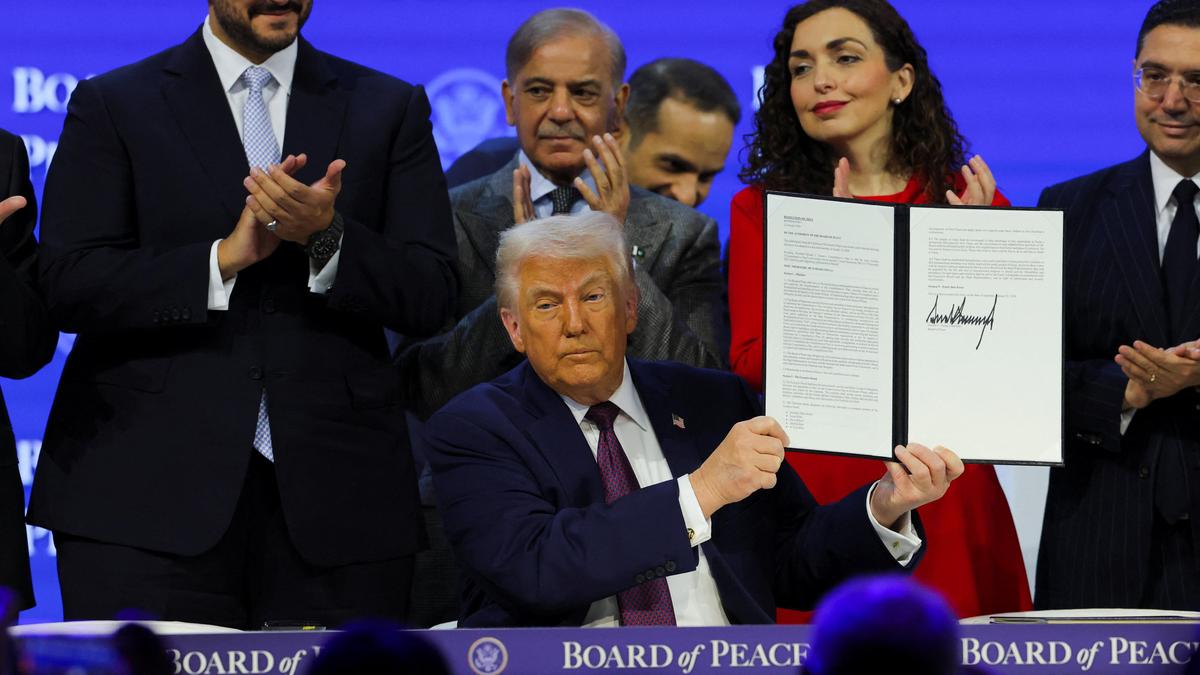
Thu Jan 22 11:14:24 UTC 2026: ### Trump Launches “Board of Peace” Amidst Controversy at Davos
The Story:
U.S. President Donald Trump officially launched the “Board of Peace” initiative at the World Economic Forum in Davos, Switzerland, on January 22, 2026. This body, intended to resolve international conflicts, saw the signing of its founding charter by leaders and senior officials from 19 countries. While Trump presented the Board as a tool for global peace, particularly in the context of the Gaza conflict, its membership criteria, potential rivalry with the United Nations, and the inclusion of controversial figures like Russian President Vladimir Putin have drawn skepticism and criticism from key U.S. allies.
Key Points:
- U.S. President Donald Trump launched the “Board of Peace” in Davos on January 22, 2026.
- The Board’s founding charter was signed by representatives from 19 countries.
- The Board aims to resolve international conflicts, initially focusing on the Gaza situation.
- Membership requires a $1 billion contribution, raising concerns about a “pay to play” dynamic.
- Key allies like France and the United Kingdom have expressed skepticism, with the UK refusing to attend the launch ceremony.
- Vladimir Putin has been invited to join, but his participation remains uncertain.
- Benjamin Netanyahu has stated his intention to join the board.
- Trump stated that Hamas needs to disarm under the next phase of the Gaza ceasefire accord.
Critical Analysis:
The launch of the “Board of Peace” appears to be a direct response to President Trump’s perceived lack of recognition for his peacemaking efforts, particularly his failure to win the Nobel Peace Prize. The timing, amidst ongoing global conflicts and the backdrop of the Gaza war, positions Trump as a key player in international diplomacy. The inclusion of leaders with close ties to Trump, alongside the invitation to Putin, suggests an attempt to create an alternative power center, potentially challenging the established international order embodied by the UN. The “Imperial Agenda” mentioned in the related article further suggests this board could be used to promote US interests globally, rather than being a purely altruistic peace-making initiative.
Key Takeaways:
- The “Board of Peace” represents a potential shift in global diplomacy, with the U.S. under President Trump seeking to establish a parallel body to the United Nations.
- The Board’s financial requirements and controversial membership raise questions about its legitimacy and effectiveness.
- The initiative highlights the ongoing tensions between the U.S. and its traditional allies regarding foreign policy and international cooperation.
- The resolution of the Israeli-Palestinian conflict in Gaza continues to be a focal point of international efforts.
- The invitation and potential inclusion of Vladimir Putin indicates a willingness on the part of the Trump administration to engage with traditionally adversarial nations.
Impact Analysis:
The long-term impact of the “Board of Peace” remains uncertain. If it gains traction and effectively resolves conflicts, it could reshape the landscape of international diplomacy. However, its controversial nature and the skepticism from key U.S. allies could limit its effectiveness and further strain international relations. A fragmented international order, with competing peace initiatives, could lead to greater instability and difficulty in addressing global challenges. The success of the board hinges on its ability to overcome these challenges and establish itself as a credible and impartial mediator.
 First Piper