
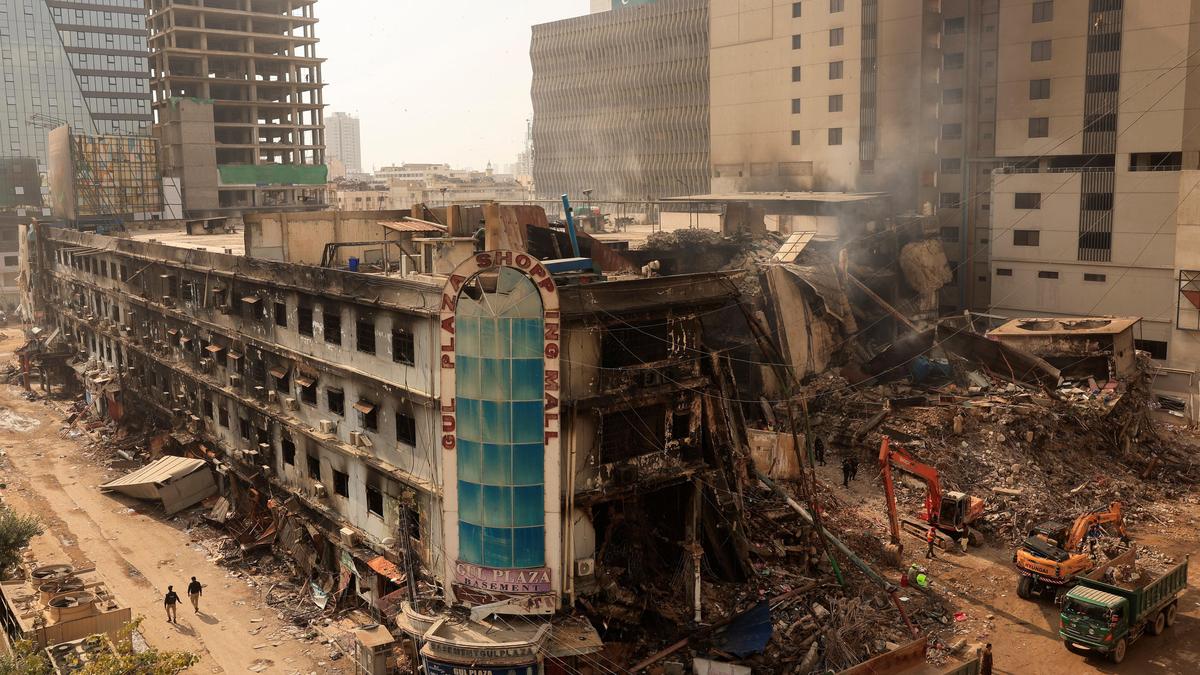
Fri Jan 23 05:58:28 UTC 2026: # Karachi Shopping Plaza Fire Claims Dozens of Lives, Exposing Systemic Safety Failures
The Story:
A devastating fire at the Gul Plaza shopping mall in Karachi, Pakistan, has claimed the lives of at least 67 people, as of January 23, 2026. The blaze, which began on Saturday, January 17, 2026, rapidly engulfed the plaza, fueled by flammable materials like cosmetics, clothing, and plastic goods. Rescue teams continue to search the wreckage, facing immense challenges in identifying the remains. The disaster has sparked outrage among family members of the missing, who accuse authorities of slow and inadequate rescue efforts.
The tragedy underscores Karachi’s history of deadly fires, often attributed to lax safety standards, weak regulatory enforcement, and illegal construction practices. The Sindh provincial government reports that around 70 people remain missing. The cause of the fire is currently under investigation, with a short circuit being a suspected trigger.
Key Points:
- The death toll in the Gul Plaza fire in Karachi has risen to 67 as of January 23, 2026.
- The fire started on January 17, 2026, and spread quickly due to flammable materials.
- Rescue teams are struggling to identify fragmented remains.
- Family members are criticizing the slow pace and effectiveness of rescue operations.
- The cause of the fire is under investigation, with a short circuit suspected.
- Karachi has a history of deadly fires due to poor safety standards and weak regulation.
Critical Analysis:
The frequency of fire-related incidents in the provided historical context, ranging from a plastic scrap godown fire in Dindigul to the Rohingya refugee camp fire in Cox’s Bazar, and including this Karachi shopping plaza fire, points to a broader systemic issue: inadequate fire safety regulations and enforcement across diverse regions and contexts. The mention of the Karachi fire toll rising and previous similar incidents in Karachi, particularly the garment factory fire in 2012, further suggests a deeply embedded and recurring problem within that specific locality.
Key Takeaways:
- The Karachi fire highlights the persistent issue of inadequate fire safety standards in Pakistan.
- The slow rescue efforts have fueled public distrust and anger toward government response.
- The presence of highly flammable goods significantly exacerbated the fire’s intensity and spread.
- Recurring incidents suggest a systemic failure in preventing and mitigating fire hazards.
- Families’ desperate search efforts show a need for improved disaster communication protocols and support.
Impact Analysis:
The Karachi shopping plaza fire is likely to have several long-term impacts. It could trigger increased scrutiny of building safety codes and enforcement mechanisms in Karachi and other major cities in Pakistan. Public outcry and pressure may lead to government reforms aimed at improving fire safety standards and disaster response protocols. Furthermore, the tragedy could prompt businesses and property owners to prioritize fire safety investments to prevent similar incidents in the future. The economic impact on the local business community and the psychological impact on the affected families and the broader community will also be significant. The political fallout could include increased pressure on the Sindh provincial government to address the underlying issues contributing to these disasters.
 First Piper