
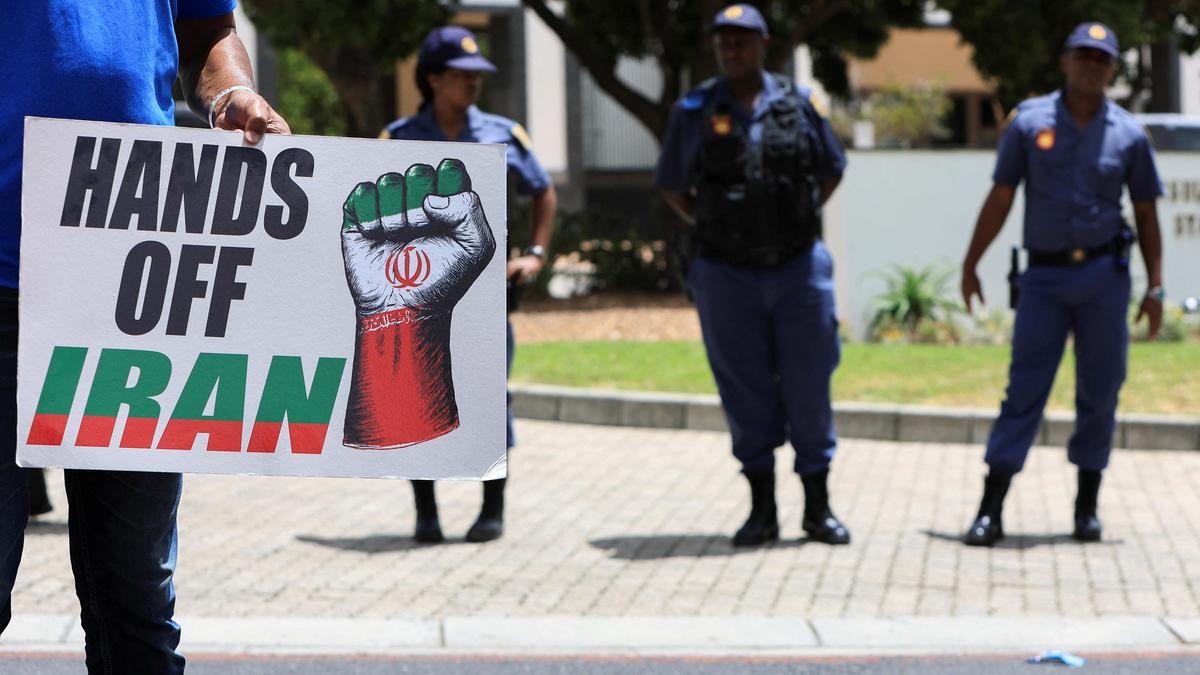
Fri Jan 23 05:14:41 UTC 2026: Headline: Iran Crackdown Death Toll Exceeds 5,000 Amid Rising U.S. Tensions
The Story:
A bloody crackdown on nationwide protests in Iran has resulted in a staggering death toll of at least 5,002 people as of January 23, 2026, according to the Human Rights Activists News Agency. The Iranian government, which has implemented a complete internet blackout for over two weeks, claims the death toll is lower, at 3,117, and blames “terrorists” for the unrest. Tensions are escalating as the United States, under President Donald Trump, moves an aircraft carrier group, the USS Abraham Lincoln strike group, closer to the Middle East, responding to the unrest.
Key Points:
- The death toll from the Iranian crackdown is at least 5,002, according to the Human Rights Activists News Agency.
- The Iranian government’s reported death toll is 3,117.
- Over 26,800 people have been detained in the crackdown.
- Iran has imposed a nationwide internet blackout since January 8, 2026.
- The U.S. is deploying the USS Abraham Lincoln carrier strike group to the region.
- President Trump warned of potential military action against Iran, referencing previous airstrikes.
- Iran’s attorney general has labeled some detainees as “mohareb” (enemies of God), a charge carrying the death penalty.
- Israel has launched a 12-day war against the Islamic Republic in June, which saw U.S. warplanes bomb Iranian nuclear sites.
Critical Analysis:
The escalation of the Iranian crackdown and the increased U.S. military presence indicate a dangerous trajectory. President Trump’s explicit threats and the historical precedent of the June attack on Iran’s nuclear facilities suggest a willingness to use military force. The “red lines” set by Trump regarding the killing of protestors and mass executions further increase pressure on the Iranian regime. The fact that Iran has been limiting journalists’ abilities locally to report on the aftermath shows the desire by Iran to cover up what is happening. The mention of the “mohareb” charge is particularly alarming given its past association with mass executions. The contextual report of “7x Retaliation’ If Iran Attacks, Says Israel’s Barkat, No Pak In Gaza:” indicates that Israel is prepared to retaliate heavily if provoked by Iran. It reveals the high degree of geopolitical tension in the region.
Key Takeaways:
- The situation in Iran is rapidly deteriorating, with significant human rights violations and a potential for further escalation.
- The US is signaling a willingness to use military force against Iran.
- The information blackout imposed by the Iranian government obscures the full extent of the crisis and hinders independent verification.
- Historical precedents, such as the 1988 executions and the recent attacks on nuclear sites, provide a context for the current threats.
- The labeling of detainees as “enemies of God” suggests the possibility of mass executions and increased brutality.
Impact Analysis:
The events described have far-reaching consequences. A military conflict between the U.S. and Iran could destabilize the entire Middle East region, leading to a protracted war with global implications. The human rights crisis in Iran could lead to international sanctions and diplomatic isolation. The suppression of dissent within Iran may further radicalize segments of the population, potentially leading to increased instability in the long term. Additionally, the internet blackout has broader implications for freedom of information and the ability of international organizations to monitor human rights abuses. Should mass executions occur, it would severely damage Iran’s international reputation and could lead to investigations for crimes against humanity.
 First Piper