
Fri Jan 23 03:16:14 UTC 2026: Headline: Trump Retaliates Against Canada, Rescinds Board of Peace Invitation After Carney’s Davos Criticism
The Story:
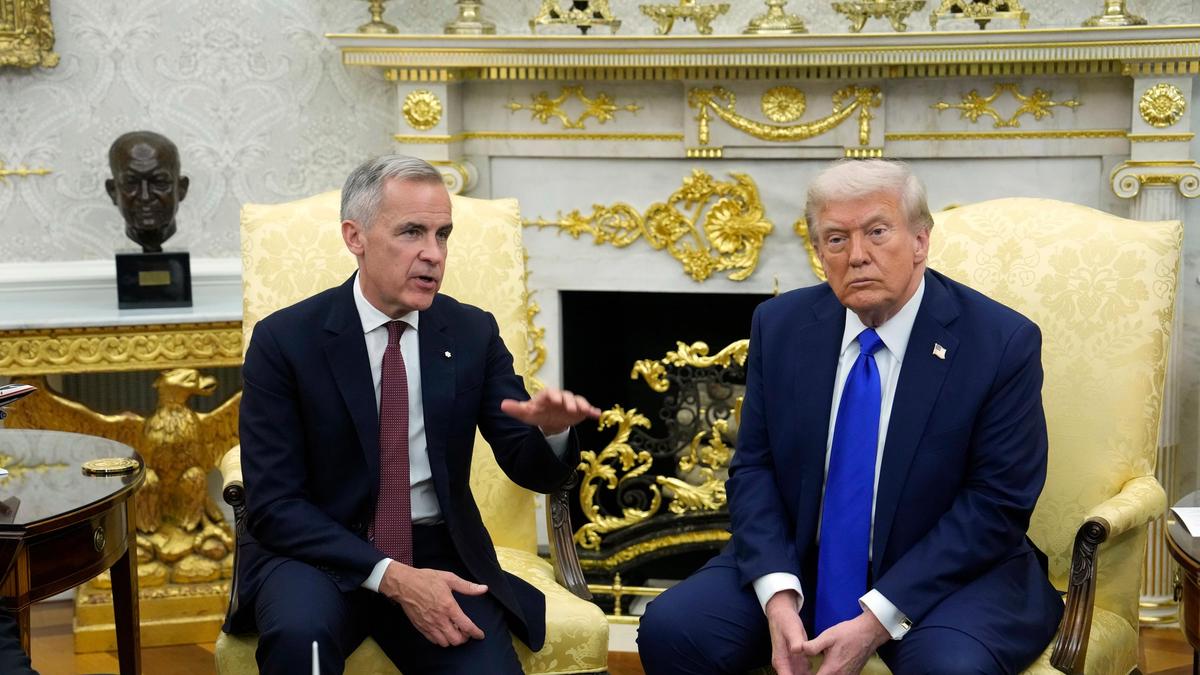
In a sharp escalation of tensions, U.S. President Donald Trump withdrew Canada’s invitation to join his newly-formed Board of Peace initiative on Thursday, January 22, 2026. The move came in direct response to Canadian Prime Minister Mark Carney’s critical remarks delivered at the World Economic Forum in Davos, where Carney denounced the use of economic integration as a weapon and tariffs as leverage. Trump publicly admonished Carney, asserting that Canada owes its prosperity to the United States.
The Board of Peace, intended to solidify a Gaza ceasefire, requires permanent members to contribute $1 billion each. While endorsed by a United Nations Security Council resolution within the context of Trump’s Gaza peace plan, several U.S. allies, including Britain, France, and Italy, have declined to participate.
Key Points:
* January 22, 2026: President Trump withdrew Canada’s invitation to the Board of Peace.
* Mark Carney’s Davos Speech: The withdrawal was triggered by Carney’s criticism of using economic integration as a weapon.
* Trump’s Retort: Trump stated Canada “lives because of the United States,” demanding gratitude.
* Board of Peace Funding: Permanent members are required to contribute $1 billion each.
* UN Endorsement: The board’s establishment was endorsed by a UN Security Council resolution, specifically within the context of Trump’s Gaza peace plan.
* Limited Allied Support: Major U.S. allies like Britain, France, and Italy have declined to join the board.
* Member Nations: Current members include Argentina, Bahrain, Morocco, Pakistan and Turkey.
Critical Analysis
This event underscores a pattern of President Trump reacting strongly to perceived slights or criticisms from other nations. Carney’s Davos speech, openly challenging what he sees as American hegemony, directly contradicted Trump’s vision of a U.S.-led global order, prompting a swift and public rebuke. This is further contextualized by the historical trend of the House voting to check Trump’s war powers, especially regarding actions in Venezuela. His decision to withdraw the invitation can be viewed as an extension of his protectionist and unilateralist policies, as well as a personal vendetta against those who oppose him.
Key Takeaways:
* Deteriorating US-Canada Relations: The incident signals a further strain in the relationship between the U.S. and Canada.
* Trump’s Unilateralism: The withdrawal reinforces Trump’s tendency towards unilateral action and his disregard for international norms when they conflict with his agenda.
* Questionable Board Legitimacy: The lack of participation from key U.S. allies casts doubt on the Board of Peace’s legitimacy and effectiveness.
* Economic Tensions as Foreign Policy Tools: Economic disputes are now heavily intertwined with foreign policy decisions, exemplified by Carney’s criticism and Trump’s reaction.
* Weakening of Rules-Based Order: The overall climate suggests a continuing erosion of the established rules-based international order.
Impact Analysis:
The immediate impact of this event is likely to be increased economic and diplomatic tension between the U.S. and Canada. In the long term, it could lead to Canada further diversifying its trade relationships, as suggested by the recent trade deal with China mentioned in the article, and seeking closer ties with other “middle powers” to counterbalance American influence. This incident could also embolden other nations to openly challenge U.S. foreign policy, particularly if they perceive it as acting against their national interests. Finally, the effectiveness of the Board of Peace is undermined by the absence of major global powers. This could mean a longer lasting, more unstable geopolitical reality.
 First Piper