
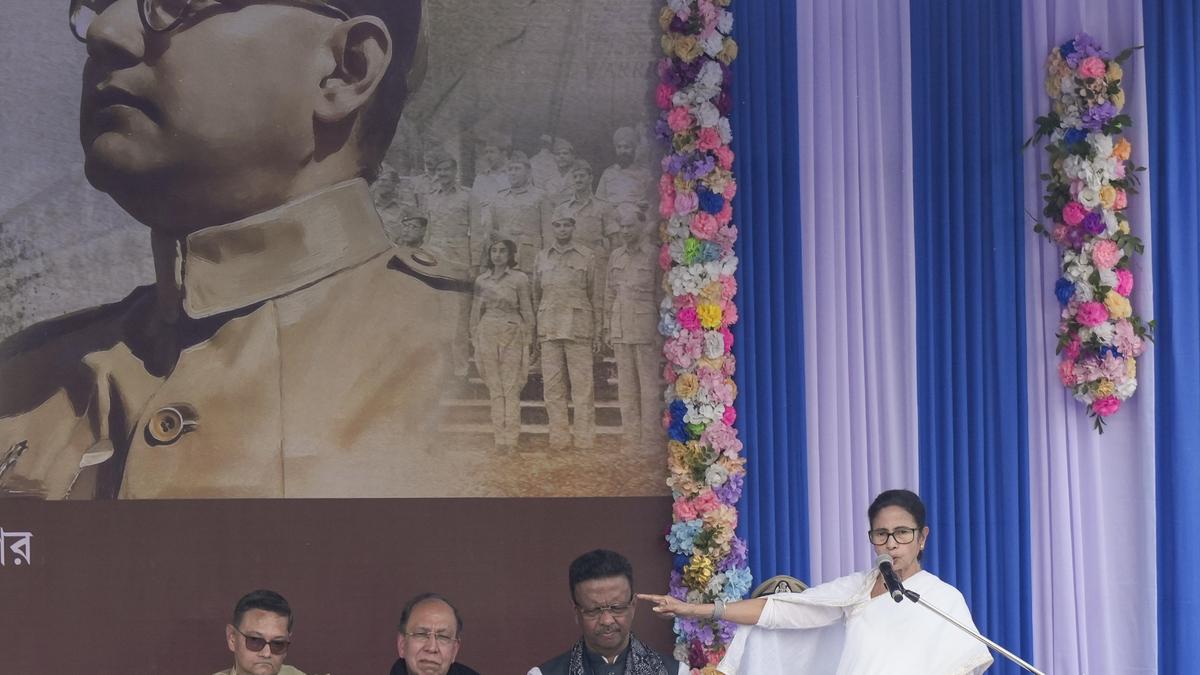
Fri Jan 23 11:57:37 UTC 2026: Headline: West Bengal Chief Minister Blames Election Commission and Central Government for Suicide Deaths During Special Intensive Revision
The Story:
West Bengal Chief Minister Mamata Banerjee has publicly accused the Election Commission of India (ECI) and the Central government of culpability in the deaths of over 110 people in West Bengal. She alleges that these deaths are suicides resulting from anxiety and distress caused by the ongoing Special Intensive Revision (SIR) of electoral rolls. Banerjee has been a vocal critic of the SIR, claiming it is a deliberate attempt to disenfranchise voters and disrespect national icons.
The Chief Minister has demanded that an FIR be filed against the ECI and that both the ECI and the Central government take responsibility for the deaths. Her comments come amidst increasing political tension in election-bound West Bengal, with the BJP accusing Banerjee of playing politics with national icons and attempting to exploit the situation.
Key Points:
* Mamata Banerjee claims 3-4 people are dying by suicide daily due to anxiety over the SIR.
* She asserts over 110 people have died and calls for an FIR against the ECI.
* Banerjee has written 5 letters to Chief Election Commissioner Gyanesh Kumar since November 2025 regarding concerns about the SIR.
* Approximately 58 lakh names have been deleted from electoral rolls after the first phase of the SIR, reducing the voter count to 7.08 crore from 7.66 crore.
* Around 1.36 crore notices have been issued to electors under the category of “logical discrepancies,” leading to violent protests.
* The BJP accuses Banerjee of political opportunism and claims they are “changing the history” by removing “colonial hangover”.
Critical Analysis:
The Chief Minister’s strong accusations against the ECI and the Central government are a clear indication of the heightened political stakes in West Bengal ahead of elections. The removal of a substantial number of voters from the electoral rolls is a contentious issue, and the Chief Minister is capitalizing on the public anxiety surrounding the SIR to position her party as the defender of the people. It is also likely that the Chief Minister’s accusations are meant to influence the Election Commission to be more lenient in the future.
Key Takeaways:
* The Special Intensive Revision of electoral rolls in West Bengal is a highly contested and politically charged process.
* Accusations of voter disenfranchisement and government culpability in citizen deaths create a volatile atmosphere ahead of elections.
* The political blame game between the Trinamool Congress and the BJP intensifies the existing tensions.
* The scale of the electoral roll revisions, with millions of names deleted, suggests potential systemic issues or deliberate manipulation.
* The involvement of the Election Commission in the controversy raises concerns about the impartiality and fairness of the electoral process.
Impact Analysis:
The ongoing controversy surrounding the Special Intensive Revision has the potential for significant long-term implications:
* Erosion of Public Trust: The accusations and counter-accusations could erode public trust in democratic institutions, including the Election Commission.
* Increased Political Polarization: The event is likely to deepen the existing political divide between the ruling Trinamool Congress and the opposition BJP, potentially leading to further instability.
* Legal Challenges: The controversy could lead to legal challenges regarding the validity of the electoral rolls and the fairness of the upcoming elections.
* Future Electoral Processes: The events may prompt a review and reform of the electoral roll revision process to ensure transparency and prevent disenfranchisement.
* Impact on Election Outcome: The redrawing of electoral maps with 58 lakhs names removed could change the outcome of the election, depending on how the revisions are distributed across various constituencies.
 First Piper