
Tue Jan 20 03:43:33 UTC 2026: # Davos 2026: Global Leaders Converge Amidst Economic Concerns and Geopolitical Tensions
The Story:
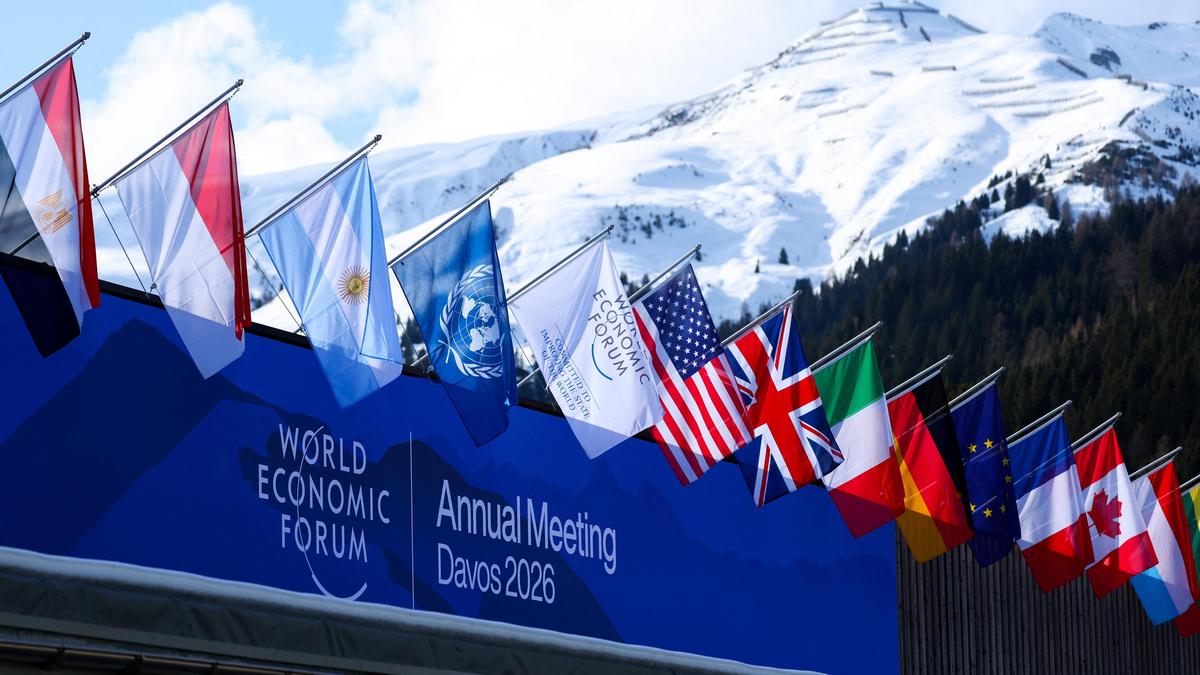
The World Economic Forum (WEF) Annual Meeting in Davos, Switzerland, began on January 19, 2026, drawing global leaders, business executives, and academics. The event focuses on dialogue in a fragmented world, addressing pressing issues such as economic inequality, cybersecurity, and geopolitical risks. Several Indian states, including Maharashtra, Telangana, and Kerala, are using the forum to attract investment and showcase their growth potential. Meanwhile, U.S. President Donald Trump is scheduled to address the gathering amidst rising tensions with European nations over Greenland and trade tariffs.
Key Points:
- The WEF Annual Meeting is held in Davos, Switzerland, from January 19-23, 2026.
- The Maharashtra government signed 19 MoUs worth ₹14.5 lakh crore, promising over 15 lakh jobs.
- Donald Trump is set to address the forum amidst tensions with European nations.
- UN chief Antonio Guterres canceled his trip due to illness.
- Several Indian states, including Gujarat, Telangana, and Kerala, are participating to attract investments.
- Growing inequality is a top economic concern for global youth, according to a WEF survey.
- Geoeconomic confrontation is identified as the biggest global risk, while cybersecurity and income inequality are top risks for India.
- Unprecedented security measures are in place for the event.
Critical Analysis:
The convergence of several Indian states at Davos indicates a proactive strategy to leverage the WEF platform for economic development, investment, and global partnerships. The focus on high-tech and green industries by states like Kerala aligns with a global shift towards sustainable and innovative technologies. President Trump’s attendance amidst international tensions underscores the importance of the WEF as a venue for high-level diplomacy, even when relationships are strained. The prioritization of cybersecurity as a key risk for India reflects the increasing importance of digital security in an interconnected world.
Key Takeaways:
- The World Economic Forum remains a crucial platform for global dialogue and economic partnerships.
- Indian states are actively pursuing foreign investment and showcasing their economic potential on the global stage.
- Geopolitical tensions and economic inequality are major concerns shaping the global landscape.
- Cybersecurity is a growing concern for India, reflecting the importance of digital infrastructure protection.
- The WEF serves as a barometer for emerging risks and priorities for the global community.
Impact Analysis:
The outcomes of the WEF 2026 meeting, particularly the investment commitments secured by Indian states, could have a significant long-term impact on economic growth, job creation, and technological advancement in these regions. The discussions surrounding geopolitical risks and inequality could influence policy decisions and international cooperation efforts aimed at addressing these challenges. Furthermore, the focus on cybersecurity will likely spur further investment and innovation in this critical area, both in India and globally. The success of state-led initiatives like Kerala’s focus on high-tech and green industries can serve as a model for other regions seeking to transition towards a more sustainable and knowledge-based economy.
 First Piper