
Mon Jan 19 17:19:30 UTC 2026: # West Bengal Sees Clashes Over Electoral Roll Revisions
The Story:
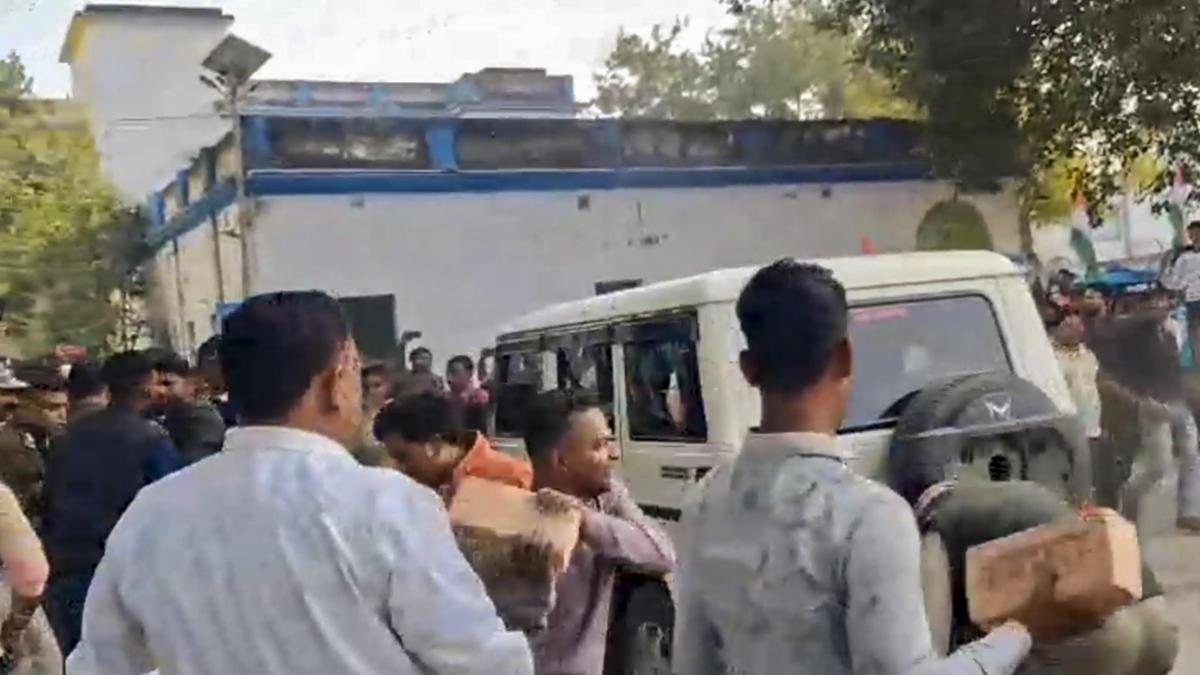
Supporters of the Trinamool Congress (TMC) and the Bharatiya Janata Party (BJP) clashed in West Bengal on Monday, January 19, 2026, over the submission of Form 7 applications for the Special Intensive Revision (SIR) of electoral rolls. Violence erupted in Murshidabad and Asansol, with accusations of assault, arson, and police inaction. The BJP alleges that the TMC is deliberately obstructing the SIR process to maintain an inflated voter list and undermine democracy.
Key Points:
- Clashes occurred in Murshidabad and Asansol over Form 7 submissions related to the Special Intensive Revision (SIR) of electoral rolls.
- BJP workers accused TMC supporters of assaulting them and destroying Form 7 applications.
- BJP MLA Gouri Sankar Ghosh accused the TMC leadership of orchestrating the attacks, while MLA Agnimitra Paul organized protests against alleged police inaction.
- The BJP claims Chief Minister Mamata Banerjee is using TMC workers to prevent the submission of Form 7 applications, alleging the existence of “fake voters.”
- A BJP delegation met with the State’s Chief Electoral Officer (CEO) to request an extension for the Form 7 submission deadline.
- State BJP President Samik Bhattacharya accused the TMC of trying to “vitiate” the SIR process and suggested assembly elections will not be held if the SIR is not conducted properly.
Critical Analysis:
The clashes over Form 7 submissions are likely a manifestation of the ongoing political rivalry between the BJP and TMC in West Bengal. The BJP has been actively trying to expand its influence in the state, challenging the TMC’s dominance. Accusations of voter list irregularities and attempts to manipulate the electoral process are common tactics used by both parties to gain an advantage. The historical context reveals an ongoing legal battle in the Supreme Court regarding the SIR, adding another layer of complexity to the conflict. PM Modi’s public criticisms of the TMC government further exacerbate the tense political climate.
Key Takeaways:
- The political climate in West Bengal is highly charged, with intense competition between the BJP and TMC.
- Electoral processes, particularly voter list revisions, are becoming flashpoints for political conflict.
- Accusations of voter list manipulation and obstruction of democratic processes are central to the ongoing political struggle.
- The Supreme Court’s involvement in the SIR process suggests the issue has significant legal and political implications.
- The events highlight concerns about the integrity of the electoral system and the potential for political violence.
Impact Analysis:
These clashes could have several long-term implications:
- Increased Polarization: The events are likely to further deepen the divide between BJP and TMC supporters, making political reconciliation more difficult.
- Erosion of Trust: Public trust in the electoral process could be undermined if concerns about voter list irregularities are not addressed transparently.
- Legal Challenges: The Supreme Court’s involvement suggests that the validity of the SIR process could be subject to legal challenges, potentially delaying or disrupting future elections.
- Central Intervention: Continued political violence and accusations of electoral malfeasance could invite increased scrutiny and potential intervention from the central government.
- Electoral Outcomes: Depending on the outcome of the SIR process, the balance of power between the BJP and TMC in West Bengal could shift significantly, impacting future election results.
 First Piper