
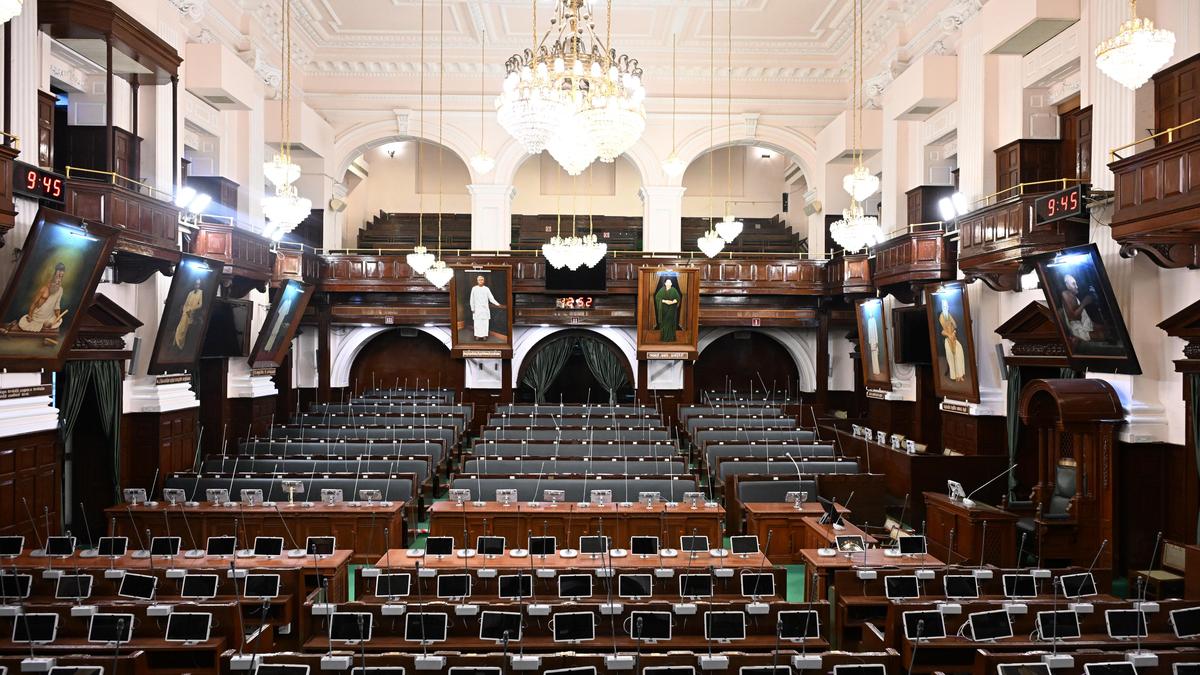
Tue Jan 20 11:41:22 UTC 2026: ### Tamil Nadu Assembly Session Commences Amidst Political Tensions
The Story:
The Tamil Nadu State Legislative Assembly commenced its first session of 2026 on Monday, January 20, 2026. The session, scheduled to last until January 24, will include paying homage to deceased dignitaries, debating the motion of thanks to the Governor’s address, and considering pending bills. This comes amid heightened political tensions, evidenced by recent allegations of a breakdown of law and order under the ruling DMK government, the Tamil Nadu Congress receiving a large number of applications for Assembly election tickets, and the DMK’s intention to propose a constitutional amendment regarding the Governor’s address. These events highlight the complex political landscape in Tamil Nadu as the Assembly session unfolds.
Key Points:
- The Tamil Nadu Assembly session began on January 20, 2026, and will continue until January 24, 2026.
- The session will include paying respects to notable figures, including industrialist Arunachalam Vellayan, poet Erode Tamilanban, producer M. Saravanan, former Union Minister Shivraj Patil Chakurkar, and DMK legislator K. Ponnusamy.
- The House will debate the motion of thanks to the Governor’s address on January 22 and 23.
- The reply to the debate and consideration of bills are scheduled for January 24.
Critical Analysis:
The commencement of the Tamil Nadu Assembly session is framed by several concurrent political developments. The DMK’s push for a constitutional amendment to curtail the Governor’s role, coupled with the opposition’s (Palaniswami’s) accusations of a law and order breakdown, suggests a significant power struggle between the ruling and opposition parties. The large number of ticket aspirants in the Congress further hints at the anticipation of upcoming Assembly elections and the perceived potential for political gains. Furthermore, the mention of the Kerala Assembly witnessing its CM correcting the Governor’s policy address, and the number of reasons as to why the Tamil Nadu Governor refused to read the DMK Government Speech, highlight a growing trend of strained relationships between state governments and Governors, likely due to differing political ideologies.
Key Takeaways:
- The Assembly session is occurring within a highly charged political atmosphere in Tamil Nadu.
- The DMK’s relationship with the Governor appears increasingly strained, potentially influencing the proceedings.
- The opposition is actively challenging the DMK’s governance, indicating a competitive political environment.
- Upcoming Assembly elections are likely a driving force behind many of the current political maneuvers.
Impact Analysis:
The ongoing tensions surrounding the Governor’s address and the broader power struggle between the DMK and opposition parties have the potential for significant long-term implications. A constitutional amendment limiting the Governor’s role, if successful, would alter the balance of power between the state government and the Governor’s office. Persistent accusations of a breakdown of law and order could erode public trust in the DMK government, affecting their electoral prospects. The outcome of the Assembly session, particularly the debates surrounding the Governor’s address and any proposed legislation, will likely shape the political landscape of Tamil Nadu in the lead-up to future elections. The relationship between the state and the center is one to watch and is undergoing a shift in dynamic.
 First Piper