
Tue Jan 20 04:21:40 UTC 2026: Headline: Deadly High-Speed Train Crash in Spain Claims 40 Lives, Prompting National Mourning and Investigation
The Story:
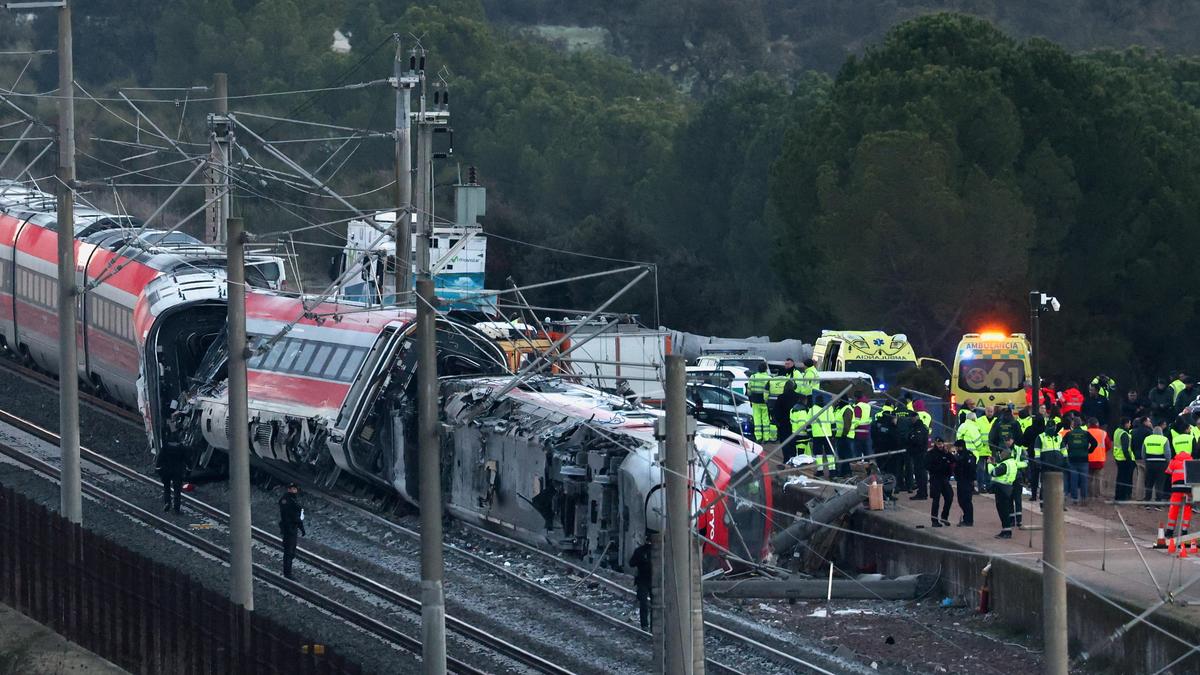
A devastating high-speed train crash near Adamuz, Cordoba, Spain, on January 19, 2026, has resulted in the deaths of 40 people. The accident involved two trains, one operated by Iryo traveling from Malaga to Madrid and the other operated by Renfe traveling to Huelva, colliding after one train derailed and crossed onto the opposite track. The Spanish government has declared three days of national mourning and initiated a full investigation into the cause of the tragedy, which is the country’s deadliest train accident since 2013.
Key Points:
* 40 people died in the high-speed train crash near Adamuz, Spain, on January 19, 2026.
* The accident involved an Iryo train traveling from Malaga to Madrid and a Renfe train traveling to Huelva.
* The Iryo train derailed, crossing onto the other track and colliding with the oncoming Renfe train.
* Over 120 people were injured, with 41 still hospitalized in Cordoba.
* The Spanish Prime Minister has vowed a transparent investigation into the cause of the accident.
* Officials have ruled out human error and speeding as potential causes.
* The first train was “practically new” and the track had been recently renovated.
* The accident occurred on a straight section of track, unlike the 2013 Santiago de Compostela crash.
Critical Analysis:
The historical context provided mentions advancements and concerns related to rail transport in India (Mumbai-Ahmedabad Bullet Train) and unfortunate incidents involving trains as well. The Spanish high-speed train crash adds another layer to the global discussion around rail safety and infrastructure. While the Indian context emphasizes progress and human aspects of the rail network, the Spanish incident underscores the potential for catastrophic failures despite technological advancements. This reinforces the need for constant vigilance and thorough inspection protocols in all high-speed rail systems globally.
Key Takeaways:
* Despite modern safety measures, high-speed rail remains vulnerable to unforeseen accidents.
* Thorough and transparent investigations are crucial for identifying the root causes of such disasters and preventing future occurrences.
* The incident will likely prompt a review of safety protocols and infrastructure maintenance across Spain’s high-speed rail network.
* Continuous advancements in rail technology must be coupled with rigorous inspection and safety standards.
* The global rail community will need to learn from this tragedy and reassess safety measures.
Impact Analysis:
This tragic event is likely to have significant short and long-term impacts. In the short term, it will lead to increased scrutiny of Spain’s high-speed rail network and potentially temporary disruptions as investigations are conducted and safety protocols are reviewed. Long-term, this may result in stricter safety regulations, increased investment in infrastructure maintenance and upgrades, and potentially slower adoption of new high-speed rail technologies until their safety can be thoroughly demonstrated. The crash will also likely affect public confidence in high-speed rail travel, at least temporarily, potentially impacting ridership and tourism. Furthermore, the investigation’s findings could have implications for high-speed rail systems worldwide, influencing safety standards and operational practices.
 First Piper