
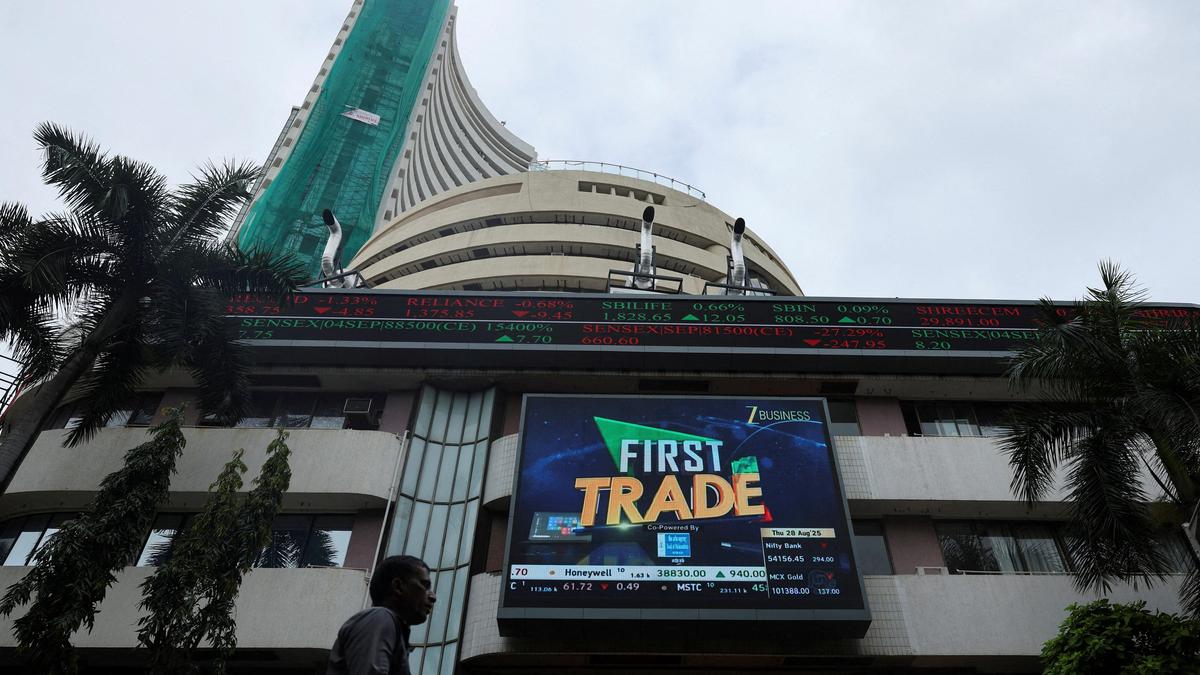
Tue Jan 20 11:08:45 UTC 2026: # Indian Stock Markets Plunge Amid Geopolitical Tensions and Foreign Fund Outflows
The Story:
On Tuesday, January 20, 2026, Indian stock market benchmark indices, Sensex and Nifty, experienced a significant downturn, plummeting over 1%. This decline was attributed to heavy selling pressure in major market players like Reliance, Bajaj Finance, and M&M, exacerbated by escalating geopolitical tensions. The weakening rupee and consistent outflows from foreign funds further dampened investor confidence, contributing to the market’s negative performance.
Key Points:
- The BSE Sensex dropped 1,065.71 points (1.28%) to close at 82,180.47.
- The NSE Nifty declined 353 points (1.38%) to settle at 25,232.50.
- Eternal led the decliners among Sensex firms, falling by 4.0%.
- Foreign institutional investors (FIIs) offloaded equities worth ₹3,262.82 crore on Monday, January 19, 2026.
- Domestic Institutional Investors (DIIs) bought stocks worth ₹4,234.30 crore on Monday, January 19, 2026.
- Global markets in Asia and Europe also traded lower.
- U.S. markets were closed on Monday, January 19, 2026, for a holiday.
- Analyst R. Ponmudi cited “aggressive and often unpredictable use of tariffs by the U.S. administration as a foreign policy tool” as a major factor. Specifically, new tariff threats from U.S. President Donald Trump regarding European opposition to the U.S. taking control of Greenland.
- Brent crude oil prices increased slightly to $63.91 per barrel.
Critical Analysis:
The confluence of factors – domestic market weaknesses, foreign fund outflows, and global geopolitical tensions driven by U.S. tariff policies – paints a picture of a highly interconnected and sensitive financial market. The specific mention of President Trump’s tariff threats reveals a direct causal link between U.S. foreign policy and Indian market performance. The historical context shows that the Sensex has been experiencing a decline for several weeks, making this dip another low point during that time.
Key Takeaways:
- Geopolitical tensions, particularly those involving the U.S.’s tariff policies, have a significant impact on Indian stock markets.
- Foreign Institutional Investor (FII) activity plays a crucial role in market stability.
- The Indian stock market is highly susceptible to global cues and investor sentiment.
- The market selloff is deepening, and the Nifty has broken key support levels, indicating further potential downside.
- Investor caution and subdued risk appetite are contributing factors to the market’s decline.
Impact Analysis:
The continued market volatility could have long-term implications for investor confidence and economic growth in India. Sustained foreign fund outflows may pressure the rupee further, potentially leading to inflationary pressures. The government and Reserve Bank of India may need to consider policy interventions to stabilize the market and restore investor confidence. The dependence of the Indian market on the actions of the US President indicates a need for India to reduce such dependence and diversify its trading and economic relations.
 First Piper