
Mon Jan 19 19:45:11 UTC 2026: ### Odisha’s Estuarine Crocodile Population Surges to 1,858 in 2026
The Story:
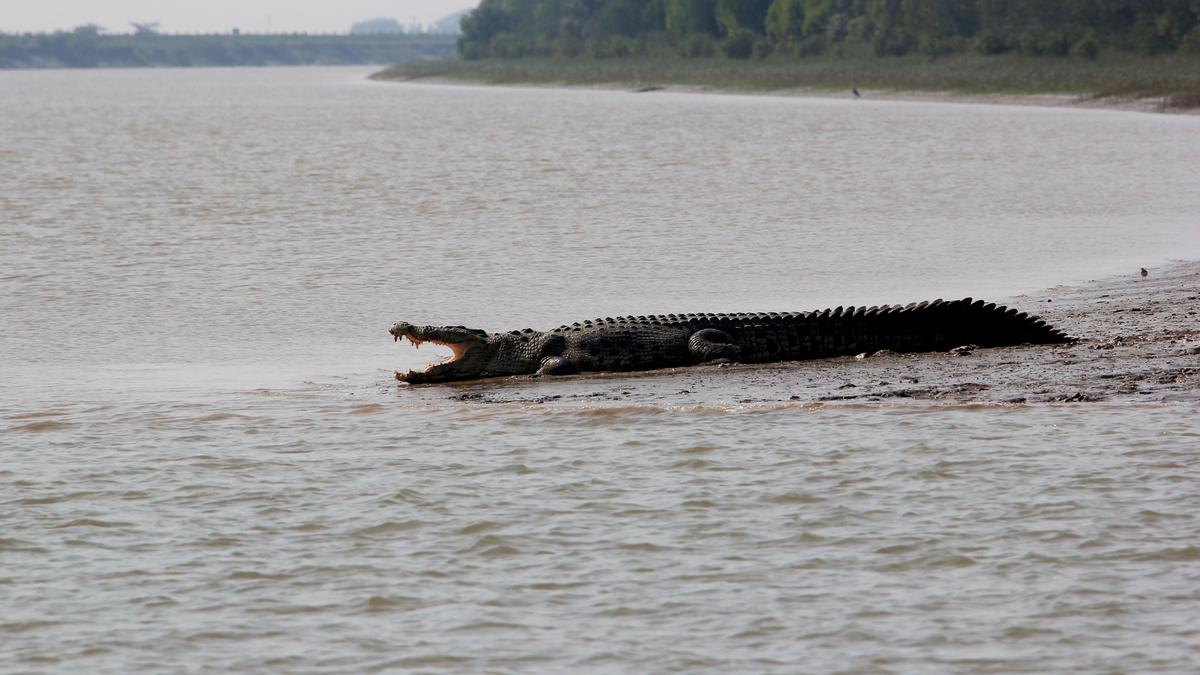
Odisha’s estuarine crocodile population has experienced a significant increase, reaching 1,858 in January 2026. This marks an addition of 32 crocodiles compared to the previous year’s estimation. The increase is attributed, in part, to the State Forest and Environment Department’s implementation of a pilot drone-based survey during the annual estimation conducted from January 8 to 10, 2026. The survey covered various river systems within and around Bhitarkanika National Park and Wildlife Sanctuary, Gahirmatha Wildlife Sanctuary, the Mahanadi deltaic area, and the Devi river mouth area.
The survey involved 24 census teams, with data collected through individual counts and boat-based surveys conducted day and night. The majority of the crocodiles, 1,424 (76.64%), were spotted in the Kanika Wildlife Range.
Key Points:
- Odisha’s estuarine crocodile population increased to 1,858 in January 2026, a rise of 32 from the previous year.
- A pilot drone-based survey was introduced by the State Forest and Environment Department to improve estimation accuracy.
- The annual estimation was conducted from January 8 to 10, 2026, covering key wildlife areas in Odisha.
- The Kanika Wildlife Range recorded the highest number of crocodiles, with 1,424 individuals.
- Population estimation involved both daytime and nighttime boat-based surveys, categorizing crocodiles by size and age.
Key Takeaways:
- The increase in crocodile population suggests the effectiveness of conservation efforts in Odisha.
- The introduction of drone-based surveys marks a technological advancement in wildlife monitoring in the region.
- The detailed categorization of the crocodile population provides valuable data for future conservation strategies.
- The concentration of crocodiles in the Kanika Wildlife Range highlights the importance of this area for their habitat.
- Continued monitoring and research are crucial to maintaining the health and stability of the crocodile population.
Impact Analysis:
The rise in the estuarine crocodile population in Odisha has several significant long-term implications:
- Ecosystem Health: A thriving crocodile population indicates a healthy estuarine ecosystem, contributing to biodiversity and ecological balance.
- Tourism and Economy: The presence of a large crocodile population could boost ecotourism in the region, generating revenue and employment opportunities for local communities.
- Conservation Policy: The success of conservation efforts, as evidenced by the population increase, can inform and strengthen wildlife conservation policies both nationally and internationally.
- Research and Development: The adoption of drone technology for wildlife monitoring could inspire similar innovations in other conservation areas and for different species.
- Human-Wildlife Conflict Management: With an increasing crocodile population, effective strategies for managing potential human-wildlife conflicts will become increasingly important to ensure the safety of local communities.
 First Piper