
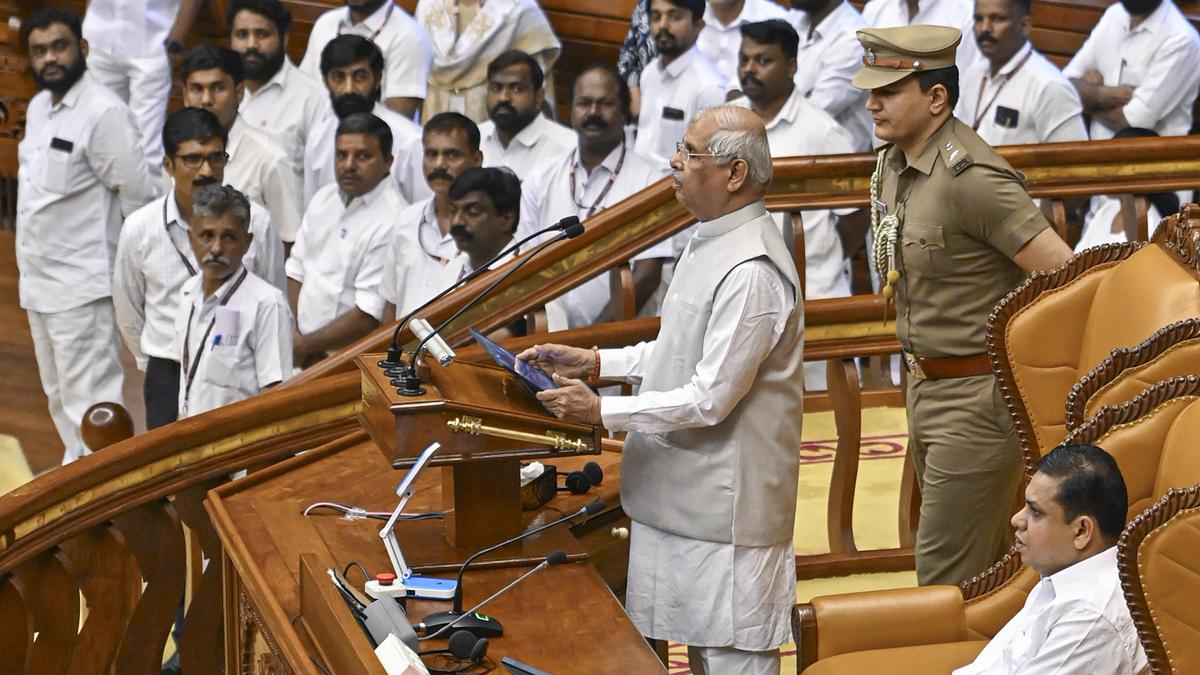
Tue Jan 20 09:30:27 UTC 2026: ### Kerala Governor’s Address Sparks Debate Amidst Fiscal Tensions and Policy Shifts
The Story: Kerala Governor Rajendra Vishwanath Arlekar’s policy address to the Legislative Assembly on January 20, 2026, outlining the CPI(M)-led LDF government’s vision, has ignited controversy. The address focused on transforming Kerala into a globally connected, urbanized region, emphasizing social welfare and sustainable development. However, it also sharply criticized the BJP-led Centre’s fiscal policies, alleging they strain the state’s finances, particularly concerning the replacement of MGNREGS with the VB-G RAM G scheme.
The address detailed ambitious plans for infrastructure development, innovation-driven industrialization, and a world-class higher education system. Environmental initiatives, health sector improvements, and strategies for leveraging demographic changes to create a “silver economy” were also highlighted. The government reiterated its commitment to Constitutional values while advocating for a “Nava Keralam” focused on digitalization, reduced congestion and emissions, and zero waste and accidents. The commencement of the 16th and final session of the 15th Kerala Assembly marks the start of the election season.
Key Points:
- Governor Arlekar’s address emphasized Kerala’s ambition to become a “well-connected, Statewide urban region,” essentially the “largest city in the world.”
- The LDF government criticized the Centre’s fiscal policies, particularly the replacement of MGNREGS with the VB-G RAM G scheme.
- Kerala reiterated its stance on the Mullaperiyar dam issue, calling for an expert committee to assess its structural strength.
- The government plans to propose four more wetlands for Ramsar designation and expand mental health services.
- The address highlighted the “Nava Keralam” vision, encompassing digitalization, congestion reduction, emission control, and waste management.
- The Kochi–Bangalore Industrial Corridor construction is slated to begin soon.
- The address reiterated the government’s commitment to Constitutional values and federalism.
Critical Analysis:
The backdrop of “Kerala Assembly witnesses unusual scene as CM ‘corrects’ Governor’s policy address” suggests a potential conflict between the Governor and the Chief Minister. This indicates deeper political friction, where the Governor’s address might have deviated from or omitted points agreed upon by the state government, leading to the CM’s public correction. This highlights the complex relationship between the Governor, appointed by the central government, and the elected state government, especially when different political parties are in power. The timing of the address preceding elections further amplifies the political significance and potential for misinterpretation or selective emphasis.
Key Takeaways:
- The Kerala government is prioritizing infrastructure development and urban integration as central to its economic strategy.
- Fiscal disputes between the state and central governments remain a significant point of contention.
- Environmental and social welfare initiatives are key components of the government’s policy agenda.
- The upcoming elections are likely to be heavily influenced by the successes and challenges highlighted in the Governor’s address.
- There are apparent conflicts that can lead to the CM correcting the Governor’s policy address in unusual scenes.
Impact Analysis:
The policy address sets the stage for the upcoming elections in Kerala. The promises made, the criticisms levied, and the government’s overall vision will be scrutinized by voters. The success of initiatives like the “Nava Keralam” vision, the handling of the Mullaperiyar dam issue, and the ability to navigate fiscal challenges will be critical factors in determining the election outcome. Long-term, the focus on sustainable development and a “silver economy” could position Kerala as a leader in these areas, but the realization of these goals depends heavily on continued political stability and effective policy implementation. Furthermore, the ongoing tension between the state and central governments could hinder the state’s ability to secure funding and resources necessary for its ambitious projects.
 First Piper