
Tue Jan 20 08:58:37 UTC 2026: # ICE Raid in Minnesota Sparks Outrage Over Alleged Overreach
The Story:
On January 19, 2026, Immigration and Customs Enforcement (ICE) agents in St. Paul, Minnesota, forcibly entered the home of ChongLy Thao, a 56-year-old naturalized U.S. citizen, also known as Scott. Thao, a Hmong man born in Laos, was allegedly dragged outside in his boxer shorts and Crocs during freezing temperatures. He was later released without explanation or apology. The incident sparked widespread outrage after photos circulated on social media, raising concerns about the Trump administration’s immigration enforcement tactics.
Key Points:
- ChongLy Thao, a naturalized U.S. citizen, was detained by ICE agents at his home in St. Paul, Minnesota, on January 19, 2026.
- Thao was taken outside in freezing temperatures wearing only boxer shorts and Crocs.
- The Department of Homeland Security (DHS) stated that officers were investigating two convicted sex offenders at the address and detained Thao because he refused to be fingerprinted or facially identified and matched the description of the targets.
- DHS published wanted posters for two “criminal illegal aliens” from Laos who are subject to deportation orders, one of whom previously lived at the house.
- A U.S. District Judge in Minnesota had previously issued an injunction blocking the Trump administration from certain aggressive tactics against protesters.
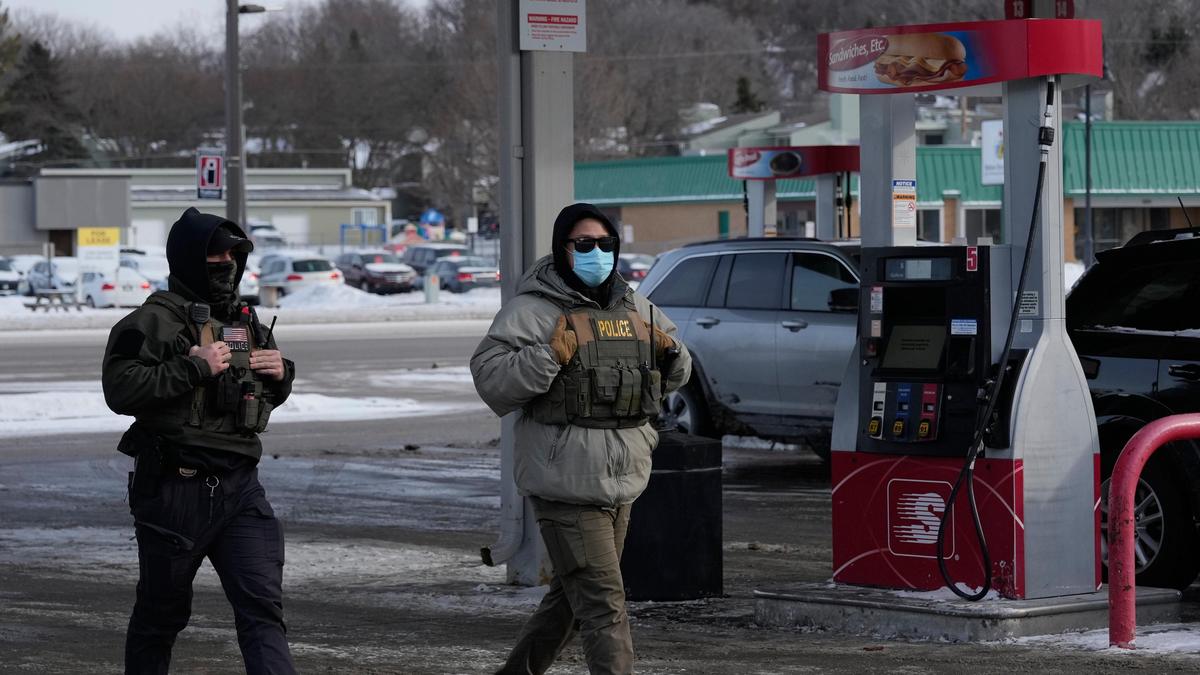
- 3,000 ICE officers have been deployed in the Minneapolis area.
Critical Analysis:
The event unfolds amidst existing tensions around immigration enforcement in Minnesota, reflected in the headlines: “Minnesota Had Its Birmingham Moment,” referencing the civil rights era, and “US Pentagon orders troops to prepare for potential Minnesota deployment.” The incident involving ChongLy Thao appears to be a flashpoint in an already charged environment, exacerbated by the deployment of a large number of ICE officers. The timing of the raid, following a judge’s injunction against aggressive tactics, suggests potential disregard for judicial oversight or a deliberate escalation of enforcement activities despite legal constraints. The prior presence of anti-ICE protesters and the detention incident could be interpreted as evidence of systemic issues within ICE’s operational procedures, or an overzealous interpretation of their authority within Minnesota.
Key Takeaways:
- The incident highlights the potential for misidentification and mistreatment of U.S. citizens during immigration enforcement operations.
- The timing of the event, in relation to prior headlines regarding troop deployment and aggressive protest activity, underscores the heightened tensions surrounding immigration enforcement in Minnesota.
- The event draws attention to the broader debate surrounding the Trump administration’s immigration policies and the tactics employed by federal law enforcement.
- Public sentiment is further inflamed due to widespread media coverage that depicts the incident as unnecessary and inhumane.
Impact Analysis:
This incident is likely to have a significant and long-lasting impact on several fronts:
- Legal Challenges: The incident will likely lead to further legal challenges against the Trump administration’s immigration policies and ICE’s enforcement tactics. Lawsuits alleging civil rights violations are highly probable.
- Political Polarization: The event will likely intensify political polarization surrounding immigration. Advocacy groups and political opponents will likely seize on this as evidence of government overreach, while supporters may defend the actions of law enforcement.
- Community Relations: Trust between law enforcement and immigrant communities in Minnesota may be severely damaged. This can hinder cooperation with law enforcement and foster a climate of fear.
- Policy Review: The incident will increase scrutiny on ICE’s operational procedures and could lead to calls for policy reforms to prevent similar incidents in the future.
- Electoral Impact: The issue could become a key factor in upcoming elections, particularly in areas with large immigrant populations.
 First Piper