
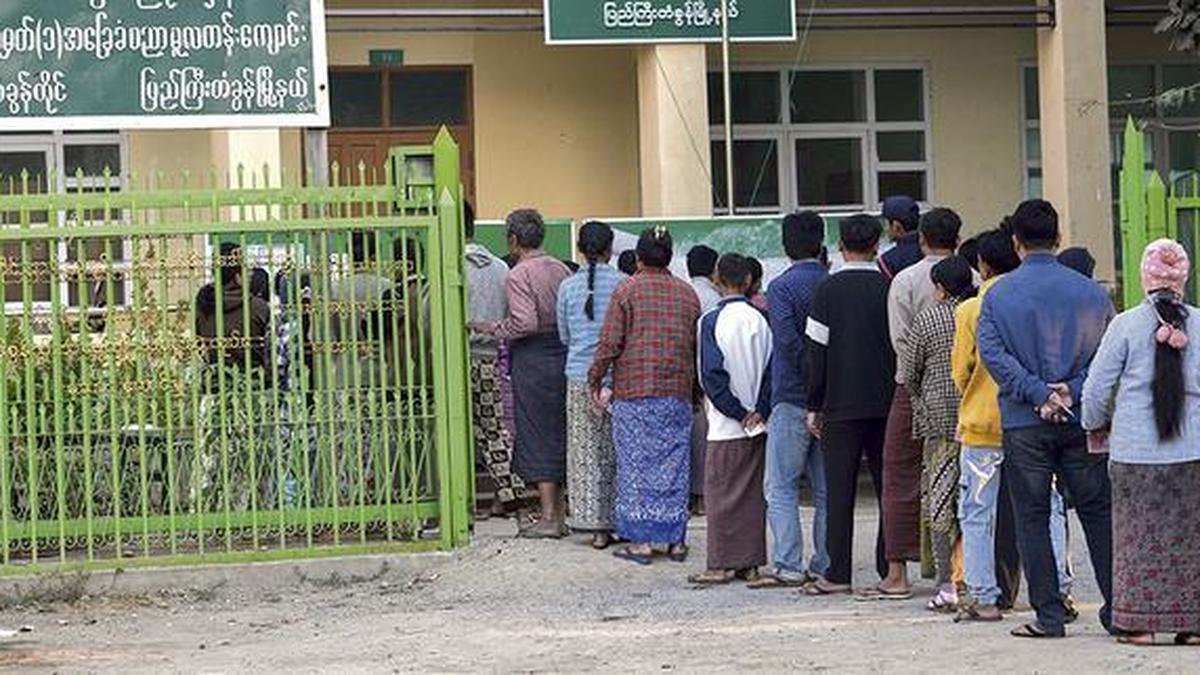
Tue Jan 20 05:16:47 UTC 2026: ### Headline: ASEAN Refuses to Endorse Myanmar’s Election Amid Ongoing Conflict
The Story:
The Association of Southeast Asian Nations (ASEAN) will not endorse the ongoing three-stage election in Myanmar, currently ruled by a military junta, according to Malaysia’s Foreign Minister Mohamad Hasan on Tuesday, January 20, 2026. This decision stems from ASEAN’s rejection of a request to send election observers, triggered by concerns that the election is a ploy to legitimize military rule following the 2021 coup against the civilian government. The election, which began in December 2025, has faced widespread condemnation from the United Nations, Western countries, and human rights groups.
Key Points:
- ASEAN will not send observers to Myanmar’s election.
- ASEAN will not endorse the poll due to concerns of legitimizing military rule.
- The election began in December 2025 and is being conducted in three stages.
- The Union Solidarity and Development Party, aligned with the military, is leading after the first phase with 88% of lower house seats.
- Myanmar has been in conflict since the 2021 military coup.
- ASEAN is also in the final stages of concluding a code of conduct with Beijing regarding the South China Sea.
Critical Analysis:
The decision by ASEAN not to endorse Myanmar’s election highlights a growing regional concern over the legitimacy of the military junta’s rule. While some individual member states may have chosen to send observers independently, ASEAN’s collective refusal underscores a unified stance against the junta’s efforts to consolidate power through what is widely perceived as a sham election. The simultaneous efforts to finalize a code of conduct with Beijing concerning the South China Sea reveals a complex diplomatic balancing act, where ASEAN seeks to navigate regional security challenges while addressing internal political crises within member states.
Key Takeaways:
- ASEAN’s non-endorsement of the Myanmar election signals a firm regional stance against the military junta’s rule.
- The focus on a code of conduct with China over the South China Sea emphasizes the importance of regional stability amidst internal conflicts.
- Individual ASEAN member states may pursue independent diplomatic paths, diverging from the collective stance.
- The low voter turnout in the second stage of the poll indicates widespread skepticism about the legitimacy of the election among the Myanmar population.
Impact Analysis:
The ASEAN decision carries significant long-term implications for Myanmar. By refusing to legitimize the election, ASEAN maintains pressure on the military junta to engage in meaningful dialogue and transition towards a more inclusive and democratic government. This stance may further isolate Myanmar internationally, potentially leading to increased sanctions and other forms of diplomatic pressure. The concurrent efforts to finalize a code of conduct with China in the South China Sea demonstrate ASEAN’s commitment to addressing broader regional security concerns, even as it grapples with internal political challenges within its member states. Failure to address the Myanmar crisis effectively could undermine ASEAN’s credibility as a cohesive and influential regional organization.
 First Piper