
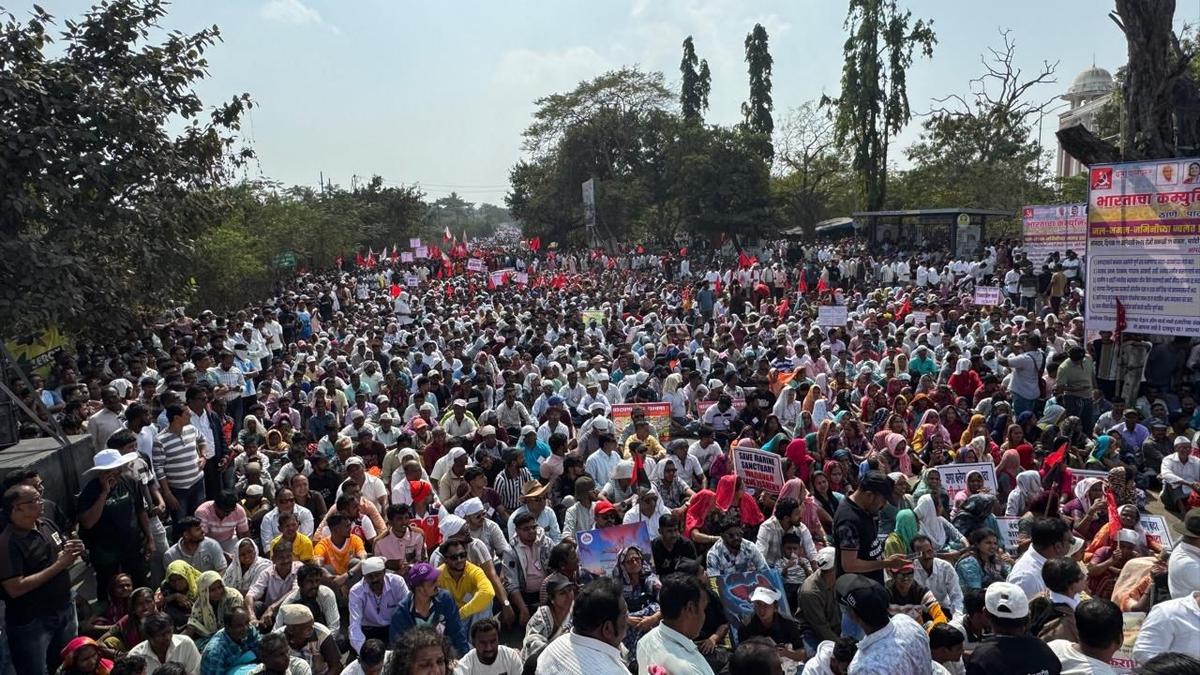
Mon Jan 19 17:01:51 UTC 2026: ### Fisherfolk and Farmers March Against Vadhavan Port Project in Maharashtra
The Story:
Thousands of protesters, led by the Communist Party of India (Marxist) and the All India Kisan Sabha, marched in Palghar district, Maharashtra on January 19, 2026, demanding the cancellation of the Vadhavan port project. The “long march” started from Charoti village and ended at the Collector’s office in Palghar on January 20, 2026. Protesters also demanded the implementation of the Forest Rights Act, and opposed changes to the MNREGA scheme. A separate rally was organized by the Vadhavan Bunder Virodhi Sangharsh Samiti (VBVSS), highlighting environmental concerns and potential damage to the livelihoods of local residents, farmers, tribals, and especially fisherfolk.
Key Points:
- Thousands marched against the Vadhavan port project on January 19, 2026.
- The protest was organized by the Communist Party of India (Marxist) and the All India Kisan Sabha, with a second rally organized by the VBVSS.
- Protesters are demanding the project’s cancellation, implementation of the Forest Rights Act, and continuation of the MNREGA scheme.
- The Dahanu Taluka Environmental Protection Authority (DTEPA) had previously refused clearance to the port.
- The VBVSS argues the project violates a 1998 DTEPA order and a Supreme Court order protecting the Dahanu eco-sensitive zone.
- The VBVSS claims that the Social and Environmental Impact Assessment ignored objections raised during public hearings.
Critical Analysis:
The provided historical context highlights India’s ongoing port development projects both domestically (Vizhinjam port development, shipbuilding yard at Ponnani port) and internationally (Chabahar port in Iran). While seemingly unrelated, the protests against the Vadhavan port demonstrate a tension between national development goals and local environmental/social concerns. The government’s continued push for port development, despite local opposition and previous environmental clearances being denied, suggests a prioritization of economic growth and strategic maritime infrastructure. This pattern could be fueling the resistance, as communities feel their concerns are being disregarded in favor of larger economic objectives.
Key Takeaways:
- Local communities are actively resisting large-scale infrastructure projects perceived as detrimental to their livelihoods and the environment.
- The Vadhavan port project highlights a conflict between economic development, environmental protection, and the rights of indigenous communities.
- The involvement of political organizations like the CPI(M) and All India Kisan Sabha demonstrates organized opposition to government policies.
- The Supreme Court’s involvement and the DTEPA’s initial refusal of clearance indicate the project faces significant legal and environmental hurdles.
Impact Analysis:
The Vadhavan port project controversy has potential long-term implications for infrastructure development in India. The success or failure of these protests could set a precedent for future projects, influencing how the government engages with local communities and addresses environmental concerns. A failure to address these concerns adequately could lead to increased social unrest and legal challenges, potentially delaying or halting similar projects nationwide. If the government successfully navigates these challenges and implements robust mitigation and rehabilitation strategies, it could establish a more sustainable and inclusive model for infrastructure development. The Supreme Court’s ruling on the matter will be decisive, setting legal precedents for environmental protection in eco-sensitive zones and the rights of affected communities.
 First Piper