
Mon Jan 19 05:15:23 UTC 2026: # Trump Escalates Greenland Pursuit, Threatens Tariffs Amidst Rising Geopolitical Tensions
The Story:
President Donald Trump, on January 18, 2026, intensified his pursuit of Greenland, asserting that Denmark has failed to address the perceived “Russian threat” in the region. In a post on his social media platform, Truth Social, Trump declared that it is “time” to resolve the issue. He vowed to impose escalating tariffs on European allies until the United States is allowed to purchase Greenland, citing the growing influence of China and Russia as justification for U.S. security interests.
Key Points:
- President Donald Trump claims Denmark hasn’t addressed the “Russian threat” in Greenland.
- Trump insists on acquiring Greenland, an autonomous territory of Denmark.
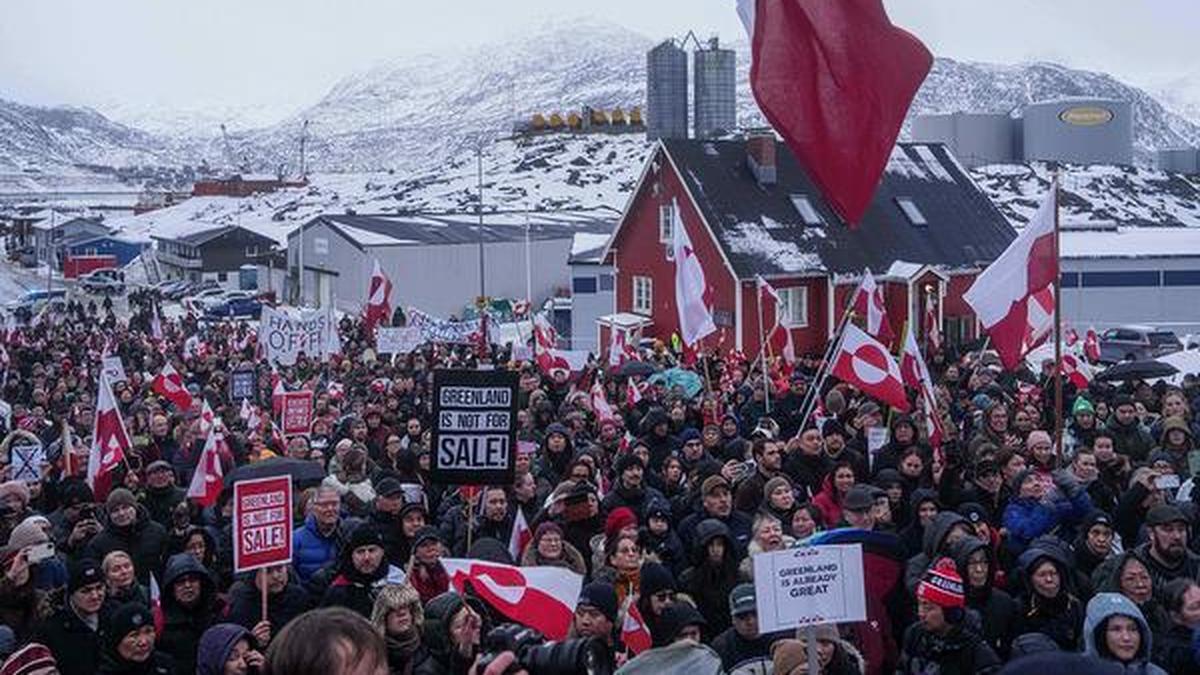
- Denmark and Greenland leaders have repeatedly rejected the idea of selling the island.
- Trump threatens tariffs on European allies to force the sale of Greenland.
- The U.S. cites China and Russia’s presence as a threat necessitating U.S. control of Greenland.
- Danish and European officials emphasize that Greenland is protected by NATO’s collective security pact.
Critical Analysis:
The events are unfolding within a context of increasing geopolitical tensions. Specifically, the earlier report of major EU states condemning Trump’s tariff threats and considering retaliation, together with drone strikes cutting power in Russian-occupied Ukraine, suggests a multi-front conflict. The US president’s desire to acquire Greenland under the pretext of a Russian threat masks the underlying tensions between NATO and Russia while also pitting the US against its own European Allies by way of threatened tariffs.
Key Takeaways:
- President Trump is leveraging perceived security threats to pursue aggressive foreign policy objectives.
- The situation is straining relations between the U.S. and its European allies.
- The push for Greenland appears to be driven by a broader geopolitical strategy concerning China and Russia.
- NATO’s collective security pact is being called into question amidst these unilateral actions by the U.S. President.
- The use of tariffs as a tool to force a nation to sell territory is an unprecedented strategy that challenges established international norms.
Impact Analysis:
This event series has significant long-term implications for international relations and global security. The threatened tariffs could trigger a trade war with Europe, further destabilizing the global economy. The pursuit of Greenland, despite strong opposition from Denmark and Greenland itself, undermines the principles of national sovereignty and territorial integrity. If successful, it could set a dangerous precedent for other powerful nations to pursue territorial acquisitions through coercive means. The increasing tensions with Russia and the strained relations with European allies create a volatile environment that could escalate into a larger conflict. Furthermore, this situation could lead to a re-evaluation of NATO’s role and effectiveness, as well as a realignment of global power dynamics.
 First Piper