
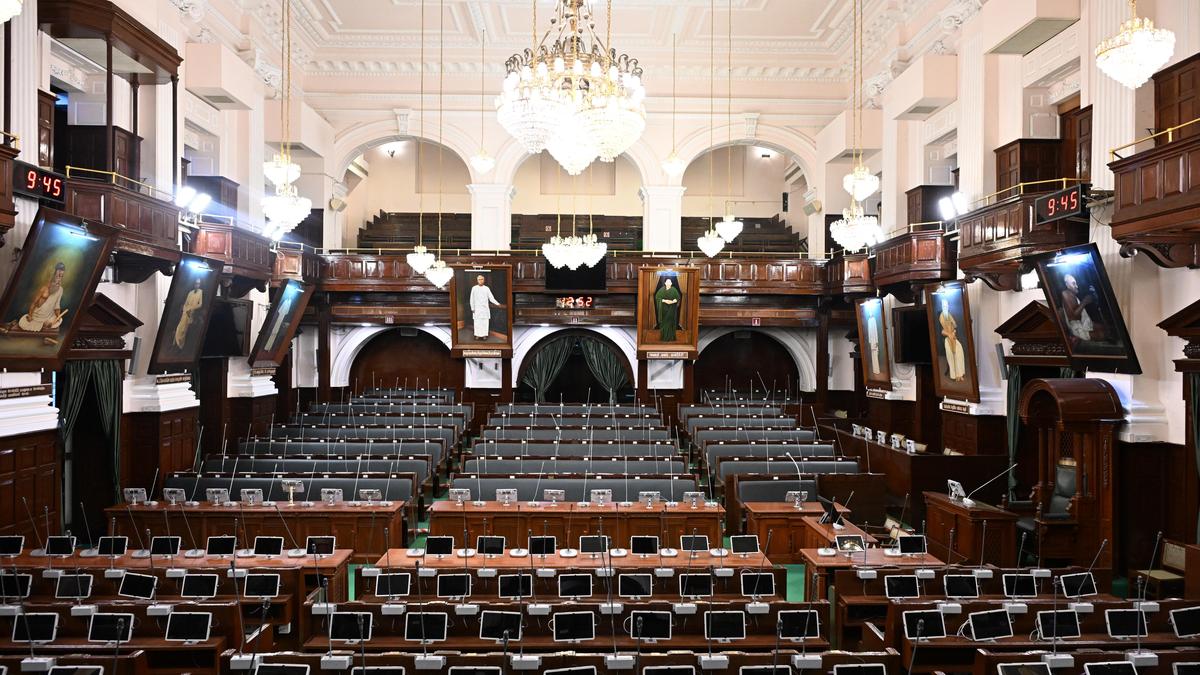
Mon Jan 19 17:09:54 UTC 2026: # Tamil Nadu Assembly Session Faces Uncertainty Amidst Political Shifts and Governor Tension
The Story:
The first session of the Tamil Nadu Legislative Assembly in 2026 is scheduled to begin on January 20 with the Governor’s address. This session is anticipated to be brief, lasting only a few days. However, it is taking place amid heightened political tensions. The session follows a period marked by significant disagreements between the Governor and the State government, including previous walkouts and public disagreements. Furthermore, the resignation of two AIADMK legislators, who have since joined rival parties, adds another layer of complexity.
Key Points:
- The Tamil Nadu Assembly’s first session of 2026 commences on January 20 at Fort St. George, Chennai.
- The Governor’s address, traditionally delivered in English, will be followed by a Tamil reading by the Speaker.
- Contentious relationships between Governor R.N. Ravi and the State government, involving walkouts and public disputes, remain a concern. Now the location is called Lok Bhavan instead of Raj Bhavan.
- The House will likely adjourn to honor deceased DMK MLA K. Ponnusamy, who died in October 2025.
- Former AIADMK legislators K.A. Sengottaiyan and Paul Manoj Pandian have resigned and joined the Tamilaga Vettri Kazhagam and DMK, respectively.
- The session is expected to be short, with debates centered on the Motion of Thanks to the Governor’s Address.
- Interactions between DMK and Congress legislators, as well as rival factions within the PMK, are likely to garner attention.
Critical Analysis:
The article highlights a continuation of existing tensions between the Governor and the ruling DMK-led government. The issues surrounding the Governor’s address, mentioned over the past three years, indicate a persistent ideological or political clash. The defection of AIADMK legislators to rival parties suggests a shifting political landscape, potentially impacting the dynamics within the Assembly. The reference to factionalism within the PMK, specifically between S. Ramadoss and Anbumani Ramadoss, is an ongoing issue within Tamil Nadu politics that will likely influence legislative debates.
Key Takeaways:
- The upcoming Assembly session is likely to be characterized by political maneuvering and potential confrontations between the Governor and the State government.
- The resignations and party switches of former AIADMK legislators signify a realignment of political forces in Tamil Nadu.
- Internal conflicts within the PMK could further complicate legislative proceedings.
- The duration of the session is expected to be brief, suggesting a focus on essential matters rather than comprehensive policy debates.
- The state government may be bracing for further disagreements with the Governor on policy matters.
Impact Analysis:
The ongoing friction between the Governor and the State government could lead to legislative gridlock and hinder the implementation of government policies. The shifting allegiances of legislators could also destabilize the existing coalition and potentially pave the way for future political realignments. The internal divisions within the PMK will continue to dilute the party’s influence and bargaining power in the Assembly. In the long term, these factors could impact the stability and effectiveness of the Tamil Nadu government, affecting policy decisions and development initiatives.
 First Piper