
Mon Jan 19 16:50:00 UTC 2026: Headline: Major Solar Storm Threatens Earth: Northern Lights Display Imminent, Potential Disruptions Loom
The Story:
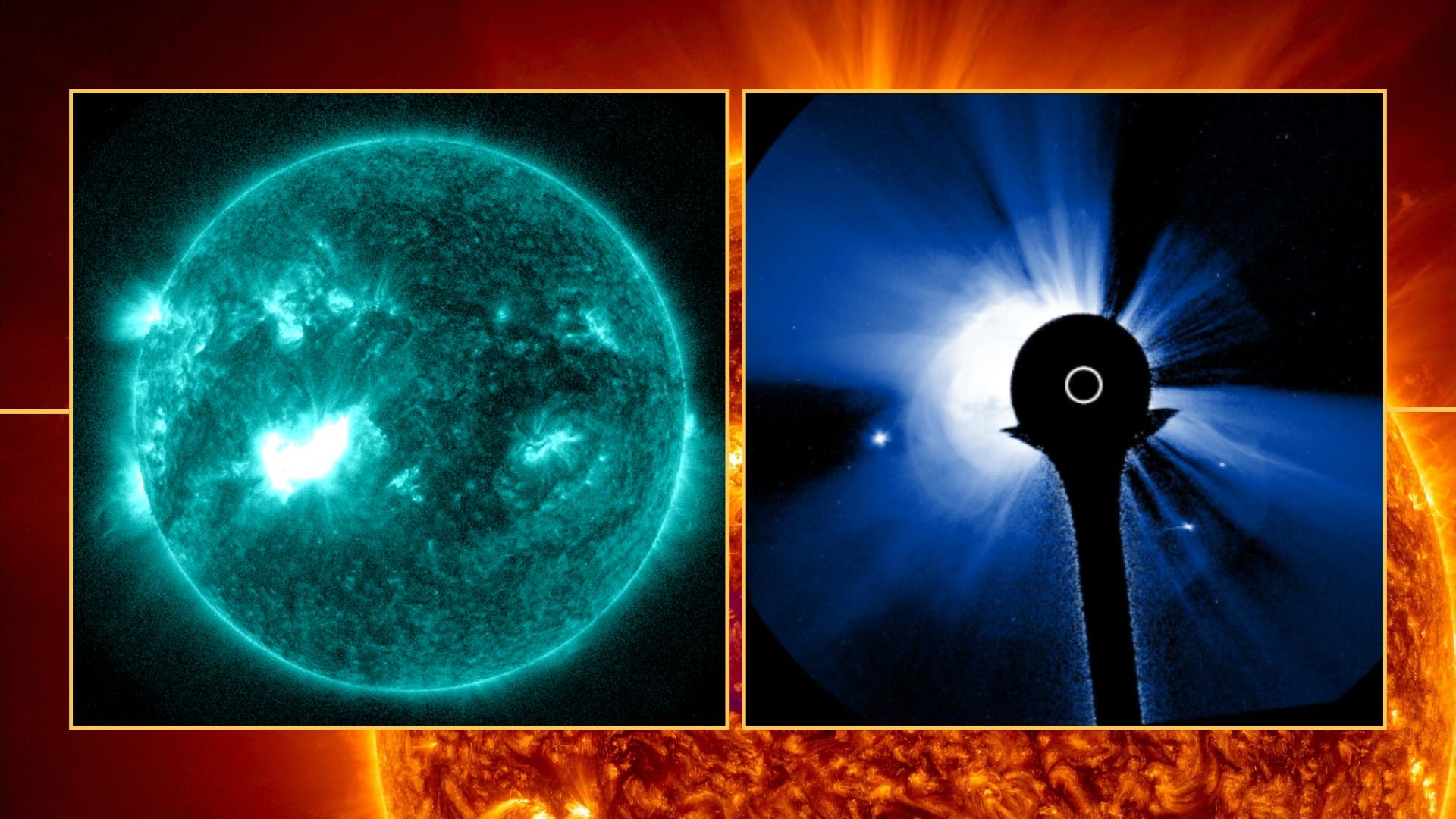
A significant X1.9-class solar flare erupted from sunspot region AR4341 on January 20, 2026, unleashing a powerful, Earth-directed coronal mass ejection (CME). According to forecasts from the U.K. Met Office, this CME is expected to impact Earth within the next 24 hours. The potential for strong (G3) to severe (G4) geomagnetic storm conditions exists, potentially leading to visible northern lights as far south as Northern California and Alabama. The primary concern revolves around the CME’s magnetic orientation, which will determine the severity of its interaction with Earth’s magnetic field.
The eruption triggered strong (R3) radio blackouts across the sunlit side of Earth, with the most severe disruptions concentrated over the Americas. While the exact magnetic orientation of the CME remains uncertain until closer to Earth, a southward orientation (Bz) would allow energy to flood into Earth’s magnetosphere, triggering significant geomagnetic storms. A northward orientation would deflect the energy. Space weather forecasters are closely monitoring the CME’s trajectory and characteristics using spacecraft like DSCOVR and ACE.
Key Points:
- An X1.9-class solar flare erupted from sunspot region AR4341 on January 20, 2026, at 1:09 p.m. EST (1809 GMT).
- A fast, Earth-directed coronal mass ejection (CME) was unleashed along with the solar flare.
- The CME is forecast to impact Earth within the next 24 hours.
- Forecasts suggest potential for strong (G3) to severe (G4) geomagnetic storm conditions.
- Possible visible northern lights as far south as Northern California and Alabama.
- The CME’s magnetic orientation (Bz) is crucial in determining the storm’s severity. A southward Bz allows greater interaction with Earth’s magnetic field.
- The eruption triggered strong (R3) radio blackouts, especially over the Americas.
- Satellite operations, GPS navigation, and atmospheric drag on spacecraft could be impacted.
Critical Analysis:
The historical context provides a glimpse into the energy landscape leading up to this solar event. The news of solar energy cutting grid power consumption in government schools highlights the increasing reliance on solar infrastructure, making the potential disruption from the geomagnetic storm more significant. The WEF 2026 news mentioning India’s “power-packed presence” suggests ongoing discussions on global energy strategies that could be affected by space weather events. Also, there is a local news regarding power shutdown, indicating grid vulnerability.
Key Takeaways:
- The Earth is facing a potential space weather event that could disrupt technology and infrastructure.
- The severity of the geomagnetic storm hinges on the magnetic orientation of the incoming CME.
- The increasing dependence on solar energy and satellite technology amplifies the potential impact of geomagnetic disturbances.
- Radio blackouts caused by the solar flare have already caused immediate disruptions.
- The northern lights may be visible at unusually low latitudes, offering a rare spectacle.
Impact Analysis:
The G3 to G4 geomagnetic storm, if it occurs as predicted, has the potential for significant disruption across a variety of sectors. Long-term, events of this magnitude underscore the need for improved space weather forecasting capabilities and resilience strategies for critical infrastructure. The increasing reliance on space-based assets for communication, navigation, and observation means that mitigating the impact of geomagnetic storms is becoming increasingly important for global stability and economic security. Damage to satellites could have long-term implications, costing billions and delaying various applications such as communications, surveillance, and scientific research.
 First Piper