
Mon Jan 19 14:48:43 UTC 2026: # Grain Discoloration Threatens Samba Paddy Harvest in Keezhaiyur Block
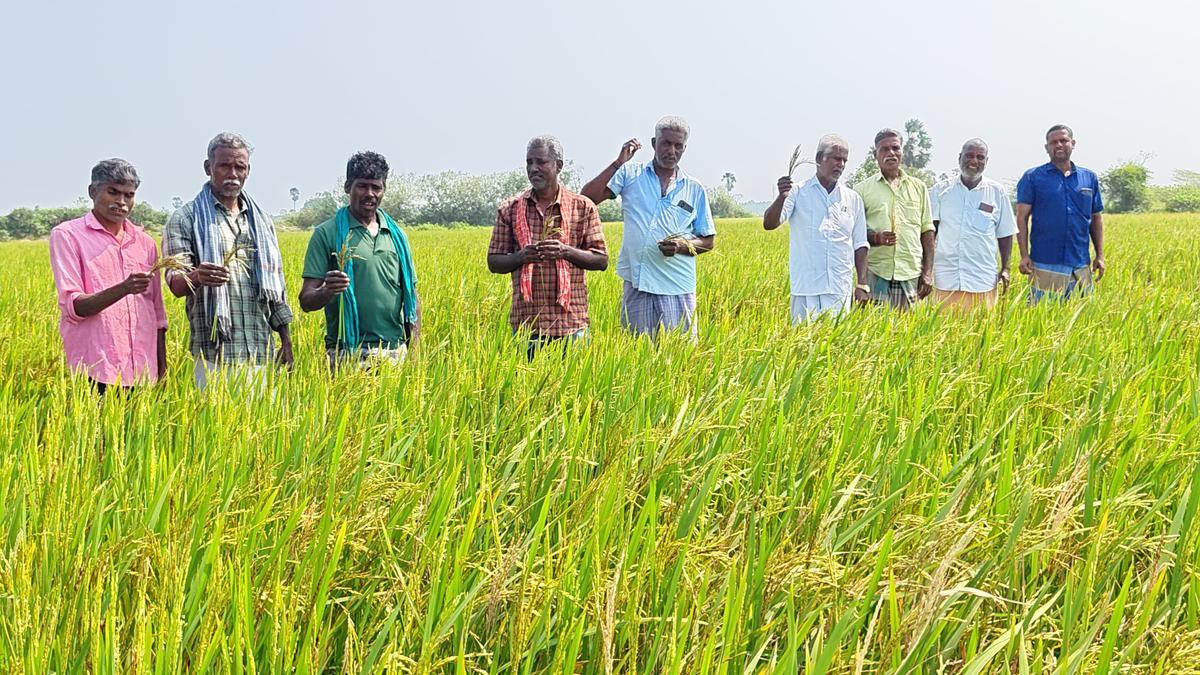
The Story: Farmers in the Keezhaiyur block of Nagapattinam district, India, are expressing serious concerns about grain discoloration affecting their samba paddy crops at the harvest stage. This issue, observed in villages like Thirupoondi, Kameswaram, and Vettaikaraniruppu, involves paddy grains turning black, raising fears of significant yield and quality losses. While the exact extent of the impact is still being assessed, farmers who utilized the direct seeding method with CO-51 and ADT-46 varieties are particularly affected.
The discoloration has triggered anxiety among farmers who have already invested between ₹25,000 and ₹30,000 per acre in cultivation. The Agriculture Department is advising farmers not to panic, suggesting the discoloration is linked to recent cold and foggy weather and is unlikely to severely affect yields. They also recommended timely crop protection measures if pests or diseases cross economic threshold levels.
Key Points:
- Samba and thaladi paddy crops in Keezhaiyur block are experiencing grain discoloration at harvest.
- Affected villages include Thirupoondi, Kameswaram, Vettaikaraniruppu, and Vizhunthamavadi.
- Farmers using direct seeding with CO-51 and ADT-46 varieties are observing the issue.
- Farmers have invested ₹25,000 to ₹30,000 per acre.
- The Agriculture Department attributes the discoloration to recent cold and foggy weather and advises against panic.
- Scientists from the Krishi Vigyan Kendra (KVK), Sikkal, inspected the affected fields on Monday, January 19, 2026.
Critical Analysis:
The provided context indicates a focus on paddy production and related issues. The first two items on the list refer to paddy and water management. The first entry notes that paddy payments are being made on time which is a good sign for farmers financially. The second entry however notes that Farmers are requesting more water be released to save their paddy crops which leads to the conclusion that these crops may be sensitive to changes in climate conditions and water availability. In addition to climate impacts, pests and disease are an ongoing concern that are being managed by the Agriculture Department.
Key Takeaways:
- The grain discoloration incident highlights the vulnerability of paddy crops to weather fluctuations, specifically cold and foggy conditions.
- The timing of the issue, occurring at the harvest stage, amplifies farmers’ concerns about potential financial losses.
- Governmental bodies, specifically the Agriculture Department and KVK, are actively monitoring the situation and providing guidance to farmers.
- Water management and climate conditions will require continuous attention to ensure agricultural production is maintained in the region.
Impact Analysis:
This incident could have a short-term impact on the market value of the affected paddy crops. If the discoloration significantly affects quality, farmers may face lower prices. However, the Agriculture Department’s assessment that yields are unlikely to be severely impacted suggests the economic consequences may be limited. Long-term, this event could lead to increased research into climate-resilient paddy varieties and improved crop protection strategies to mitigate future risks. Furthermore, it emphasizes the need for robust support systems for farmers, including access to timely information, financial assistance, and insurance schemes, to help them cope with unforeseen agricultural challenges.
 First Piper