
Sun Jan 18 19:02:00 UTC 2026: ### Hyderabad Municipal Corporation Faces Potential Division Ahead of Elections
The Story:
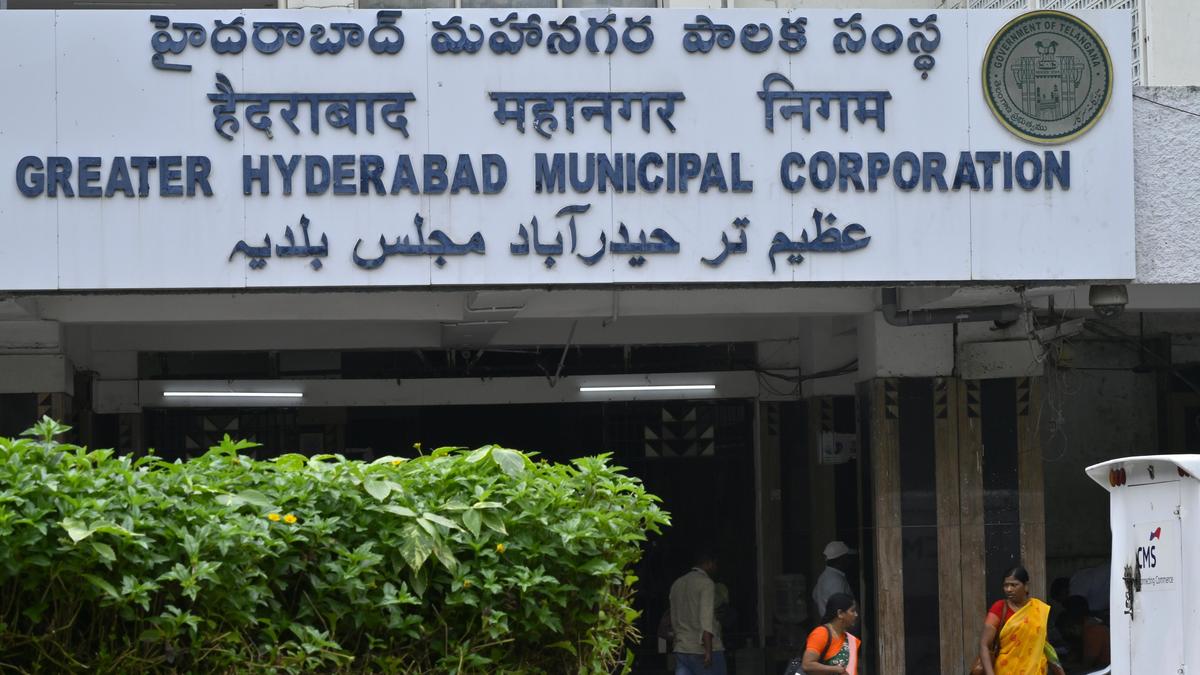
The Greater Hyderabad Municipal Corporation (GHMC) is on the cusp of being divided into three separate entities – Hyderabad, Cyberabad, and Malkajgiri – just after a significant expansion in 2025 that saw it encompass a much larger area. This potential demerger comes ahead of the municipal elections scheduled for February 2026. The move, facilitated by ordinances amending the Telangana Municipalities Act, 2019, and the GHMC Act, 1955, has sparked debate about its impact on governance, development, and political dynamics within the region. Critics argue that this reverses the original intent of the expansion, which aimed to address uneven growth and service disparities.
Key Points:
- In 2025, the GHMC expanded from 650 sq km to 2,053 sq km by incorporating 27 peripheral urban local bodies (ULBs).
- The GHMC area is encircled by the 158 km Nehru Outer Ring Road.
- The proposed demerger would create three corporations: Hyderabad (150 wards), Cyberabad, and Malkajgiri.
- Hyderabad is expected to include the core city and areas towards the airport, while Cyberabad would focus on the IT hub on the western side. Malkajgiri would encompass the eastern part of the city, facing infrastructure challenges.
- Elections for 300 wards are scheduled for February 11, 2026.
- The AIMIM is expected to increase its representation in the Hyderabad corporation.
- Some believe the demerger is to benefit Chief Minister A. Revanth Reddy’s project, Bharat Future City.
Critical Analysis:
The timing of the proposed demerger, just before the municipal elections, raises questions about the political motivations behind the move. The article suggests the demerger could benefit the Congress party by expanding its voter base, potentially weakening the hold of the Bharat Rashtra Samithi, which dominated city-based Assembly constituencies in the 2023 elections. Furthermore, the AIMIM’s anticipated dominance in the Hyderabad corporation adds another layer of political complexity. The comparison to Delhi’s failed experiment with dividing its municipal corporation highlights potential pitfalls, particularly financial strain and operational inefficiencies.
Key Takeaways:
- The potential demerger of the GHMC represents a significant shift in the governance of Hyderabad.
- Political motivations appear to be a major driving force behind the proposed changes.
- The move could have long-term consequences for development, service delivery, and political representation in the region.
- Past experiences, like Delhi’s municipal corporation split, serve as a cautionary tale.
- The focus should be on addressing existing deficiencies within the GHMC rather than undertaking a potentially disruptive demerger.
Impact Analysis:
The division of the GHMC could lead to significant long-term impacts. Each corporation will likely face unique challenges based on its geographical area, economic profile, and population demographics. The Hyderabad corporation, dominated by the AIMIM, might prioritize heritage and localized concerns, potentially affecting broader development initiatives. Cyberabad, driven by the IT sector, could experience rapid growth but may struggle with infrastructure and quality of life issues. Malkajgiri, already facing infrastructure deficits, might find it difficult to catch up. This fragmentation could exacerbate existing inequalities and make coordinated urban planning more challenging. The success of this restructuring will depend on the ability of the three corporations to cooperate and address shared challenges effectively.
 First Piper