
Sat Jan 17 13:50:21 UTC 2026: ### Headline: Protests Erupt in Denmark and Greenland Over U.S. Interest in Acquisition
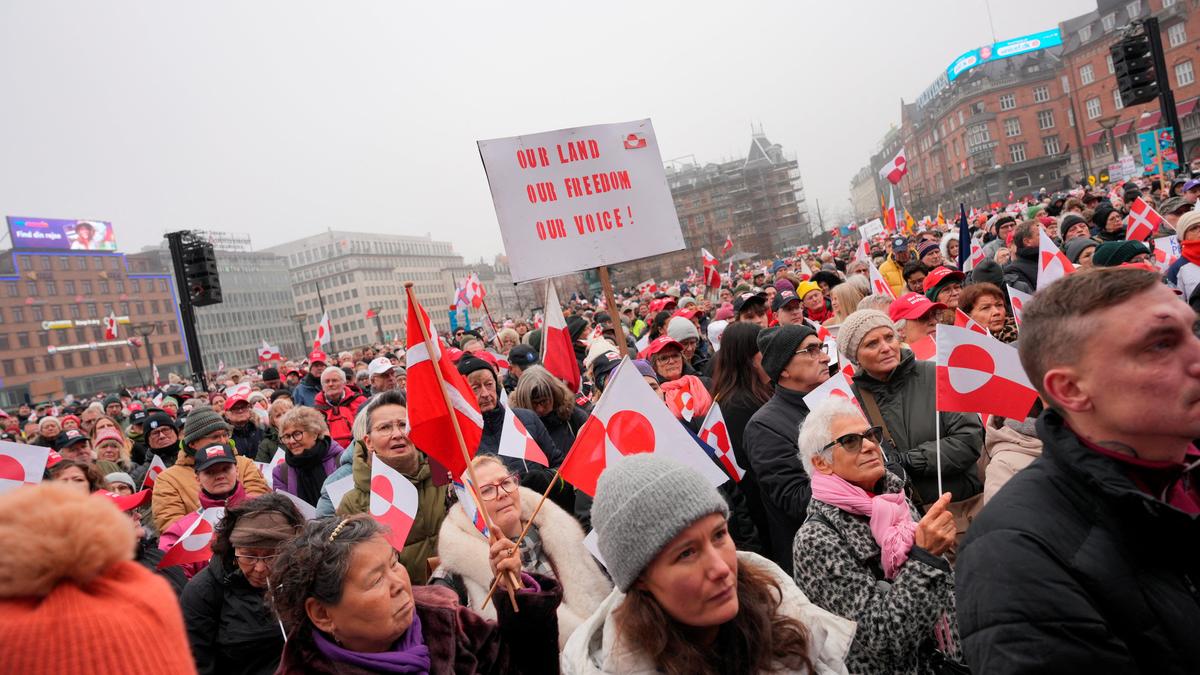
The Story: Thousands of protesters took to the streets of Copenhagen and Nuuk on January 17, 2026, to voice their opposition to U.S. President Donald Trump’s interest in acquiring Greenland. The demonstrations, organized by Greenlandic associations, coincided with a visit by a U.S. Congressional delegation to Copenhagen and followed Trump’s warning of potential tariffs on countries opposing his plans. Protesters waved Danish and Greenlandic flags, chanting slogans in support of Greenland’s self-determination.
Key Points:
- Thousands protested in Copenhagen and Nuuk against U.S. interest in acquiring Greenland on January 17, 2026.
- The protests were triggered by U.S. President Donald Trump’s consideration of acquiring Greenland and his threat of tariffs on opposing nations.
- A U.S. Congressional delegation was in Copenhagen during the protests, expressing opposition to the administration’s stance.
- Greenlanders overwhelmingly oppose joining the United States, with only 6% in favor according to a January 2025 poll.
- European NATO members are deploying troops in Greenland for military exercises, underscoring their commitment to defending their sovereignty.
Critical Analysis:
The events surrounding Greenland reflect a renewed interest in Arctic security and resources, particularly in light of climate change and shifting geopolitical dynamics. Trump’s approach, characterized by threats and unilateral considerations, has created friction with Denmark, a key NATO ally. The involvement of a bipartisan Congressional delegation signals a division within the U.S. regarding the administration’s strategy. The military exercises involving multiple European nations are a clear message of collective defense and territorial integrity, particularly in the face of perceived U.S. overreach.
Key Takeaways:
- The Greenland situation highlights the growing strategic importance of the Arctic region.
- Donald Trump’s diplomatic tactics are causing tension with traditional allies.
- Greenlanders overwhelmingly oppose U.S. acquisition, emphasizing their right to self-determination.
- European nations are demonstrating a united front in defending their Arctic sovereignty.
- Climate change and shifting geopolitical realities are driving increased interest in Arctic security.
Impact Analysis:
The Greenland crisis has the potential to significantly impact international relations and security in the Arctic region.
- Increased Geopolitical Competition: The U.S. interest in Greenland is likely to spur further competition among nations for influence and access to resources in the Arctic.
- Strained U.S.-Denmark Relations: Trump’s approach could damage the long-standing relationship between the United States and Denmark, impacting cooperation within NATO and other international forums.
- Rise of Arctic Nationalism: The protests and strong opposition to U.S. acquisition could fuel a sense of Greenlandic national identity and a push for greater autonomy or even independence.
- Shift in European Security Strategy: The increased military presence of European nations in Greenland signals a willingness to assert their sovereignty and protect their interests in the Arctic, potentially reducing reliance on the U.S. for regional security.
- Future Resource Disputes: As climate change opens up new shipping routes and access to resources in the Arctic, disputes over territorial claims and resource exploitation are likely to escalate, requiring international cooperation to prevent conflict.
 First Piper