
Sun Jan 18 04:27:49 UTC 2026: ### Syria’s Army Advances, Displacing Kurdish Forces Amidst Fragile Agreements
The Story:
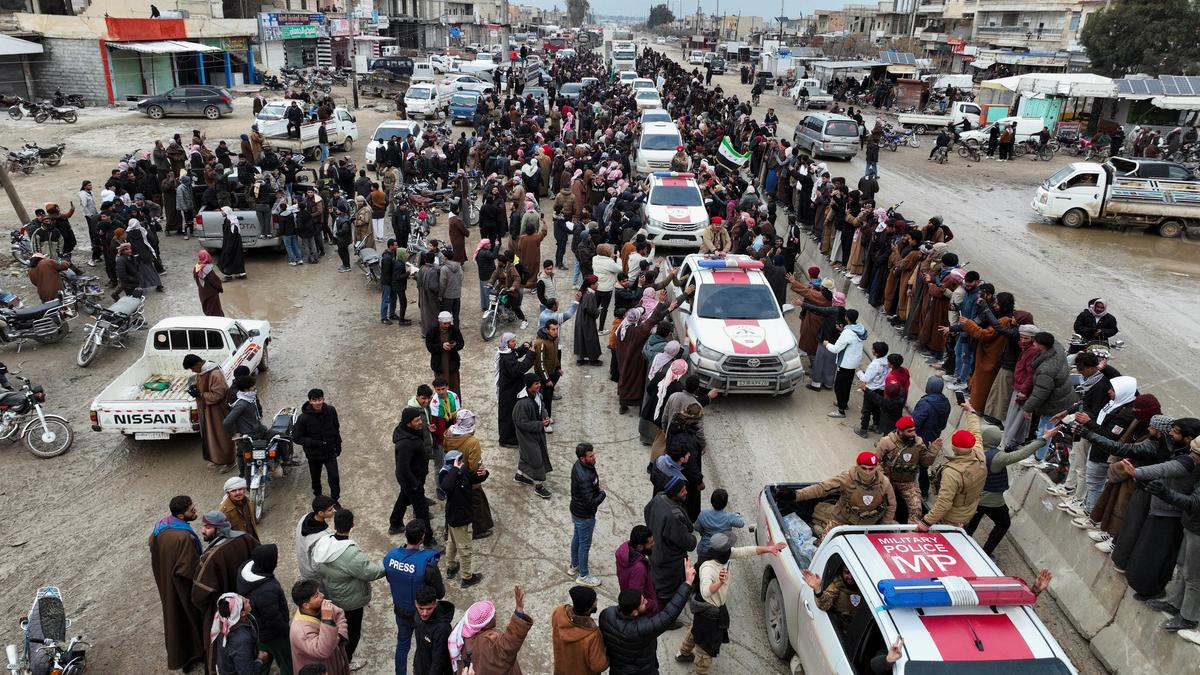
Syria’s army has seized control of significant territory in the north, pushing out Kurdish-led Syrian Democratic Forces (SDF) after more than a decade of Kurdish autonomy in those regions. This follows stalled implementation of a March 2026 deal meant to integrate Kurdish forces into the state army. The Syrian government, led by President Ahmed al-Sharaa, issued a decree recognizing Kurdish as a “national language” but Kurdish authorities claim it falls short of their aspirations. The advance has led to clashes, accusations of violated agreements, and international calls for de-escalation.
Key Points:
- Syrian army took control of territory formerly held by the SDF, including the strategic city of Tabqa and the Euphrates Dam on January 18, 2026.
- President Ahmed al-Sharaa issued a decree recognizing Kurdish as a “national language” on January 16, 2026.
- The SDF and Syrian army accuse each other of violating withdrawal agreements, resulting in casualties on both sides.
- The SDF allegedly blew up a bridge and cut off water supply in Raqa city.
- International actors, including the U.S. and France, are urging de-escalation and a ceasefire.
- The U.S. conducted a strike in northwest Syria, killing a militant linked to a deadly attack on three Americans last month.
Critical Analysis:
The events indicate a complex interplay of factors. While the Syrian government makes symbolic gestures towards recognizing Kurdish rights, the military advances demonstrate an intent to reassert control over territories held by the Kurds since the civil war. The timing of the advance following a stalled agreement to integrate Kurdish forces suggests a deliberate strategy to undermine Kurdish autonomy. The international involvement, particularly by the U.S., which supports both the Syrian government and Kurdish forces, highlights the delicate balancing act required to prevent further escalation.
Key Takeaways:
- The Syrian government is prioritizing territorial control over meaningful concessions to Kurdish self-governance.
- The fragility of agreements between the Syrian government and the SDF exacerbates instability in the region.
- International mediation is crucial to prevent further conflict and protect civilian populations.
- The recognition of Kurdish as a “national language” is seen as a superficial concession by the Kurds.
- The U.S. faces a complex geopolitical challenge balancing relationships with both the Syrian government and Kurdish forces.
Impact Analysis:
The Syrian army’s advance and displacement of Kurdish forces have significant long-term implications. This could lead to:
- Increased Instability: Renewed conflict between the Syrian government and Kurdish groups could destabilize the region further, potentially leading to a resurgence of extremist groups like ISIS.
- Humanitarian Crisis: Displacement of civilians and disruption of essential services like water and electricity could trigger a humanitarian crisis.
- Geopolitical Realignment: The shifting power dynamics could prompt regional actors to reconsider their alliances and strategies.
- Erosion of Trust: The failure of the integration deal and the subsequent military action could severely damage trust between the Syrian government and Kurdish communities, making future reconciliation more difficult.
- Diminished Kurdish Autonomy: The Syrian government’s actions signal a clear intention to curtail Kurdish autonomy, potentially reversing gains made during the civil war.
 First Piper