
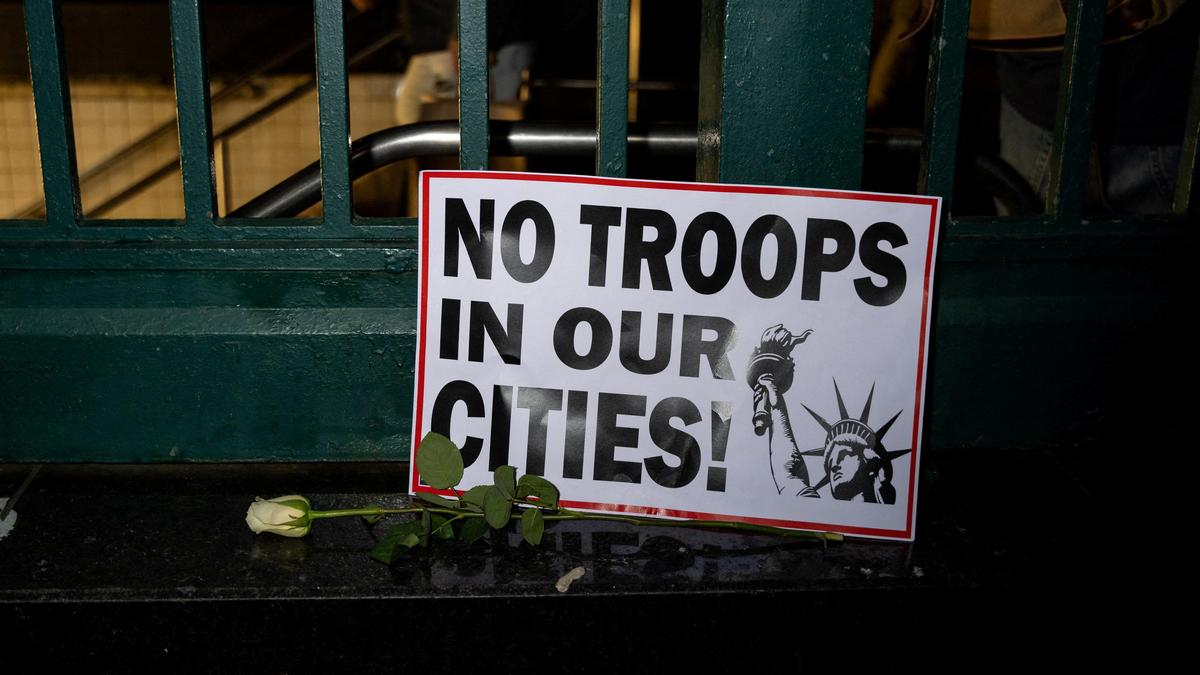
Sun Jan 18 12:45:51 UTC 2026: Headline: Federal Troops Prepare for Deployment to Minnesota Amidst Protests Over ICE Shooting
The Story:
The Pentagon has ordered approximately 1,500 active-duty soldiers to prepare for possible deployment to Minnesota in response to escalating protests against the government’s immigration policies. This follows the fatal shooting of Renee Nicole Good, a 37-year-old U.S. citizen and mother of three, by an ICE agent on January 7, 2026, in Minneapolis. President Donald Trump has threatened to invoke the Insurrection Act to deploy military forces if state officials fail to quell the protests, which he alleges are being driven by “professional agitators” targeting ICE agents.
The situation is further complicated by accusations of federal overreach and political motivations, as the troop deployments coincide with a criminal investigation against Minnesota Governor Tim Walz and repeated targeting of the state’s Somali immigrant community by the President. Governor Walz has mobilized the State’s National Guard to support local law enforcement.
Key Points:
- The Pentagon ordered 1,500 active-duty soldiers to prepare for potential deployment to Minnesota.
- President Trump threatened to use the Insurrection Act to deploy military forces.
- Renee Nicole Good, a U.S. citizen, was fatally shot by an ICE agent on January 7, 2026.
- President Trump has deployed nearly 3,000 federal agents from ICE and Border Patrol to Minneapolis and St. Paul.
- Minnesota Governor Tim Walz has mobilized the State’s National Guard.
Critical Analysis:
The deployment preparation follows a pattern of President Trump using federal resources, including ICE and potentially the military, in states run by Democratic politicians, often citing the need to combat crime and protect federal property. The timing of the deployment, coinciding with a criminal investigation against Governor Walz and targeting of the Somali immigrant community, suggests a politically motivated use of federal power. The Insurrection Act threat and the actual deployment of troops represents a significant escalation of federal involvement in state affairs.
Key Takeaways:
- The situation highlights a growing tension between the federal government and state governments over immigration enforcement and federal overreach.
- The invocation of the Insurrection Act, or even the threat of it, represents a significant escalation of presidential power in domestic affairs.
- The events underscore the continued politicization of immigration and the targeting of specific communities.
- The use of military force to quell domestic protests raises concerns about civil liberties and the role of the military in civilian law enforcement.
Impact Analysis:
The unfolding events carry significant long-term implications:
* Erosion of Federal-State Relations: The conflict between the federal government and Minnesota could further deteriorate relations between states and the federal government, leading to increased legal challenges and political polarization.
* Increased Social Unrest: The deployment of troops could exacerbate social unrest and potentially lead to further violence, especially if the military engages directly with protesters.
* Damage to U.S. Image: Internationally, the deployment of troops against U.S. citizens could harm the country’s reputation as a defender of democracy and human rights. Especially contrasted against reports of Israeli Troops killing Palestinians on the same day.
* Legal Precedent: The invocation, or attempted invocation, of the Insurrection Act could set a dangerous precedent for future presidents, potentially leading to the militarization of domestic law enforcement.
 First Piper