
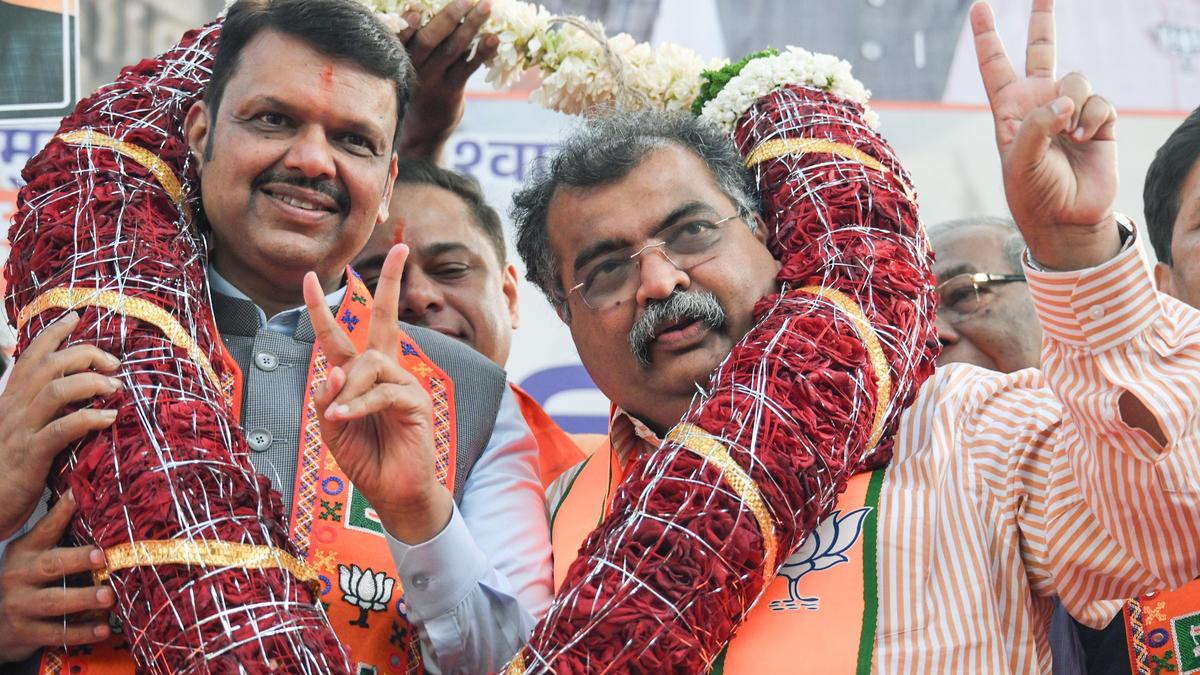
Sat Jan 17 20:31:42 UTC 2026: ### BJP Dominates Mumbai Civic Polls, Shiv Sena (UBT) Emerges as Strong Opposition
The Story:
In the January 16, 2026, Brihanmumbai Municipal Corporation (BMC) elections, the Bharatiya Janata Party (BJP) secured the highest number of seats, marking a significant shift in Mumbai’s political landscape. While falling short of a complete takeover, the BJP leads with 89 seats, with its alliance partner, Eknath Shinde’s Shiv Sena, securing 29 seats. Uddhav Thackeray’s Shiv Sena (UBT) emerged as a strong opposition, winning 65 seats. The results signal a blow to the Shiv Sena (UBT)’s ambition to retain control of India’s richest civic body and highlight the BJP’s growing influence in Mumbai.
Other parties, including the Maharashtra Navnirman Sena (MNS) with 6 seats, the Congress with 24 seats, Ajit Pawar’s Nationalist Congress Party (NCP) with 3 seats, and Sharad Pawar’s NCP with 1 seat, also secured representation. A notable surprise was the All India Majlis-E-Ittehadul Muslimeen (AIMIM) winning 8 seats.
Key Points:
- The BJP leads in the BMC elections with 89 seats, followed by Shiv Sena (UBT) with 65 seats, and Eknath Shinde’s Shiv Sena with 29 seats.
- The BJP’s victory affirms its dominant position in Mumbai but doesn’t secure a decisive takeover.
- The Shiv Sena (UBT) and MNS won in Marathi-dominated wards, indicating the enduring strength of Marathi identity politics.
- The AIMIM made significant gains, winning 8 seats in Muslim-dominated wards.
- The Congress managed to secure 24 seats, showcasing a diminished presence compared to the 2017 elections.
Critical Analysis:
The historical context provides insights into the evolving political dynamics. Uddhav Thackeray’s statement that the “Election Was Very Strange…” hints at potential allegations of foul play or irregularities. The BJP’s confidence, as expressed by Devendra Fadnavis, claiming a “Decisive Mandate” with 45% vote share, further emphasizes the party’s assertiveness. The Delhi HC’s rejection of an AAP leader’s plea against a BJP victory in the 2025 Assembly poll and the AICC’s discussions on poll alliances indicate broader political maneuvering at the state and national levels, underscoring the intense competition and strategic alliances shaping India’s political future.
Key Takeaways:
- The BJP has emerged as a dominant force in Mumbai’s civic politics, challenging the traditional dominance of the Shiv Sena.
- The Shiv Sena (UBT), despite losing ground, remains a significant political force and a strong opposition.
- Regional parties like the MNS and AIMIM continue to play a crucial role, representing specific demographics and shaping local political dynamics.
- The Congress struggles to maintain its foothold in Mumbai, signaling a need for strategic recalibration.
- The split within the Shiv Sena has significantly impacted the political landscape, creating new power dynamics and rivalries.
Impact Analysis:
The BJP’s ascendance in Mumbai civic polls has several long-term implications. It could lead to a shift in policy priorities within the BMC, potentially favoring infrastructure projects and developmental agendas aligned with the BJP’s vision. The reduced influence of the Shiv Sena (UBT) may force the party to reassess its strategies and potentially seek new alliances. The gains made by the AIMIM signal the growing political assertion of Muslim communities and could influence future electoral strategies of other parties. Ultimately, the 2026 BMC elections represent a pivotal moment in Mumbai’s political history, potentially reshaping the city’s governance and political landscape for years to come.
 First Piper