
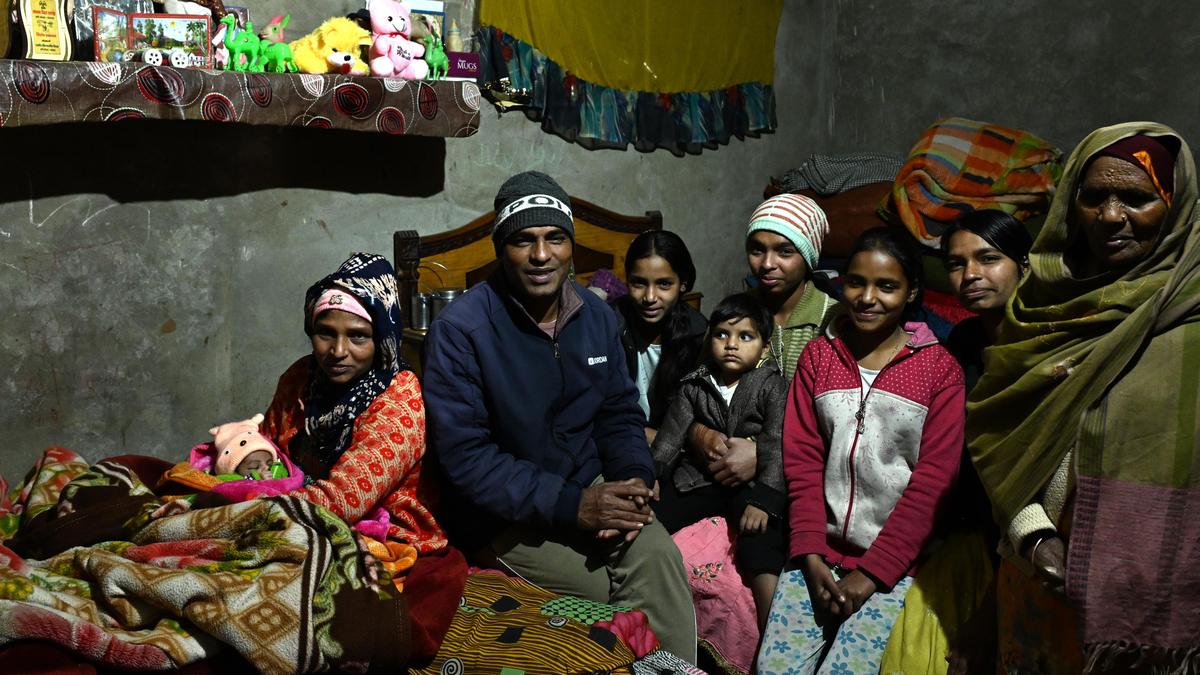
Sun Jan 18 02:30:00 UTC 2026: ### Haryana Family Celebrates Birth of Son After 11 Pregnancies, Highlighting Persistent Son Preference
The Story:
In Dhani Bhojraj village, Haryana, the Singwai family is celebrating the birth of their first son after Sunita Singwai, 37, endured 11 pregnancies. Despite having nine daughters, societal pressures and personal desires led her to continue childbearing until a son was born on January 4, 2026. The article underscores the deep-rooted cultural preference for sons in the region, despite improvements in the state’s sex ratio.
Key Points:
- Sunita Singwai, 37, had 11 pregnancies before giving birth to a son.
- The family, residing in Haryana’s Fatehabad district, faced societal taunts for not having a son.
- Haryana’s sex ratio at birth has improved to 923 females per 1,000 males in 2025 (Civil Registration System), but the preference for sons remains.
- Activist Sunil Jaglan, who initiated the ‘Selfie with Daughter’ campaign in 2017, highlights the collective pressure women face to bear sons.
- The family insists there was no coercion, and they love all their daughters, but the desire for a son was strong.
Critical Analysis:
Cold Conditions, Pollution Increase Preterm Births Risk, Warn Doctors: January 15, 2026
Delhi, Punjab and Haryana reel under intense cold, sub-zero nights grip Kashmir: January 14, 2026
The birth occurred during a period of intense cold and reported risk of preterm births from pollution in Haryana. This raises concerns about the potential health risks Sunita Singwai and her newborn faced, considering her weakened state from multiple pregnancies.
Key Takeaways:
- Despite government efforts and improving sex ratios, the preference for sons persists in Haryana, particularly among lower-income households.
- Societal pressure and cultural norms play a significant role in perpetuating this preference.
- Continuous childbirth poses significant health risks to women.
- The story highlights the complex interplay between individual desires, societal expectations, and women’s health in the context of gender inequality.
Impact Analysis:
The Singwai family’s story, while personal, serves as a microcosm of a larger societal issue. The persistence of son preference in Haryana, as highlighted in this article, necessitates continued and intensified efforts to address gender stereotypes through education, awareness campaigns, and policy interventions. The story underscores the need to promote the value of daughters and ensure women’s reproductive health and rights are prioritized. Failure to do so could lead to further gender imbalance and the continued marginalization of women. The article is important because this is 2026 and this issue is still affecting women in Haryana.
 First Piper