
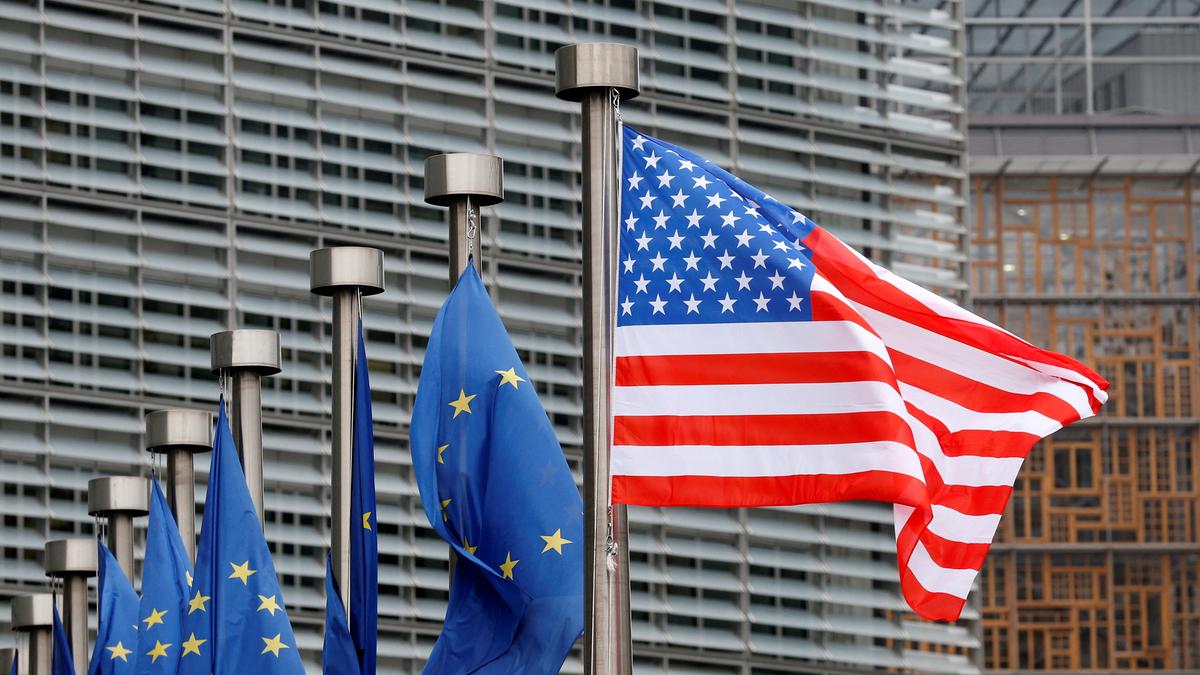
Sun Jan 18 01:49:22 UTC 2026: # Trump’s Greenland Pursuit Sparks Trade War Threat with Europe
The Story:
U.S. President Donald Trump has threatened to impose tariffs on eight European nations, starting with a 10% import tax in February 2026, escalating to 25% by June 1, 2026, if the U.S. is not granted the “Complete and Total purchase of Greenland.” This action stems from European opposition to American control over Greenland. European Union leaders have responded with strong condemnation, warning of a “dangerous downward spiral” in transatlantic relations and pledging to remain united in upholding their sovereignty.
Key Points:
- Donald Trump announced a 10% import tax on goods from Denmark, Norway, Sweden, France, Germany, the United Kingdom, the Netherlands, and Finland, effective February 2026.
- The tariff could climb to 25% by June 1, 2026, if the U.S. does not acquire Greenland.
- EU leaders, including European Commission President Ursula von der Leyen and EU Council President Antonio Costa, warned of a “dangerous downward spiral.”
- EU top diplomat Kaja Kallas said the tariffs would undermine shared prosperity and distract the EU from addressing Russia’s war in Ukraine.
- EU ambassadors will hold an emergency meeting on January 18, 2026, to discuss their response.
Critical Analysis:
The timing of this Greenland initiative, while seemingly abrupt, needs to be contextualized. A U.S. president openly attempting to purchase Greenland is not a new phenomenon; Trump made similar attempts during his first term. The key difference now is the geopolitical landscape. With Russia’s ongoing war in Ukraine and heightened global tensions, the U.S. likely views control over Greenland as critical for strategic security, particularly in the Arctic. The EU’s resistance, framed as upholding sovereignty, likely stems from a desire to maintain regional influence and prevent further U.S. dominance in the Arctic region. Kallas’s statement on Russia and China benefiting from divisions among allies suggests a broader understanding of the geopolitical ramifications, yet the EU’s unified opposition indicates a firm stance against yielding to U.S. demands.
Key Takeaways:
- Escalating Trade Tensions: Trump’s tariff threats mark a significant escalation in trade tensions between the U.S. and Europe.
- Geopolitical Strategy: The U.S.’s renewed interest in Greenland likely reflects a heightened focus on Arctic security amidst growing global instability.
- EU Resistance: The European Union is unified in its opposition to the U.S.’s acquisition of Greenland, prioritizing sovereignty and regional influence.
- Strategic Diversion: The EU fears that this crisis distracts from more pressing issues, particularly the war in Ukraine.
- NATO Implications: The suggestion to address Greenland’s security within NATO frameworks hints at alternative solutions to U.S. acquisition.
Impact Analysis:
The immediate impact is likely to be economic disruption, as the tariffs will affect trade between the U.S. and Europe. In the long term, this crisis could reshape transatlantic relations, potentially weakening the alliance if not handled carefully. A trade war could further fragment the global economy, benefiting countries like China and Russia who are already challenging the established world order. The situation also forces a critical examination of Arctic security and the balance of power in the region, with potentially significant implications for international cooperation and resource management.
 First Piper