
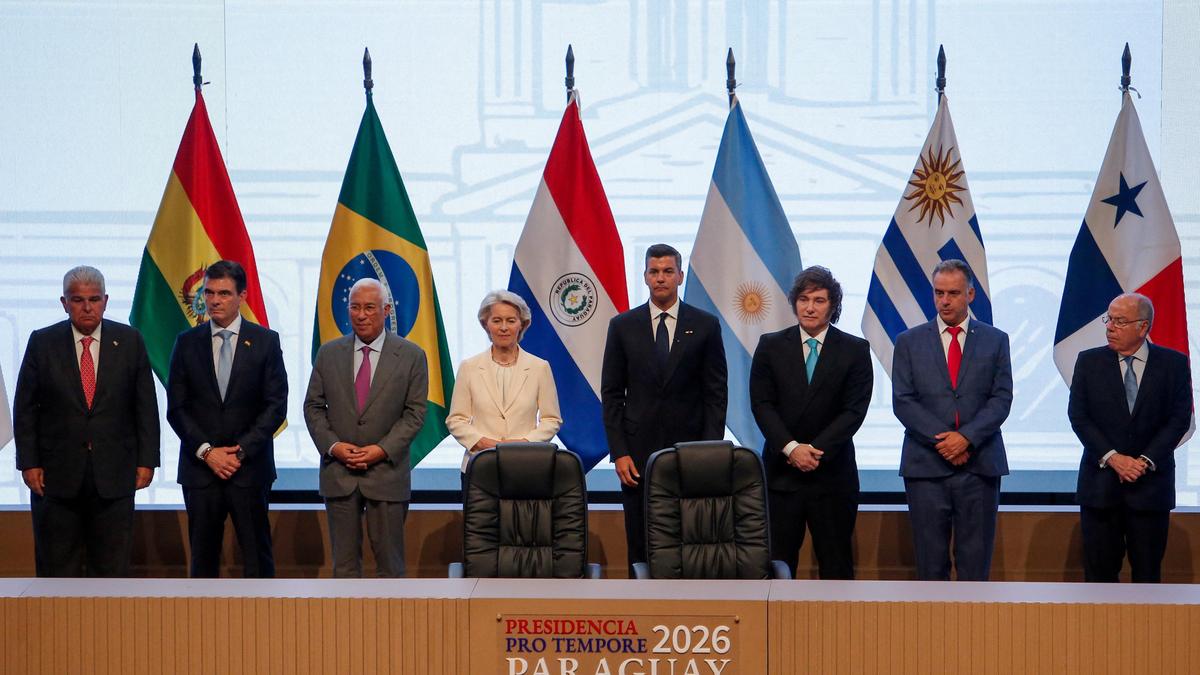
Sun Jan 18 02:11:38 UTC 2026: ### EU and Mercosur Sign Landmark Free Trade Agreement After Decades of Negotiations
The Story:
After more than 25 years of arduous negotiations, the European Union and the Mercosur bloc of South American countries formally signed a free trade agreement on January 17, 2026, in Asunción, Paraguay. This agreement aims to bolster commercial ties amidst rising global protectionism and trade tensions. The deal represents a significant geopolitical win for the EU, offering expanded access to a resource-rich region while challenging U.S. dominance and countering surging Chinese exports.
The agreement, however, faces potential hurdles, including ratification by the European Parliament, and reflects internal tensions regarding agricultural standards and protectionism. Despite these challenges, key figures like European Commission President Ursula von der Leyen and Brazilian President Luiz Inácio Lula da Silva have championed the deal as a crucial step towards multilateralism and fair trade.
Key Points:
- The EU and Mercosur signed a free trade agreement on January 17, 2026, after 25 years of negotiations.
- The agreement aims to eliminate over 90% of tariffs on goods, creating one of the world’s largest free trade zones, impacting over 700 million consumers.
- European Commission President Ursula von der Leyen framed the deal as a direct contrast to the protectionist policies of the Trump administration, which recently imposed tariffs on European nations.
- Brazilian President Luiz Inácio Lula da Silva, despite being a key advocate, did not attend the signing ceremony, highlighting underlying tensions and frustrations over EU demands regarding agricultural production standards.
- The agreement still requires ratification by the European Parliament, where it faces opposition from protectionist lobbies and concerns over its impact on European farmers, particularly in countries like France.
Critical Analysis:
The signing of the EU-Mercosur trade agreement is occurring at a time of complex global economic and political dynamics. The agreement presents a united front from two major trade blocs against unilateral protectionist policies, specifically those associated with the Trump administration. However, internal tensions within both blocs, particularly in the EU where powerful farming lobbies wield considerable influence, underscore the complexities involved in balancing free trade aspirations with domestic economic and political concerns. The absence of Lula, despite his long advocacy for the deal, further points to the strained nature of the negotiations and the underlying issues that may impact future relations.
Key Takeaways:
- The EU-Mercosur agreement represents a strategic effort to counter protectionist trends and assert multilateralism in global trade.
- Internal divisions and protectionist pressures within the EU remain a significant challenge to the full implementation of the agreement.
- The agreement underscores the ongoing competition between the EU, the U.S., and China for influence in South America.
- Agricultural standards and environmental regulations are key points of contention in international trade agreements, reflecting differing priorities between developed and developing economies.
- Ratification by the European Parliament remains a critical hurdle, and the success of the agreement hinges on navigating protectionist opposition within Europe.
Impact Analysis:
The EU-Mercosur trade agreement has the potential for long-term global impact, reshaping trade relations and geopolitical alignments. If successfully ratified and implemented, it could lead to:
- Economic Growth: Increased trade flows between the EU and Mercosur countries, stimulating economic growth in both regions.
- Geopolitical Influence: Strengthening the EU’s foothold in South America, providing a counterweight to U.S. and Chinese influence in the region.
- Trade Standards: Setting a precedent for future trade agreements, incorporating environmental and social standards while navigating protectionist pressures.
- Agricultural Transformation: Potentially reshaping agricultural production and trade patterns, as South American producers gain greater access to European markets, and European farmers face increased competition.
- Consumer Benefits: Lower prices for consumers in both regions as tariffs are eliminated on a wide range of goods.
 First Piper