
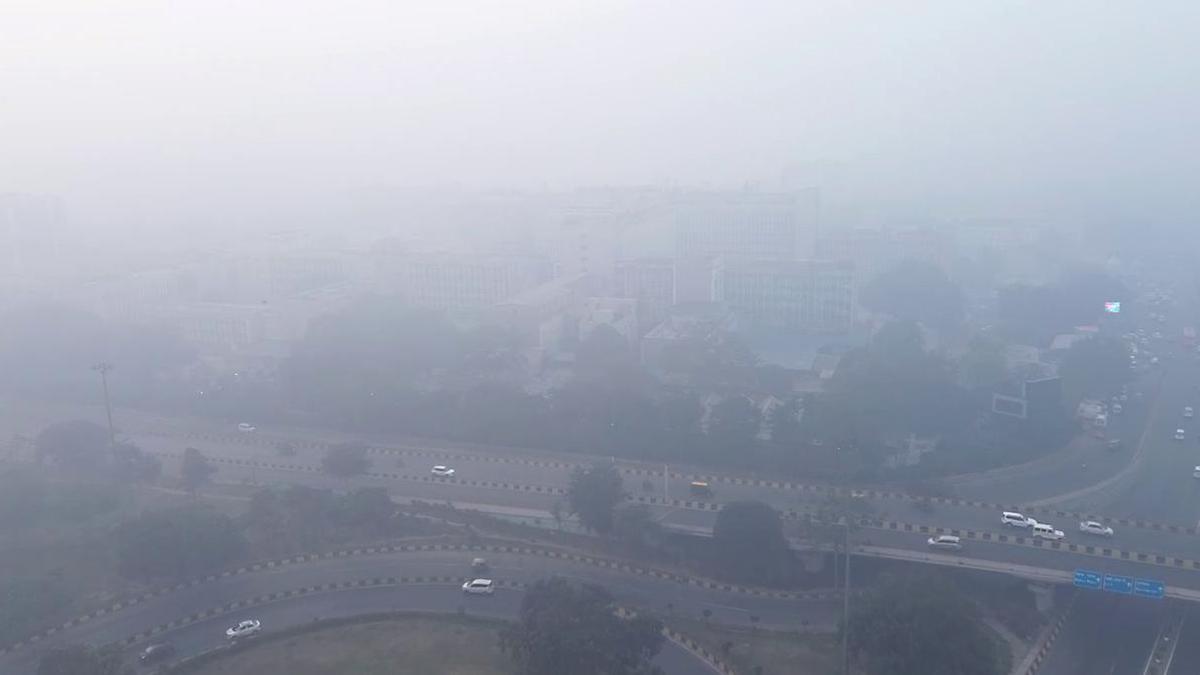
Sat Jan 17 20:10:17 UTC 2026: # Delhi Chokes: Severe Air Pollution Triggers Emergency Measures
The Story:
On Saturday, January 17, 2026, Delhi’s air quality plummeted to the ‘severe’ category, prompting the Commission for Air Quality Management (CAQM) to implement Stage IV of the Graded Response Action Plan (GRAP). The measures include a ban on most trucks entering the city, with exceptions for essential commodities and specific fuel types. Schools, except for students in Classes 10 and 12, are ordered to shift to hybrid mode in Delhi, Gurugram, Faridabad, Ghaziabad, and Gautam Buddha Nagar.
Key Points:
- Delhi’s overall air quality index (AQI) reached 428 (severe) at 8 p.m. on January 17, 2026.
- A ban is imposed on trucks entering Delhi, excluding those carrying essential commodities and providing essential services. Trucks powered by LNG, CNG, battery, or BS-VI diesel are exempt.
- Schools in Delhi, Gurugram, Faridabad, Ghaziabad, and Gautam Buddha Nagar, except for Classes 10 and 12, must switch to a hybrid mode of learning.
- The CAQM suggested State governments could consider additional measures, including closing colleges and suspending non-essential commercial activities.
- These restrictions fall under Stage IV of the Graded Response Action Plan (GRAP).
Critical Analysis:
The historical context reveals that the GRAP-4 curbs were imposed in Delhi-NCR on January 17, 2026, the same day the air quality worsened to ‘severe’. This indicates a reactive, rather than preventative, approach to air pollution management. The immediacy of the response following the deterioration of air quality to “severe” highlights the lack of preparedness or the ineffectiveness of prior measures to proactively mitigate pollution levels.
Key Takeaways:
- Delhi’s air pollution continues to be a significant public health crisis, requiring immediate and drastic interventions.
- The GRAP is activated only when air quality reaches critical levels, suggesting a reactive rather than proactive approach.
- The restrictions implemented disproportionately affect certain sectors, like transportation and education, indicating a need for more comprehensive and equitable solutions.
- Reliance on emergency measures indicates a failure to address the root causes of air pollution effectively.
Impact Analysis:
The recurring implementation of GRAP measures like Stage IV suggests a cyclical pattern of severe air pollution in Delhi. This has long-term implications for public health, economic productivity (due to school closures and restrictions on commercial activities), and the region’s overall sustainability. The repeated disruptions in education and commerce could hinder long-term development and exacerbate existing socio-economic disparities. Furthermore, the reliance on reactive measures, like the GRAP, rather than preventative strategies, raises concerns about the long-term viability of Delhi as a habitable urban center.
 First Piper