
Sat Jan 17 19:47:20 UTC 2026: # Ahmedabad-Gandhinagar Metro Ridership Surges Following Phase-2 Completion
The Story
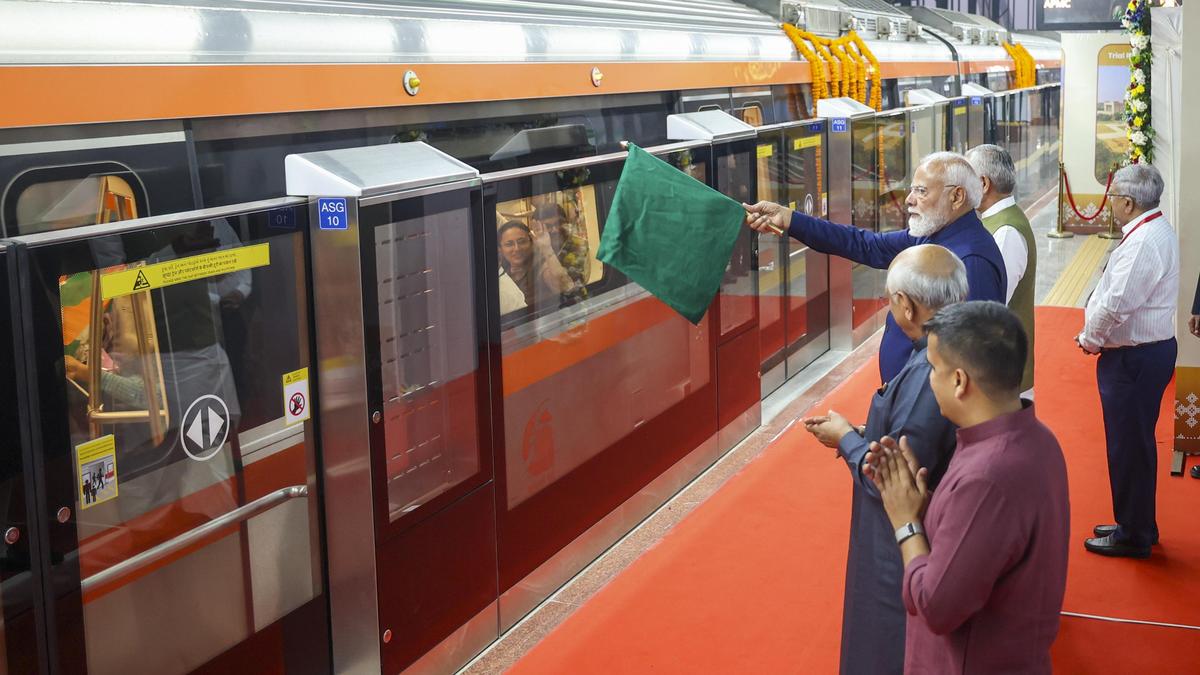
Daily passenger traffic on the Ahmedabad-Gandhinagar Metro has experienced a substantial increase, rising from approximately 35,000 to 1.5 lakh over the past three years. This surge follows the inauguration of the metro extension to Mahatma Mandir in Gandhinagar on January 11, 2026, as part of Ahmedabad Metro Rail Phase-2. The extension provides direct metro connectivity between Ahmedabad and Gandhinagar.
Over 11.50 crore passengers utilized the Ahmedabad-Gandhinagar Metro between October 2022 and December 2025. The metro network’s expansion, now spanning 68 km with 53 stations, connects key locations like Gandhinagar Railway Station, Akshardham Temple, and Dandi Kutir. This development is anticipated to reduce private vehicle usage and alleviate traffic congestion, benefiting employees, students, daily commuters, and visitors attending events at Mahatma Mandir and Kadi Sarva Vishwavidyalaya.
Key Points
- Daily ridership on the Ahmedabad-Gandhinagar Metro has increased from 35,000 to 1.5 lakh in three years.
- The metro extension to Mahatma Mandir was inaugurated on January 11, 2026, as part of Ahmedabad Metro Rail Phase-2.
- Over 11.50 crore passengers used the metro between October 2022 and December 2025.
- The metro network now spans 68 km with 53 stations.
- Ridership peaked during large events such as IPL matches, international cricket matches, and the Rath Yatra, and the Coldplay concert on January 25-26, 2025, where 4.11 lakh passengers traveled by metro.
Critical Analysis
The increase in ridership in Ahmedabad-Gandhinagar Metro is also occuring in a time where the Bengaluru Metro is facing a fare hike, indicating that there is both expansion and financial planning being done to keep the metro successful.
Key Takeaways
- The Ahmedabad-Gandhinagar Metro expansion has significantly increased ridership, demonstrating its value to the public.
- Major events substantially boost metro usage, highlighting the metro’s role in facilitating transportation during peak demand.
- The expanded network offers convenient access to key locations, benefiting a diverse range of commuters.
- The development aims to reduce traffic congestion and promote sustainable transportation.
Impact Analysis
The completion of Phase-2 and the subsequent surge in ridership signify a positive shift towards public transportation in the Ahmedabad-Gandhinagar region. This development likely has several long-term implications:
- Reduced Traffic Congestion: As more people opt for the metro, private vehicle usage is expected to decrease, leading to less traffic congestion and improved air quality.
- Economic Growth: Enhanced connectivity can stimulate economic activity by facilitating the movement of people and goods.
- Sustainable Development: The metro promotes sustainable transportation, aligning with broader environmental goals and reducing reliance on fossil fuels.
- Increased Property Values: Areas near metro stations may experience increased property values due to improved accessibility and convenience.
- Future Expansion: The success of Phase-2 may encourage further expansion of the metro network, connecting more regions and benefiting a larger population.
 First Piper