
Sat Jan 17 01:14:46 UTC 2026: ### Syria on Brink of Renewed Conflict as Government and Kurdish Forces Clash
The Story:
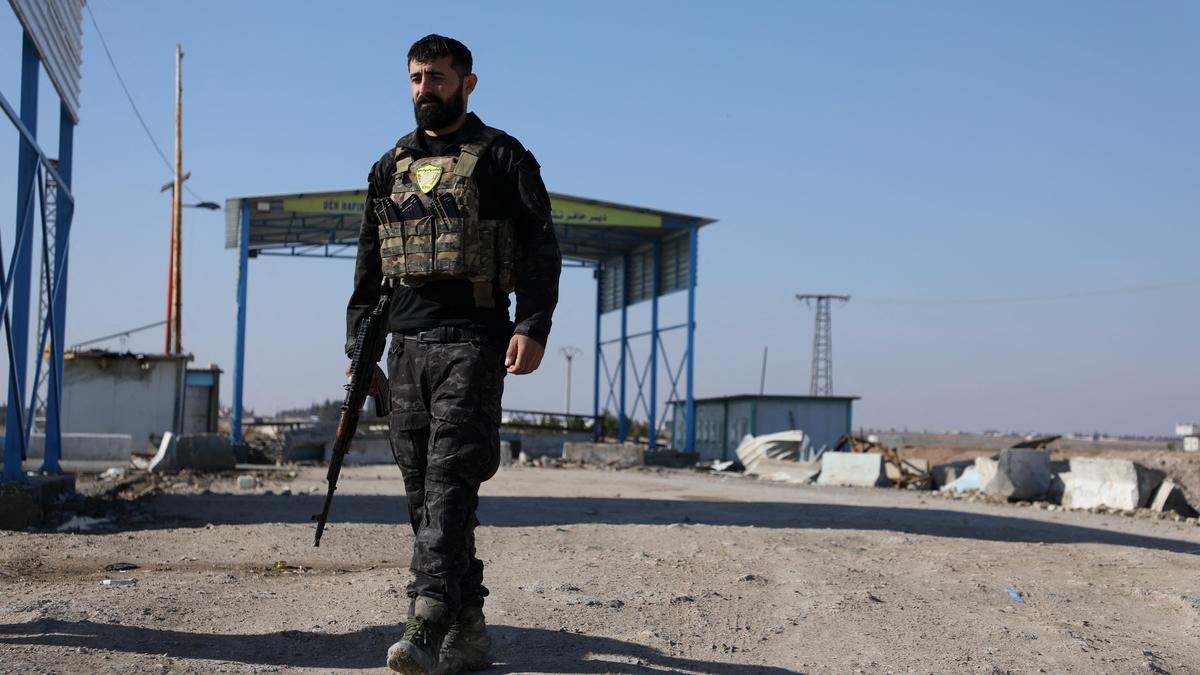
Syrian government troops are preparing to launch an offensive against Kurdish-held towns in northern and eastern Syria, escalating tensions after failed integration talks. The Syrian Democratic Forces (SDF), a Kurdish-led group, has agreed to withdraw from areas east of Aleppo, a move welcomed by the Syrian Defence Ministry, which intends to deploy its forces to enforce state sovereignty. The United States is urging both sides to de-escalate and return to negotiations, balancing its historical support for the SDF with its new support for President Ahmed al-Sharaa and a unified Syria.
Key Points:
- Syrian troops are poised to attack towns held by Kurdish fighters to pressure them into concessions in deadlocked talks.
- SDF head Mazloum Abdi announced the withdrawal of forces east of Aleppo, citing calls from friendly countries.
- The Syrian military said it had begun shelling bases belonging to a militia affiliated with the Kurdistan Workers’ Party (PKK) and remnants of the former regime allied with SDF in Aleppo’s Deir Hafer city.
- The United States is urging both sides to avoid a showdown and return to talks.
- As many as five Syrian army divisions could participate in the offensive, targeting Kurdish-held towns in Aleppo and Deir el-Zor.
- Syrian Army units deployed on January 14 and January 15, 2026 to the town of Deir Hafer and surrounding villages.
- U.S. envoy Tom Barrack stated Washington is in close contact with all parties, working to prevent escalation.
- President Sharaa accused the SDF of obstructing U.S. policy and taking orders from the PKK.
Key Takeaways:
- The Syrian civil war, though officially over after 14 years, continues to be a source of instability as the central government struggles to reassert control over semi-autonomous regions.
- The failure of integration talks between the Syrian government and the SDF has brought the region to the brink of renewed conflict, potentially undoing years of progress against groups like the Islamic State.
- The United States faces a difficult balancing act, needing to maintain stability, support its allies, and foster a unified Syria under a new leadership.
- The involvement of the PKK, a group considered a terrorist organization by Turkey, complicates the situation and could draw in other regional actors.
Impact Analysis:
The unfolding events have significant long-term implications:
- Regional Instability: Renewed conflict could destabilize the entire region, potentially leading to a resurgence of extremist groups like the Islamic State and increased displacement of civilians.
- Geopolitical Realignments: The United States’ evolving stance towards Syria could lead to shifts in alliances and influence in the Middle East. The US attempt to “recalibrate its Syria policy” to support Sharaa, who ousted a Russian-backed dictator, signifies a huge shift in US priorities.
- Humanitarian Crisis: A full-scale military campaign could trigger a humanitarian crisis, requiring international aid and intervention.
- Kurdish Autonomy: The future of the semi-autonomous Kurdish region is at stake, with the Syrian government aiming to reclaim control. The loss of Kurdish autonomy would embolden Turkey, who views the PKK as a threat.
 First Piper