
Fri Jan 16 22:30:00 UTC 2026: # Uttar Pradesh Electoral Roll Revision Sparks Concerns Over Migrant Voters and Minority Inclusion
The Story:
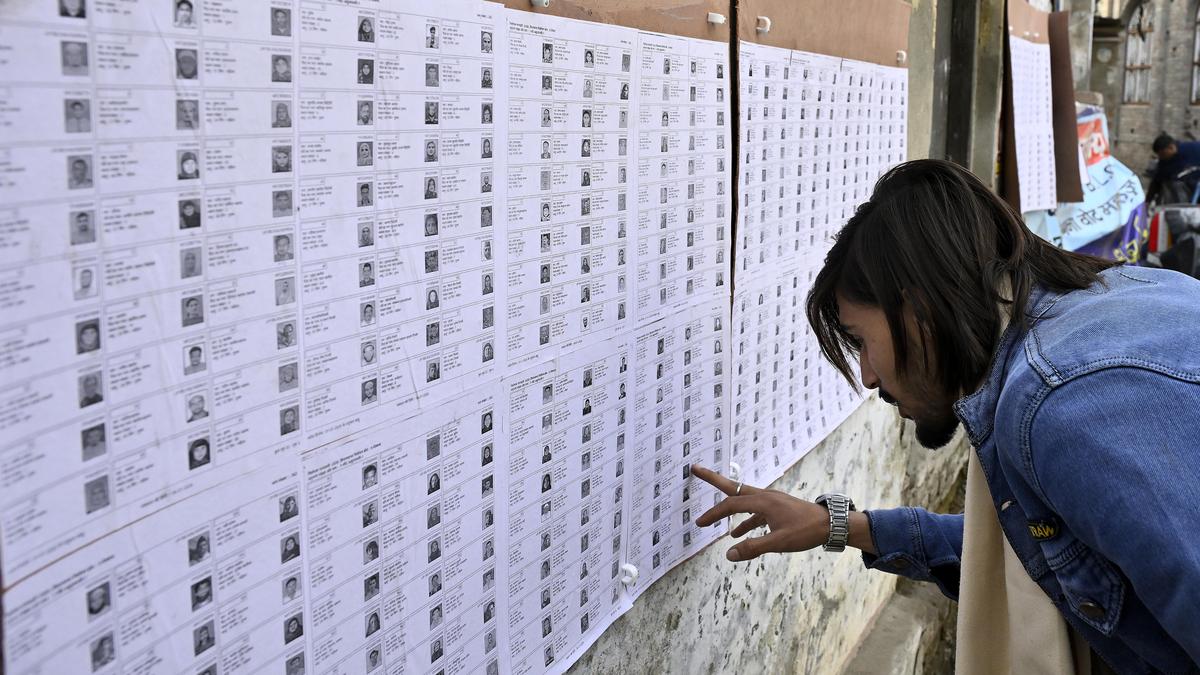
A special intensive revision (SIR) of electoral rolls in Uttar Pradesh (January 2026) has resulted in a significant number of voter deletions, raising concerns about the enfranchisement of migrant workers and minority communities. The Election Commission of India (EC) initiated the SIR to address duplicate voter registrations and inaccuracies. However, the process has led to confusion and anxiety among residents, particularly those who have moved frequently for work or have faced challenges in providing the necessary documentation to prove their identity and citizenship. The high number of deletions, especially in urban areas, and the complexity of the required paperwork are creating challenges for both voters and election officials.
Key Points:
- 2.89 crore names were deleted from U.P. electoral rolls, the highest in India.
- 18.7% deletion rate, second-highest after Andaman and Nicobar Islands.
- 14% of deletions attributed to permanent migration or inability to locate voters.
- Lucknow topped the list with over 12 lakh deletions out of almost 40 lakh voters.
- Significant deletions in Ghaziabad (28%), Kanpur (25%), Prayagraj (24%), and Gautam Buddha Nagar (23.5%).
- Duplicate voter registrations are common among migrant workers from Bihar and West Bengal.
- The SIR process requires voters unmapped to the 2003 voter list to provide documentation proving identity and citizenship.
- Community leaders in minority-dominated areas like Deoband have set up camps to assist residents with the complex paperwork.
- The deadline for claims and objections is February 6, 2026, with final rolls to be published on March 6, 2026.
Critical Analysis:
The timing of the SIR in Uttar Pradesh, coupled with the concerns raised in Deoband regarding citizenship verification, suggests the process may be viewed with suspicion by minority communities. The high deletion rates in urban areas, where migrant workers are concentrated, also hint at potential disenfranchisement of a significant portion of the population. The political sensitivity is amplified by the involvement of political party workers in the process and the concerns that the changes in voter demographics could upset carefully calibrated political strategies.
Key Takeaways:
- The large-scale deletion of names from voter rolls in Uttar Pradesh raises concerns about potential disenfranchisement and voter suppression.
- The SIR process has disproportionately impacted migrant workers and minority communities, highlighting the need for more accessible and inclusive voter registration procedures.
- The complexity of the documentation requirements and the linking of voter registration to the 2003 voter list have created significant challenges for many residents.
- Political parties are actively involved in the SIR process, raising concerns about potential manipulation and partisan influence.
- The EC faces the challenge of ensuring a fair and transparent electoral process while addressing the issues of duplicate voter registrations and inaccuracies in the electoral rolls.
Impact Analysis:
The SIR in Uttar Pradesh has significant long-term implications for the state’s political landscape. Disenfranchisement of migrant workers and minority communities could alter election outcomes and exacerbate social tensions. Furthermore, the controversies surrounding the SIR process could erode public trust in the electoral system and undermine the legitimacy of future elections. The legal challenges to the process, such as those indicated by Congress leader Gurdeep Singh Sappal, may lead to judicial intervention and further scrutiny of the EC’s procedures. The need for comprehensive electoral reforms that address the specific challenges faced by migrant workers and minority communities is apparent, requiring the government and the Election Commission to take proactive measures to protect the voting rights of all citizens.
 First Piper