
Sat Jan 17 04:42:04 UTC 2026: ### Grand Arches Mark Transformation of Medaram Jatara, Sparking Debate
The Story:
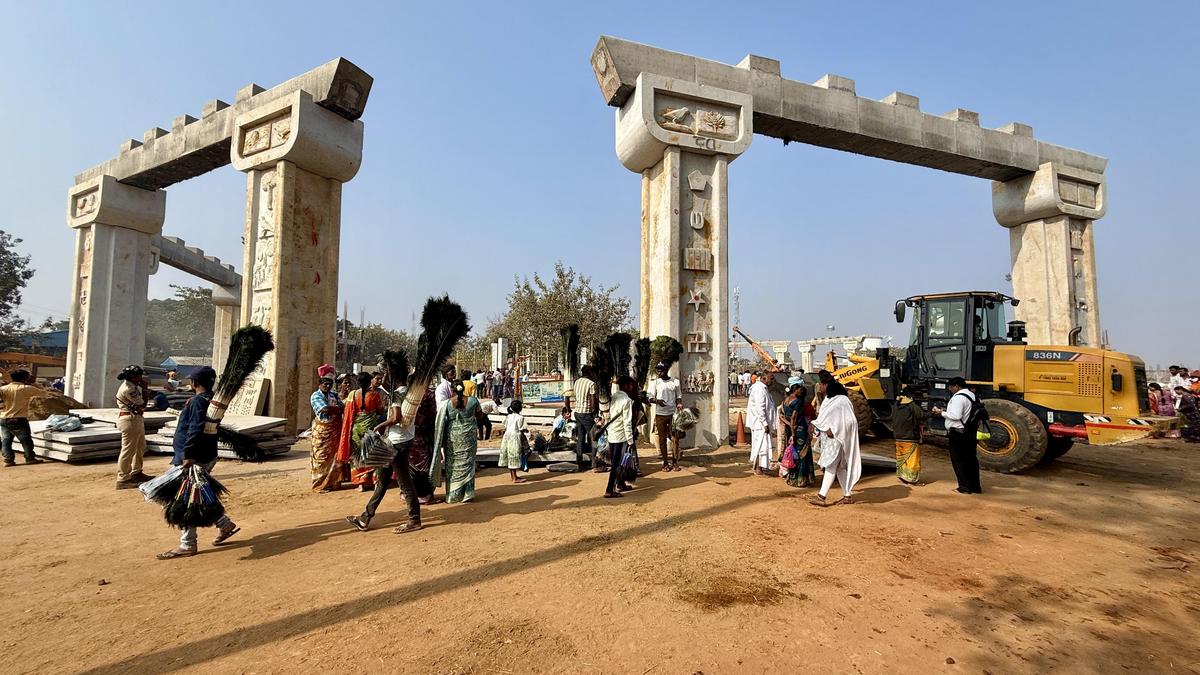
The biennial Samakka-Saralamma Jatara, one of the world’s largest indigenous gatherings held in Medaram village, Telangana, is undergoing a significant transformation ahead of its commencement on January 28, 2026. Gigantic granite arches, adorned with cultural symbols and clan histories, now frame the spiritual heart of the festival, replacing the traditional, smaller entrance. While authorities tout improved crowd management and a safer pilgrimage experience, some members of the Koya tribe express concerns that the modern State’s intervention is altering the essence of the ancient animist festival. The festival commemorates the sacrifice of the deities Sammakka, Saralamma, Pagididda Raju, and Govinda Raju, drawing millions of Adivasi devotees from across Telangana, Andhra Pradesh, Chhattisgarh, and Odisha.
Key Points:
- The Samakka-Saralamma Jatara is a biennial Adivasi festival in Medaram village, Mulugu district, Telangana, commencing on January 28, 2026.
- The festival attracts millions of devotees from Telangana, Andhra Pradesh, Chhattisgarh, and Odisha.
- The spiritual core of the festival is being reshaped with new granite arches and pillars, significantly expanding the consecrated space from 2,940 square metres to 5,816 square metres.
- The new structures feature around 7,000 images narrating clan histories, replacing a single arch with a dominant goddess image.
- Some Koya tribe members, including the thalapathi, Nageshwar Rao, express reservations about the changes, stating their beliefs do not require such structures.
- The festival commemorates the sacrifice of Sammakka, Saralamma, Pagididda Raju, and Govinda Raju, historical figures who fought against the Kakatiya rulers.
Critical Analysis:
The provided historical context indicates a concerted effort by the Telangana government to prepare for the 2026 Medaram Jatara. News items from December 2025 mention a “facelift” for the Sammakka-Sarakka shrine, while reports from January 2026 detail the completion of works by January 15 and expectations of nearly 3 crore devotees. The invitation of “KCR” (presumably K. Chandrashekar Rao, former Chief Minister of Telangana) suggests the high political importance attached to the event. The timeline reveals a proactive approach to managing a massive religious gathering. The article highlights a tension between modern development and the preservation of indigenous traditions. The state government is clearly aiming to improve infrastructure and crowd management, but this comes at the risk of altering the traditional experience and potentially alienating some members of the Koya tribe, who feel their cultural heritage is being compromised.
Key Takeaways:
- The Medaram Jatara is undergoing significant infrastructural changes driven by the Telangana State government.
- These changes aim to improve crowd management and provide a safer pilgrimage experience.
- The modernization efforts have raised concerns among some members of the Koya tribe about the potential loss of cultural authenticity.
- The Jatara illustrates the complex interplay between state development, religious tourism, and indigenous cultural preservation.
- The transformation reflects a broader trend of incorporating traditional festivals into the formal tourism sector.
Impact Analysis:
The transformation of the Medaram Jatara could have several long-term impacts:
- Increased Tourism: Improved infrastructure may attract even larger crowds in future years, boosting the local economy but potentially further straining resources and impacting the environment.
- Cultural Shift: The altered physical landscape could gradually shift the cultural and spiritual practices associated with the Jatara, potentially diluting the traditional animist beliefs.
- Community Division: Disagreements over the changes could create divisions within the Koya community and between the community and the state government, requiring careful negotiation and consultation.
- Precedent Setting: The Medaram Jatara’s transformation could serve as a model for other large-scale indigenous festivals in India, raising important questions about balancing modernization with cultural preservation.
- Economic Opportunity: With careful management of the transformation economic opportunity to the local community could grow and create better living conditions.
 First Piper