
Fri Jan 16 02:48:51 UTC 2026: ### Venezuela Shifts Course Under U.S. Pressure Following Maduro’s Ouster
The Story:
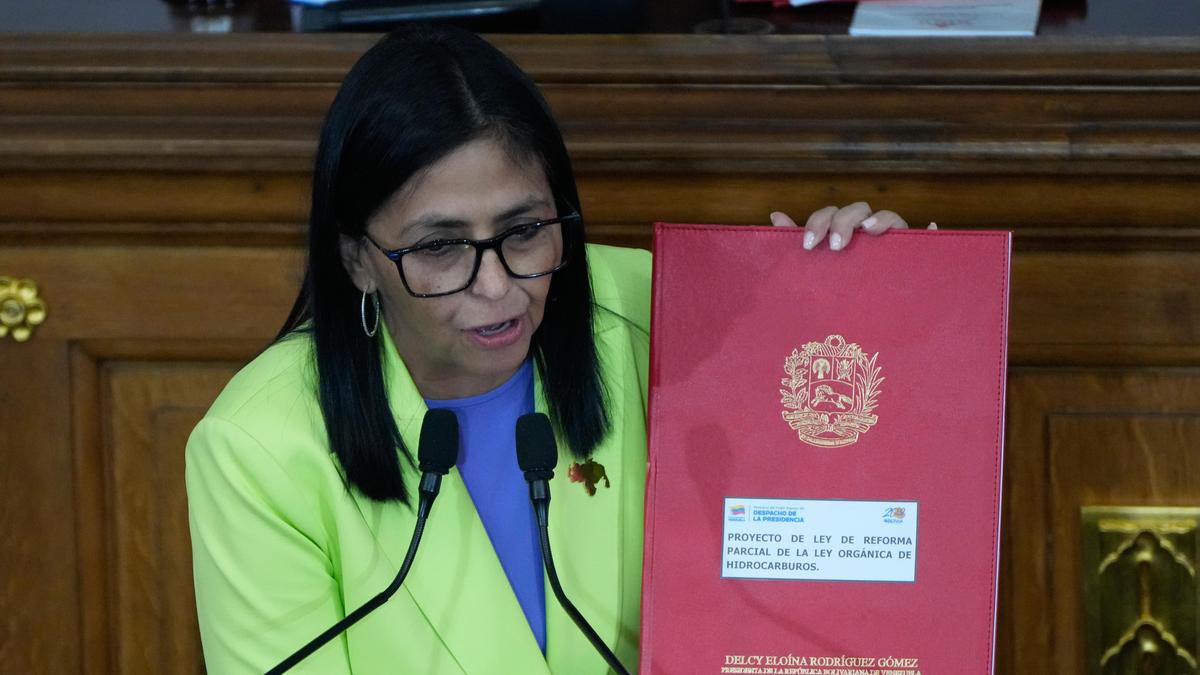
Following the capture and removal of President Nicolás Maduro by the Trump administration, acting President Delcy Rodríguez delivered her first state of the union address on January 15, 2026, signaling a significant shift in Venezuelan policy. Facing pressure from the U.S. to cooperate with its plans for the sanctioned oil industry, Rodríguez advocated for opening the crucial state-run oil sector to more foreign investment. While criticizing the U.S. action against Maduro, she also promoted the resumption of diplomatic ties and the redirection of oil revenue to bolster Venezuela’s ailing health services and infrastructure.
Key Points:
- Delcy Rodríguez advocated for opening Venezuela’s oil industry to more foreign investment.
- The Trump administration intends to control future oil revenue to benefit the Venezuelan people.
- Rodríguez criticized the U.S. capture of Nicolás Maduro but also sought to resume diplomatic relations.
- Opposition leader María Corina Machado met with President Trump in Washington and presented him with her Nobel Peace Prize medal.
- Venezuela’s high court granted Rodríguez presidential powers for a renewable period of 90 days.
- State TV continues to broadcast pro-government propaganda, despite the change in leadership.
Critical Analysis
The article highlights a rapid and dramatic shift in Venezuela’s political landscape following the ouster of Nicolás Maduro. The fact that acting President Delcy Rodríguez, a member of the existing government, is advocating for policies directly opposed to those previously enacted by Maduro, demonstrates the immense pressure the U.S. is exerting. The timing of this shift, closely following Maduro’s removal, shows the effectiveness of the U.S. strategy. The simultaneous meeting between María Corina Machado and President Trump further solidifies the U.S. influence and its intent to shape Venezuela’s future. The lack of coverage of Machado’s meeting in Venezuelan state media shows how propaganda is still being used to control the population. The condemnation of violence in Bangladesh and the controversial election count in Uganda in the historical context, suggest that democracy is unstable in many parts of the world.
Key Takeaways:
- The U.S. has successfully leveraged its influence to instigate a significant policy shift in Venezuela.
- Venezuela is now seeking renewed diplomatic ties with the U.S., indicating a pragmatic acceptance of the new reality.
- The future role of María Corina Machado remains uncertain, despite her meeting with President Trump.
- Despite the change in leadership, pro-government propaganda persists, suggesting underlying tensions and a struggle for control.
- Venezuela’s opening of the oil industry could significantly impact global energy markets and foreign investment opportunities.
Impact Analysis:
The events in Venezuela are likely to have a lasting impact on the country’s political and economic landscape. The opening of the oil industry to foreign investment could lead to increased production and revenue, potentially stabilizing the economy and improving infrastructure and healthcare. However, it also raises concerns about national sovereignty and the potential for exploitation by foreign entities. The U.S.’s role in shaping Venezuela’s future could set a precedent for intervention in other nations, raising questions about international law and the balance of power. The ongoing propaganda efforts suggest that the transition of power will not be smooth and that the Venezuelan people may remain divided about the country’s direction. Long term there is risk of civil war if the Venezuelan people don’t accept the legitimacy of the new leadership.
 First Piper