
Fri Jan 16 16:31:45 UTC 2026: Headline: J&K Waqf Board Defends Mosque Profiling Amidst Opposition Outcry
The Story:
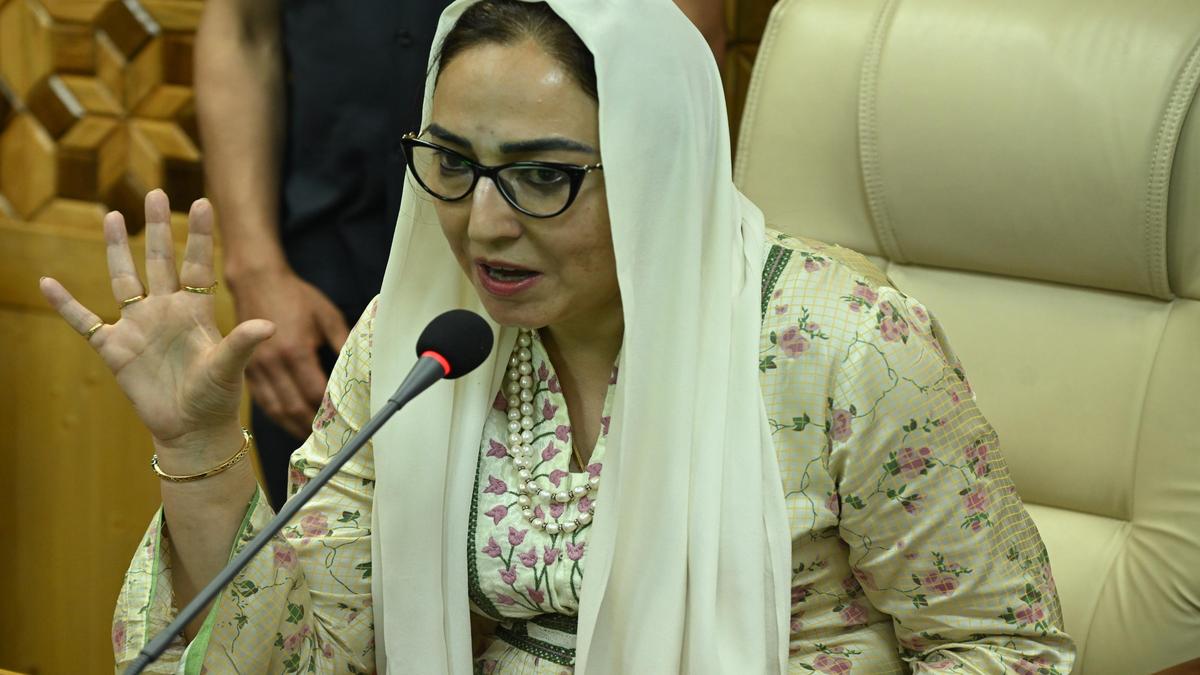
The Jammu and Kashmir Waqf Board chairperson, Darakhshan Andrabi, defended the police’s decision to profile mosques in the Kashmir Valley on January 16, 2026, aligning herself with other Bharatiya Janata Party (BJP) leaders. Andrabi stated that the verification of religious properties should not be viewed with suspicion and that there is no political agenda behind the profiling. This defense comes amidst widespread opposition from various political parties and religious organizations who view the profiling as an intrusive measure. The BJP maintains that such surveillance is necessary for accountability, transparency, and to prevent the misuse of mosques for political propaganda and pro-Pakistan activities, citing past incidents and recent terror modules linked to religious figures.
Key Points:
* Darakhshan Andrabi, chairperson of the J&K Waqf Board, defended the police profiling of mosques.
* The BJP supports the profiling, citing concerns about misuse of mosques for political and pro-Pakistan activities.
* The Muttahida Majlis-e-Ulema (MMU) and other political parties, including the National Conference, PDP, and CPI(M), have opposed the profiling, labeling it as “intrusive.”
* The police are reportedly collecting extensive data, including personal, financial, and digital information, on individuals connected to mosque management.
* BJP spokesman Altaf Thakur linked the profiling to concerns about Wahabi ideology and its potential connection to extremism, as well as historical misuse of mosques.
Critical Analysis:
The events reveal a pattern of escalating tension between the government (specifically the BJP) and Muslim religious institutions in Jammu and Kashmir. The government justifies the profiling as a necessary security measure based on historical events and perceived threats. However, the opposition sees it as a targeted and intrusive measure aimed at undermining religious freedom and creating an atmosphere of suspicion. The defense offered by the Waqf Board chairperson, a figure within a religious institution, is notable. It suggests an internal division or co-opting of some religious authorities by the ruling party, further complicating the situation. The mention of the “Wahabi ideology” is likely to further alienate the Muslim population as it is a sensitive religious issue.
Key Takeaways:
* The J&K administration is intensifying its scrutiny of religious institutions under the guise of security and accountability.
* This action is fueling a political divide, with opposition parties framing it as an assault on religious freedom.
* The profiling initiative is likely to further alienate the Muslim community in Jammu and Kashmir.
* The government is attempting to justify its actions by linking religious institutions to historical security threats and extremist ideologies.
Impact Analysis:
The mosque profiling initiative is likely to have long-term implications for community relations and security in Jammu and Kashmir. It could lead to:
* Increased mistrust and alienation of the Muslim population from the government.
* Potential radicalization as a reaction to perceived religious persecution.
* Heightened political polarization and social unrest.
* Legal challenges to the profiling based on constitutional rights to privacy and religious freedom.
* Further international scrutiny regarding human rights and religious freedom in the region.
 First Piper