
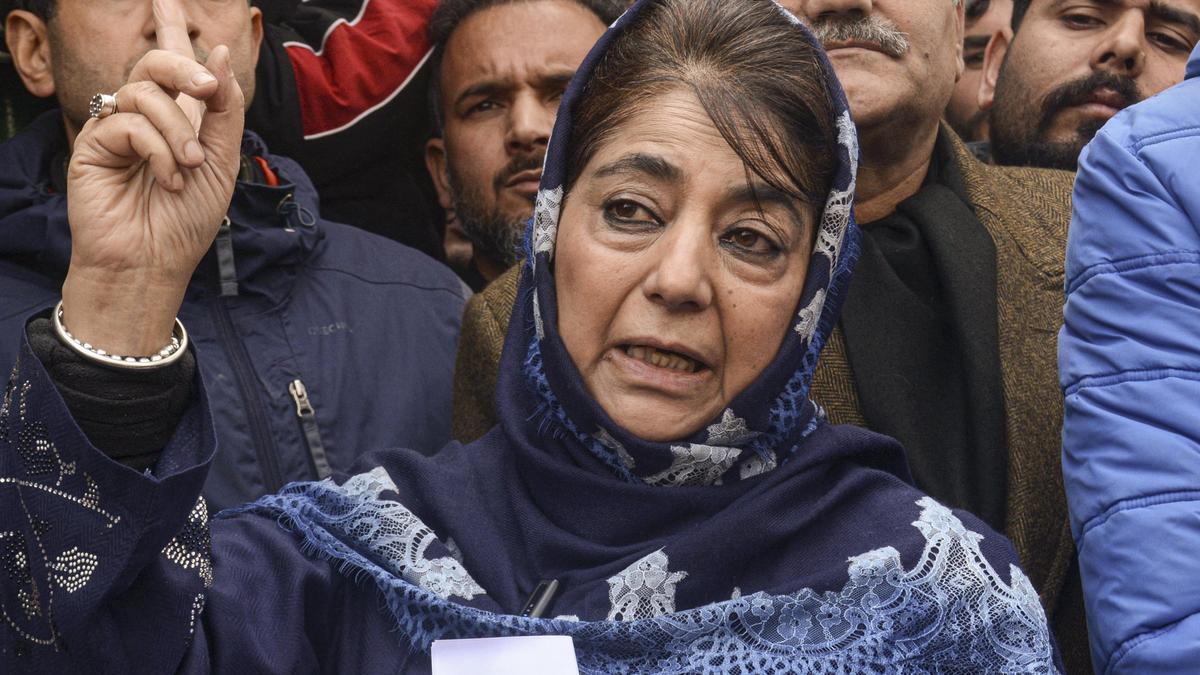
Fri Jan 16 11:14:29 UTC 2026: ### Headline: Mufti Urges Iranian Unity Against U.S. and Israeli “Ploys” Amidst Protests
The Story
On January 16, 2026, Peoples Democratic Party (PDP) President Mehbooba Mufti, speaking in Srinagar, called upon the people of Iran to unite against what she described as the “ploys” of the U.S. and Israel. She also appealed to the Iranian leadership to address the grievances of protesters within the country. Mufti accused the U.S. of habitually intervening in other countries to exploit their resources, drawing a contrast with the situation in Gaza, where she claims the U.S. fails to act despite alleged atrocities. She also expressed concern about the plight of students from Jammu and Kashmir studying in Iran and requested the External Affairs Minister to arrange special flights for their return.
Key Points
- Mehbooba Mufti urged Iranians to be wary of the U.S. and Israel, accusing them of exploiting resources.
- She criticized the U.S.’s interventionist policies in Muslim countries while contrasting it with the situation in Gaza.
- Mufti highlighted demonstrations in Kashmir in support of Iran, lamenting that such protests are now subdued due to the current Indian government’s policies.
- She appealed to the External Affairs Minister to arrange flights for students from Jammu and Kashmir in Iran.
- Mufti referenced Iran’s relationship with India.
Critical Analysis
The timing of Mufti’s statement, coinciding with emergency UN Security Council discussions on the Iranian protests, suggests an attempt to influence public opinion within India, particularly in Kashmir, regarding the situation in Iran and the role of external actors like the U.S. and Israel. The statement aligns with a broader narrative prevalent in some circles that frames U.S. foreign policy as driven by resource acquisition and interventionism, which is viewed as a way to unite different anti-western interest groups.
Key Takeaways
- Mufti’s statement reflects a specific geopolitical viewpoint that is critical of U.S. and Israeli foreign policy.
- The statement underscores the ongoing tensions between the U.S. and Iran, and the role of other actors in the conflict, and global perspectives.
- The concern for Kashmiri students in Iran highlights the potential impact of international events on specific communities and the responsibility of governments to provide support.
- The reference to diminished protest activity in Kashmir suggests a shift in the political landscape of the region.
- This event indicates potential geopolitical instability and the polarization of international relations regarding Iran.
Impact Analysis
The potential long-term impacts of this event include:
- Increased tensions between India and the U.S.: Although Mufti is not a sitting government official, her statements can strain relations, especially if perceived as reflecting broader sentiments within certain segments of Indian society.
- Potential for radicalization: Portraying the U.S. and Israel as enemies of Muslims can fuel extremist narratives.
- Impact on Indo-Iranian relations: The situation in Iran and the response from India, influenced by figures like Mufti, could affect the future trajectory of bilateral relations.
- Domestic political consequences: Mufti’s statement could resonate with her support base in Kashmir and influence political dynamics in the region, especially in the context of ongoing debates about autonomy and self-determination.
- Increased global scrutiny of J&K: Mufti’s statements also point to the relationship between the local population and the current Indian administration, something that international monitoring groups will review.
 First Piper