
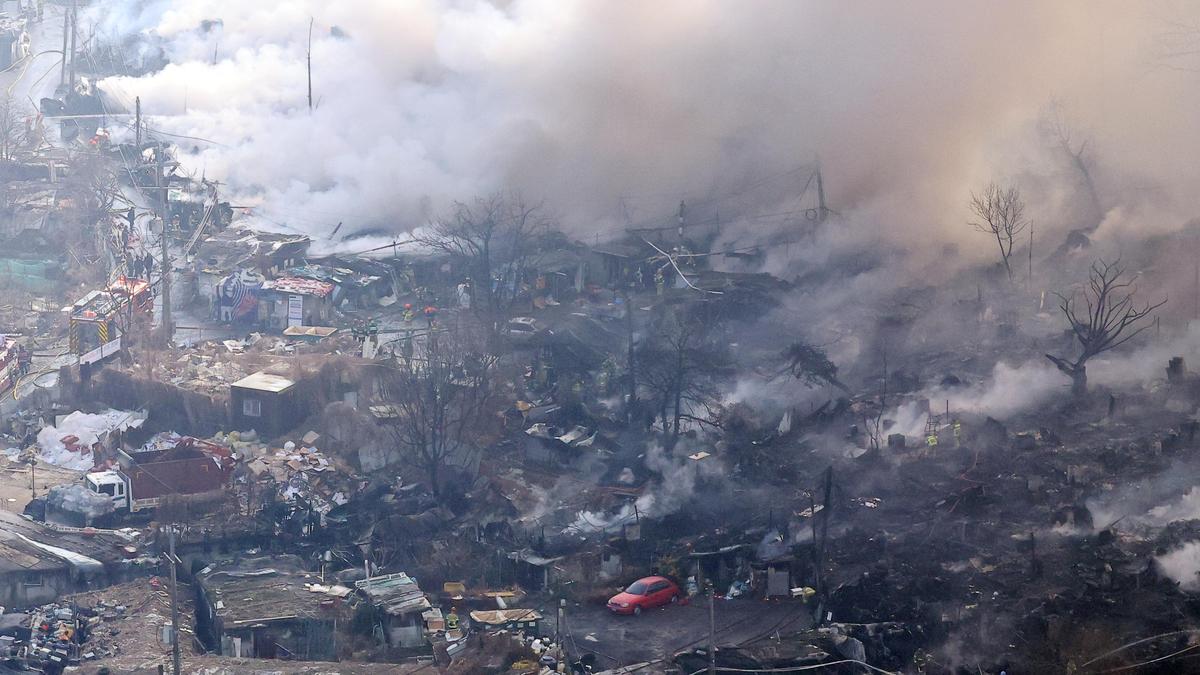
Fri Jan 16 05:24:54 UTC 2026: # Seoul Shanty Town Fire Highlights Deepening Income Inequality in South Korea
The Story:
A fire erupted in Guryong village, one of Seoul’s last remaining shanty towns, on January 16, 2026. The blaze consumed makeshift houses, forcing dozens of residents to flee. While no immediate casualties were reported, rescue teams were thoroughly searching the burned area for potential victims. Over 1,200 personnel, including firefighters and police officers, were deployed to control the fire, which was largely contained by the time of the initial report.
Key Points:
- The fire occurred in Guryong village, a shanty town in southern Seoul.
- The fire broke out on January 16, 2026.
- No casualties were immediately reported, but a search was underway.
- Over 1,200 personnel were deployed to the scene.
- The cause of the fire is under investigation.
- Guryong village was formed in the 1980s for people evicted during redevelopment projects.
- The village is a symbol of South Korea’s income inequalities, located near affluent neighborhoods.
- The village has faced previous fires due to tightly packed homes and flammable materials.
Critical Analysis:
The historical context does not reveal significant patterns that explain why the fire occurred, so this section is omitted.
Key Takeaways:
- The fire underscores the persistent issue of income inequality in South Korea.
- The vulnerability of Guryong village to fires highlights the inadequate living conditions of its residents.
- Redevelopment projects in the 1980s, intended to improve Seoul’s image, led to displacement and the creation of settlements like Guryong village.
- The incident raises questions about the long-term solutions for addressing poverty and housing insecurity in Seoul.
- Future policy changes will need to emphasize urban renewal without displacement.
Impact Analysis:
The fire in Guryong village is likely to have several significant long-term impacts:
- Policy Scrutiny: The incident will likely intensify public and political scrutiny of South Korea’s housing policies and urban development strategies, pushing for more inclusive and equitable approaches. The focus should shift from beautification to sustainable urban development.
- Increased Social Activism: The fire could galvanize social activism and advocacy efforts aimed at improving the living conditions of marginalized communities and addressing income inequality.
- Urban Planning Revisions: City planners in Seoul, and potentially other urban centers in South Korea, may be compelled to revise their urban planning strategies to prioritize the needs of low-income residents and reduce the risk of similar incidents in the future.
- Government Funding and Resource Allocation: The government may be pressured to allocate more resources to support infrastructure improvements and fire safety measures in vulnerable communities like Guryong village.
- Public Awareness: The incident will raise public awareness about the disparities in living conditions and the challenges faced by marginalized communities, fostering greater empathy and support for social justice initiatives.
 First Piper