
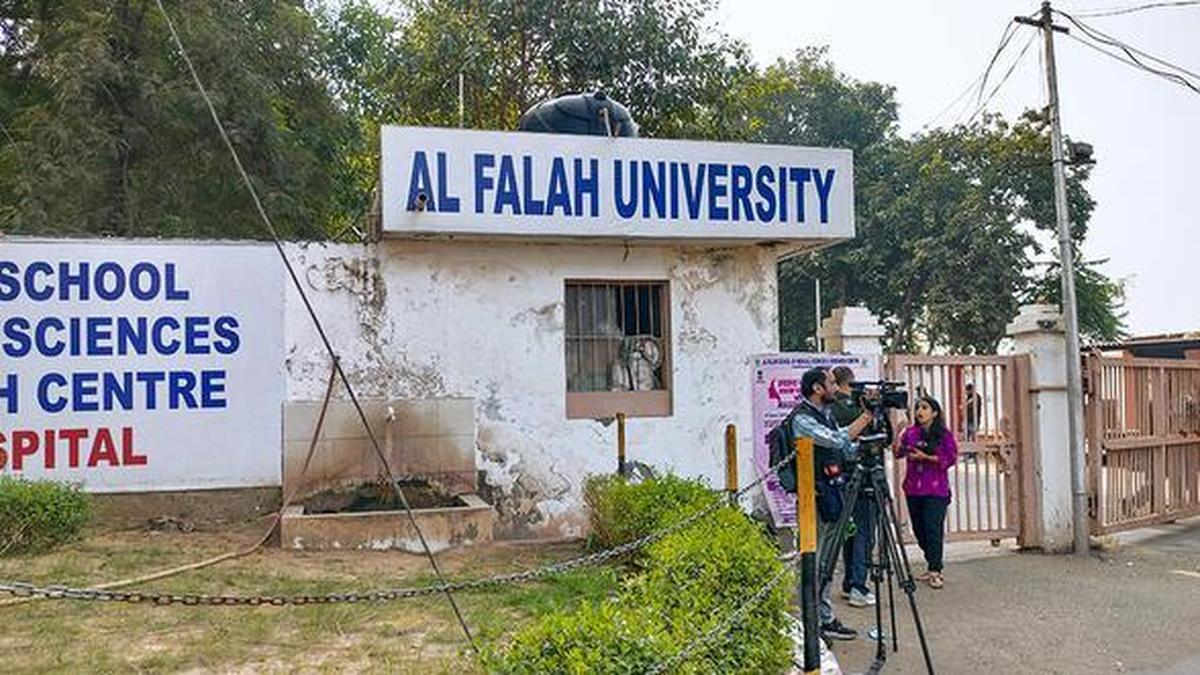
Fri Jan 16 14:34:59 UTC 2026: ### Headline: Al-Falah University Assets Attached Following Red Fort Blast Investigation
The Story:
On January 16, 2026, the Enforcement Directorate (ED) attached assets worth approximately ₹140 crore belonging to Haryana-based Al-Falah University. This action follows the November 10, 2025 Red Fort area blast, which implicated individuals connected to the university. The ED has filed a charge sheet against Al-Falah Group chairman Jawad Ahmed Siddiqui and his trust under the Prevention of Money Laundering Act (PMLA).
The attached assets include the university’s 54-acre land in Dhauj, Faridabad, along with its buildings, schools, departments, and hostels. Siddiqui was arrested in November 2025 on charges of money laundering related to alleged fraudulent accreditation practices.
Key Points:
- The Enforcement Directorate (ED) attached approximately ₹140 crore in assets of Al-Falah University on January 16, 2026.
- The action is linked to the November 10, 2025 Red Fort blast investigation.
- Al-Falah Group chairman Jawad Ahmed Siddiqui and his trust face charges under the Prevention of Money Laundering Act (PMLA).
- The attached assets include the university land, buildings, and hostels in Faridabad.
- The university allegedly generated ₹415.10 crore through fraudulent accreditation claims.
- A doctor from the university, Dr. Umar-un-Nabi, is alleged to have been a suicide bomber in the Red Fort blast.
Critical Analysis:
- The case highlights the intersection of financial crimes and national security. The alleged money laundering activities of the Al-Falah Trust appear to be linked to a terror module, as evidenced by the implication of university personnel in the Red Fort blast. The ED’s actions are aimed at dismantling the financial infrastructure that may have supported or enabled terrorist activities. The timing of the ED’s action, following the Red Fort blast, suggests a concerted effort by law enforcement and security agencies to crack down on entities suspected of funding or supporting terrorism under the guise of educational institutions.
Key Takeaways:
- Educational institutions are vulnerable to exploitation for money laundering and potentially, financing of terrorism.
- Stringent oversight of accreditation and financial practices is crucial for universities.
- Law enforcement agencies are actively pursuing financial crimes linked to national security threats.
- The government is taking measures to ensure that students’ education is not disrupted during the investigation.
- The case underscores the importance of inter-agency cooperation between financial crime investigators (ED) and national security agencies (NIA).
Impact Analysis:
This event will likely lead to increased scrutiny of the financial operations and accreditation processes of educational institutions, particularly those with a significant international student base or those operating in sensitive regions. The case may prompt the government to implement stricter regulations and monitoring mechanisms to prevent similar incidents in the future. Furthermore, the attachment of assets and ongoing legal proceedings could severely impact the operations of Al-Falah University and potentially affect the educational prospects of its students in the short term. The government’s assurance of continuing education for students is critical.
 First Piper