
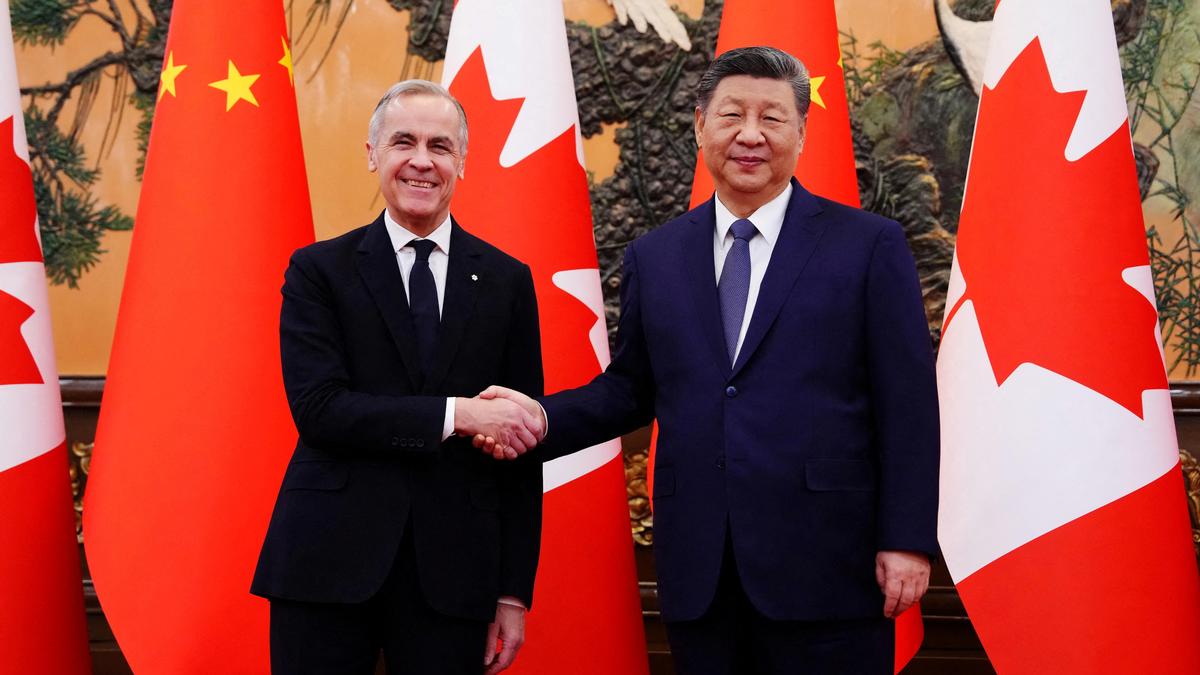
Fri Jan 16 13:23:59 UTC 2026: ### Headline: Canada Sidesteps U.S. Tariffs, Strikes Trade Deal with China
The Story:
In a move signaling a growing divergence from U.S. trade policy, Canadian Prime Minister Mark Carney concluded a deal with China on January 16, 2026, to reduce tariffs on electric vehicles (EVs) in exchange for lower Chinese tariffs on Canadian farm products, most notably canola seeds. The agreement, announced after two days of meetings with Chinese leaders in Beijing, marks the first visit by a Canadian Prime Minister to China in eight years and aims to improve relations strained by previous tariffs and geopolitical tensions. This deal reflects Canada’s strategy to diversify its economy and reduce reliance on the United States, particularly in light of Donald Trump’s “America-first” policies.
Key Points:
- Canada will reduce its 100% tariff on Chinese EVs, with an initial cap of 49,000 vehicles imported, increasing to 70,000 over five years.
- China will reduce its tariff on canola seeds from approximately 84% to 15%.
- Prime Minister Carney described the global governance system as “under great strain” and called for a new relationship with China “adapted to new global realities”.
- Former Prime Minister Justin Trudeau’s tariffs of 100% on Chinese EVs and 25% on steel and aluminum had triggered retaliatory tariffs from China.
- China’s imports from Canada fell 10.4% last year to $41.7 billion.
- President Xi Jinping stated that talks have been underway on restoring and restarting cooperation since the two held an initial meeting in October on the sidelines of a regional economic conference in South Korea.
Critical Analysis:
The timing of this agreement, following years of strained relations and during a period of significant trade friction with the U.S., suggests a strategic move by both Canada and China. The related news snippets indicating that Mae Martin to host Junos and celebrate Canada’s ‘bastion of sanity’ amid U.S. tensions; and Canada’s Carney hails ‘strategic partnership’ in talks with China’s Xi’ highlight Canada’s shifting alignment away from the U.S. policies and an openness to collaborate. China, facing ongoing trade pressures from the U.S., may see this agreement as a means to weaken the U.S.’s influence over its allies and foster a more multipolar world order.
Key Takeaways:
- Canada is actively pursuing economic diversification to lessen its dependence on the U.S. market.
- China is using trade agreements to cultivate relationships with countries that may be at odds with U.S. trade policies.
- The “America-first” policies of President Trump are creating opportunities for other nations to forge stronger economic ties independent of the U.S.
- The agreement signals a potential shift in the global balance of power, with Canada seeking to play a more independent role in international trade.
Impact Analysis:
This agreement could have several long-term implications:
- Weakening of U.S. Trade Leverage: Canada’s willingness to break with U.S. trade policies could embolden other nations to do the same, diminishing the effectiveness of U.S. trade leverage.
- Strengthening of China’s Economic Influence: The deal provides China with greater access to the Canadian market and strengthens its position as a key player in global trade.
- Realignment of Trade Relationships: The agreement could accelerate the realignment of global trade relationships, with countries seeking to forge new partnerships outside of the traditional U.S.-led framework.
- Future Canadian Economic Growth: Access to the Chinese market for agricultural exports, particularly canola, may lead to increased economic growth for Canadian farmers.
 First Piper